


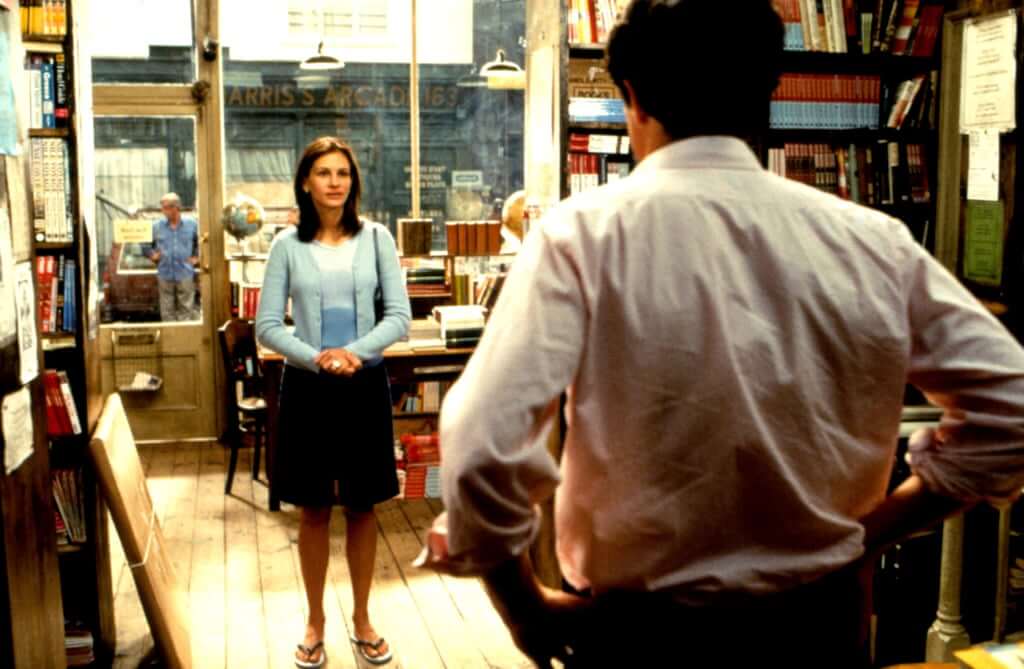


Anglophiles all over the world love the film Notting Hill, and many make a pilgrimage to this West London neighborhood to see the real place that provided the backdrop for Hugh Grant and Julia Roberts’s unlikely romance. The 1999 Richard Curtis film turned a charming but relatively unknown corner of London into one of the city’s most visited neighborhoods, with fans eager to walk the same streets as William Thacker and Anna Scott.
But here’s the honest truth: many visitors are horribly disappointed when they arrive. They realize that the film’s Notting Hill and the real Notting Hill don’t quite match up. The neighborhood is pretty much like any other area of London that caters to tourists—which is to say, it’s been significantly transformed by its own popularity. It’s an absolute zoo on Portobello Road Market days (Fridays and especially Saturdays), so crowded with tourists, antique hunters, and street food enthusiasts that you can barely move, let alone appreciate the neighborhood’s genuine charm or spot the film locations you came to see.
The Notting Hill of the film—quiet, quirky, village-like, full of chance encounters on uncrowded streets—largely exists in movie magic rather than modern reality. The blue door that became the film’s most iconic image? It was removed by the then-homeowner, tired of tourists constantly knocking and posing for photos. The charming travel bookshop? Closed years ago, though the building remains. The sense of a small community where everyone knows everyone? Diluted by sky-high property prices and the neighborhood’s transformation into one of London’s most expensive postcodes.
But don’t despair. Notting Hill still has real magic to offer film lovers willing to look beyond the surface. If you want to see the real Notting Hill, get a feel for what made Richard Curtis fall in love with it in the first place, and understand why it made such a perfect setting for a romance, you need to experience it as a local would. That means avoiding the market madness, knowing where to look, and appreciating the neighborhood for what it actually is rather than what the film suggested it might be.
Here’s your comprehensive guide to experiencing Notting Hill as a film lover.
The Film Locations: What to See and What to Know
The Famous Blue Door (280 Westbourne Park Road)
Let’s address the elephant in the room first: the most iconic image from Notting Hill—that glossy blue door to William’s flat at “142 Portobello Road”—no longer exists in its film form. The actual location was 280 Westbourne Park Road (not Portobello Road at all), and the door was painted blue specifically for the film. After years of tourists knocking, taking photos, and generally treating a private residence like a public attraction, the homeowner removed the door and auctioned it for charity in 2008.
However, you can still visit the location and see the house where the door once hung. The current door is black, and there’s nothing to mark the building’s cinematic significance. This is actually rather fitting—it’s a reminder that real people live here, and that the Notting Hill of the film is a beautiful fiction. Stand across the street (don’t block the pavement), take your photo if you must, but please respect that this is someone’s home.
To find it: Take the Tube to Westbourne Park station, walk south on Great Western Road, turn left on Portobello Road, then right on Westbourne Park Road. It’s the house with the white façade and black railings. You’ll probably spot other tourists looking confused with their phones out—that’s how you know you’ve found it.
The Notting Hill Bookshop (13 Blenheim Crescent)
In the film, William Thacker owns a charming but financially struggling travel bookshop where Anna Scott first wanders in, setting the entire romance in motion. The interior scenes were filmed on a set, but the exterior shots used a real location: a shop at 13 Blenheim Crescent, just off Portobello Road.
At the time of filming, this was indeed a travel bookshop, which provided perfect authenticity. Sadly, like William’s fictional shop, it struggled financially—though unlike William, the owner didn’t end up with Julia Roberts. The original travel bookshop closed in 2011. It has since been replaced by the ‘Notting Hill Bookshop’, which does a decent job of playing up its connections to the film.
Portobello Road Market
Portobello Road is Notting Hill’s spine and the film’s most prominent location. Several key scenes were shot here, including William’s walk through the market as the seasons change (one of cinema’s most memorable montage sequences) and various street scenes showing the neighborhood’s bustle and character.
The market is real and has been operating since the 1860s, though it’s grown considerably since then. Today it’s actually several markets: antiques on Saturdays (the famous one), fresh food daily at the southern end, and fashion and general goods on Fridays and Saturdays.
The reality check: Saturday’s antiques market is an overwhelming experience. We’re talking tens of thousands of visitors, vendors hawking everything from genuine antiques to outright tat, street food stalls creating bottlenecks, and barely room to move. It’s exciting if you love that energy, but it bears little resemblance to the film’s version where Hugh Grant could apparently stroll unimpeded through the market while contemplating his love life.
The film lover’s approach: Visit on a weekday morning (Tuesday or Wednesday are quietest) when the antiques stalls are closed but the permanent shops are open. You’ll actually be able to walk the street, appreciate the colorful houses, and see what attracted Richard Curtis to this location. The market’s southern end, around the Notting Hill Gate end near the fruit and vegetable stalls, operates daily and gives you a taste of the market atmosphere without the weekend chaos.
Walk north from Notting Hill Gate station along Portobello Road, and you’ll pass through distinct zones: the antiques area (empty on weekdays but you can window-shop), the area where fashion stalls set up (under the Westway flyover), and eventually into the more residential northern section. This walk gives you the full Portobello experience.
The Ritz Hotel and The Savoy
While not in Notting Hill itself, these Central London locations featured prominently in the film. The Ritz on Piccadilly is where William and his flatmate Spike (Rhys Ifans in a career-defining comedic performance) gate-crash a press junket, leading to William’s accidental interview with Anna.
You can visit The Ritz for afternoon tea (book well in advance and expect to spend around £75-100 per person) and enjoy the same opulent surroundings where William awkwardly asked, “Have you ever been mistaken for someone who was famous?” The hotel maintains its Edwardian grandeur, and having tea there makes for a genuinely special London experience, film connection aside.
The Savoy on the Strand is where the film’s climactic press conference scene takes place. Again, not a location you can casually wander into, but you can have drinks at the Savoy’s American Bar (jacket required for men) or the more casual Beaufort Bar, both of which offer a taste of this historic hotel’s glamour.
Coronet Cinema (Now The Coronet Theatre)
The gorgeous art deco cinema where William and Anna have their disastrous first date is the Coronet Cinema at Notting Hill Gate. Originally opened as a theatre in 1898, it was converted to a cinema in 1916 and maintained that function until 2014.
Sadly for film lovers, it’s no longer a cinema—it closed and was converted back into a theatre and music venue, now called The Coronet Theatre. However, the building’s stunning exterior remains unchanged, and it’s worth walking past to admire the architecture. The interior, when the venue is open for performances, still retains much of its period charm.
The area around Notting Hill Gate has changed significantly since the film, with chain shops replacing many independent businesses, but the Coronet’s façade remains a beautiful reminder of old London.
The Private Garden (Rosmead Garden)
One of the film’s most romantic scenes takes place in a private communal garden where William and Anna climb over the fence for a quiet moment away from the world. This was filmed at Rosmead Garden, a real private garden square in Notting Hill.
Here’s the thing about London’s garden squares: they’re genuinely private, maintained by residents who pay for keys, and you can’t access them unless you live there or know someone who does. Don’t try to recreate this scene by climbing the fence—you’ll be trespassing and will rightfully get told off.
However, you can admire the garden from the street. Walk along Rosmead Road (between Ladbroke Grove and Kensington Park Road) and you’ll see the garden behind railings. It’s beautiful, especially in spring and summer, and gives you a sense of one of Notting Hill’s secret pleasures: these lovely communal gardens that exist behind closed gates throughout the neighborhood.
The Restaurant (192)
The restaurant where William and Anna have their “I’m just a girl, standing in front of a boy, asking him to love her” confrontation is 192, a real restaurant on Kensington Park Road. It’s still operating and you can book a table to eat in the same space where that famous line was delivered.
The restaurant serves modern European cuisine with a focus on seasonal British ingredients. It’s not cheap (expect to pay £40-60 per person without drinks) but it’s good, and the atmosphere retains a neighborhood feel despite the film connection. The restaurant acknowledges its Notting Hill fame but doesn’t exploit it—there’s no special “Anna Scott menu” or anything cringeworthy.
Beyond the Film: Experiencing Notting Hill Properly
Now that we’ve covered the film locations, let’s talk about how to actually enjoy Notting Hill as a neighborhood rather than just as a film set.
Perfect for Breakfast and Brunch
Hummingbird Bakery (133 Portobello Road)
This isn’t in the film, but it’s become a Notting Hill institution since opening in 2004. Hummingbird Bakery is credited with bringing American-style cupcakes to London, and their Notting Hill location is the original. The cupcakes are genuinely excellent—moist, generously frosted, and available in creative flavors. They also serve proper coffee and other baked goods.
The shop is small, often crowded, but the takeaway service is efficient. Grab cupcakes and coffee, then enjoy them on a nearby bench or in one of the garden squares (if you can access one). The red velvet cupcake is their signature, but the salted caramel is secretly the best.
Granger & Co (175 Westbourne Grove)
For a proper sit-down breakfast or brunch, Granger & Co delivers. Founded by Australian chef Bill Granger, this is where Notting Hill’s fashionable residents come for avocado toast, ricotta hotcakes, and perfectly executed eggs. Yes, it’s trendy, and yes, you’ll probably wait for a table on weekends, but the food is genuinely good rather than just Instagram-worthy.
The ricotta hotcakes with banana and honeycomb butter are legendary—sweet but not cloying, fluffy but substantial. If you want savory, the corn fritters with roast tomato, spinach, and bacon are excellent. Coffee is taken seriously here, which shouldn’t be notable but sadly still is in parts of London.
Gail’s Bakery (Multiple Locations)
For something more grab-and-go, Gail’s Bakery has several Notting Hill locations and serves excellent coffee with outstanding pastries and sandwiches. This is a small London chain that maintains quality across all locations. The almond croissants are extraordinary, and their sourdough loaves are what many locals buy for the week.
The Bookshops
Since the film’s fictional travel bookshop is gone, you might wonder if there are any real bookshops worth visiting in Notting Hill. The answer is yes—several excellent ones.
Lutyens & Rubinstein (21 Kensington Park Road)
This independent bookshop opened in 2009, a decade after Notting Hill was filmed, but it embodies everything the film suggested a Notting Hill bookshop should be: carefully curated, staffed by people who genuinely love books, and focused on literary fiction and quality non-fiction rather than bestsellers.
The shop is small, with every book chosen deliberately. The staff give excellent recommendations, and they host regular author events. This is a bookshop where you discover something new rather than finding something you already knew you wanted. They have a particularly good travel writing section—a nod to the neighborhood’s fictional bookshop, perhaps.
The Book & Comic Exchange (14 Pembridge Road)
For something completely different, this second-hand bookshop specializes in graphic novels, comics, and film books alongside general fiction and non-fiction. It’s been operating since the 1970s and has that pleasantly chaotic atmosphere of a true second-hand shop where you might find anything.
Film lovers should head to the basement where they stock an impressive collection of film books, biographies, and cinema studies texts. You can lose hours here, and prices are reasonable for London.
Stanfords (7 Mercer Walk, Covent Garden)
If you’re specifically seeking that travel bookshop experience from the film, you need to make a pilgrimage to Stanfords in Covent Garden. Established in 1853, this is the world’s largest travel bookshop and the genuine article—the kind of place William Thacker’s shop aspired to be. Spread over three floors, Stanfords stocks an extraordinary collection of travel guides, maps, atlases, travel literature, and globes. Ernest Shackleton and Florence Nightingale shopped here. This isn’t just a bookshop; it’s a travel institution.
The ground floor focuses on travel guides organized by destination, the lower ground floor houses their famous map collection (they have maps for everywhere), and the upper floor is dedicated to travel writing and inspiration. Staff are knowledgeable travelers themselves who can recommend books for any destination or journey. It’s a 15-minute Tube ride from Notting Hill to Covent Garden, but if you loved the concept of William’s travel bookshop, Stanfords is essential visiting.
Daunt Books (Marylebone High Street)
Also not in Notting Hill—it’s in Marylebone—but another must-visit for travel book enthusiasts. Daunt Books is housed in a stunning Edwardian building with skylights and oak galleries. Books are organized by country, so if you’re planning a trip anywhere, you’ll find novels, histories, memoirs, and guidebooks all together.
The original Marylebone location is the most beautiful, but they have branches throughout London. Between Stanfords and Daunt Books, you’ll get the full travel bookshop experience that the film only hinted at.
Antiques and Vintage Shopping
If you visit on a Saturday and brave the market crowds, Notting Hill offers some of London’s best antiques and vintage shopping. Here’s how to approach it:
The Portobello Road Antiques Market runs primarily on Saturdays from around 8 AM to 6 PM, though many dealers pack up by 4 PM. The serious antiques are at the southern end (Notting Hill Gate end) while the northern end tends toward vintage clothing and collectibles.
Tips for the Market:
- Arrive early (before 10 AM) to beat the worst crowds and get first pick
- Bring cash—many dealers don’t take cards
- Don’t be afraid to negotiate, especially if buying multiple items
- Be wary of “antiques” that are obviously reproduction
- Watch your belongings in the crowds—pickpockets operate here
Alice’s Antiques Market (No. 86 Portobello Road) is an indoor arcade with permanent stalls. It’s less chaotic than the street market and operates Tuesday through Saturday. You’ll find jewelry, vintage clothing, collectibles, and smaller antiques. The dealers here are more established and prices reflect that, but quality is generally higher.
The Mall Antiques Arcade (Camden Passage) – Again, not in Notting Hill but nearby in Islington—worth mentioning for serious antiques hunters. It’s less touristy than Portobello and offers better prices for quality pieces.
The Streets Worth Walking
Beyond the famous locations, some of Notting Hill’s most beautiful streets barely appear in the film but perfectly capture its atmosphere:
Lancaster Road and Ladbroke Grove – These streets showcase Notting Hill’s famous pastel-painted Victorian houses. Unlike Portobello Road, they’re quiet and residential. Walk here to see why property prices in Notting Hill are astronomical—the houses are genuinely stunning, many with communal gardens behind.
Westbourne Grove – This is Notting Hill’s main shopping street, running perpendicular to Portobello Road. It’s home to independent boutiques, cafes, and restaurants. Less crowded than Portobello, it’s where locals actually shop. The western end, near Portobello, has the best boutiques.
Colville Terrace and Talbot Road – These streets have some of Notting Hill’s most colorful houses, painted in pinks, blues, yellows, and greens. They’re residential and quiet—perfect for photography and getting that quintessential Notting Hill aesthetic without crowds.
Pembridge Square and Lonsdale Road – More beautiful garden squares surrounded by elegant Victorian terraces. You can’t access the gardens, but walking the perimeter gives you a sense of Notting Hill’s village-within-a-city atmosphere.
Museums and Culture
Museum of Brands (111-117 Lancaster Road)
This quirky museum chronicles consumer culture and advertising from Victorian times to the present. It’s essentially a walk through British daily life via packaging, toys, and advertisements. For visitors interested in British culture beyond the tourist highlights, it’s genuinely fascinating. You’ll recognize products from your childhood (if you’re of a certain age) and see how British brands and design have evolved.
The Tabernacle (34-35 Powis Square)
This gorgeous Victorian building was originally a church, then hosted various community functions, and is now a cultural center with a restaurant, bar, and performance space. Even if you don’t catch a show, the building is architecturally significant and the courtyard is lovely for a drink.
Parks and Green Spaces
Holland Park
Just south of Notting Hill proper, Holland Park is one of London’s loveliest green spaces. It’s far less crowded than Hyde Park and offers Japanese gardens, peacocks roaming freely, woodland areas, and the ruins of Holland House (bombed during WWII and left as a picturesque ruin).
The Kyoto Garden within Holland Park is particularly special—a Japanese garden donated by the Chamber of Commerce of Kyoto in 1991. It’s peaceful, beautiful in all seasons, and feels miles from central London despite being a five-minute walk from the Tube.
The eastern boundary of Notting Hill runs into Kensington Gardens, part of the Royal Parks. The Italian Gardens at the north end are especially beautiful, with fountains and formal plantings. This is the same park that features at the end of the film during the final bench scene (though that was actually filmed on Hampstead Heath—another London filming location deception).
Where Locals Actually Eat and Drink
The Churchill Arms (119 Kensington Church Street)
This Victorian pub is famous for two things: being absolutely covered in flowers (seriously, the entire exterior is flowering plants) and serving excellent Thai food. Yes, Thai food in a traditional English pub—it’s a long story involving the landlord’s ex-wife, but the important thing is the food is genuinely good and reasonably priced for the area.
The pub maintains its traditional interior with Winston Churchill memorabilia (hence the name) while serving green curry and pad thai. It’s bizarre, very London, and highly recommended. Get there early on weekends as it’s popular with locals and tourists alike.
The Ledbury (127 Ledbury Road)
At the other end of the spectrum, The Ledbury is a two-Michelin-star restaurant offering one of London’s finest dining experiences. It’s not cheap (tasting menus start around £180 per person) but if you want to splash out on a special meal, chef Tom Sellers delivers extraordinary modern British-French cuisine.
This is where wealthy Notting Hill residents celebrate special occasions—it’s the neighborhood’s fine dining destination. Book well in advance.
Electric Diner (191 Portobello Road)
Next to the Electric Cinema, this American-style diner serves comfort food in a stylish setting. Open from breakfast through late-night dining, it’s perfect for burgers, steaks, and cocktails. The atmosphere is lively but not loud, and it attracts a fashionable local crowd. Weekend brunch here is an institution.
The Cow (89 Westbourne Park Road)
This gastropub, owned by Tom Conran (son of designer Terence Conran), serves excellent seafood alongside traditional pub fare. The ground floor is a proper pub with Guinness on tap and bar snacks (the oysters are particularly good). Upstairs is a more formal dining room. It gets busy, especially weekend evenings, but the food is reliably good and the atmosphere is convivial.
Geales (2 Farmer Street)
In a film guide about Notting Hill, we’d be remiss not to mention somewhere serving fish and chips. Geales has been serving fish and chips in Notting Hill since 1939, making it a proper institution. The fish is fresh, the batter is light and crispy, and they’ve perfected the art over eight decades. It’s pricier than your average chippy (this is Notting Hill, after all) but the quality justifies it.
The Cinema Experience
Electric Cinema (191 Portobello Road)
While the film used the Coronet for its cinema scenes, the Electric Cinema is where you should actually go to watch a film in Notting Hill. Opened in 1910, it’s one of Britain’s oldest cinemas still operating and has been beautifully restored with an art deco interior.
But here’s what makes it special: leather armchairs, footstools, side tables for your wine and snacks, and even double beds in the front row for maximum comfort. It’s the antithesis of a modern multiplex—intimate, luxurious, and treating cinema-going as a special occasion. They screen a mix of new releases and classics. Tickets are pricier than standard cinemas (£20-30 depending on seating) but the experience is incomparable.
Book the double bed seats if you’re with a partner—you get a proper double bed with pillows and blankets. It’s wonderfully decadent.
Practical Information for Film Lovers
Getting There
By Tube:
- Notting Hill Gate (Central, District, and Circle lines) – Best for southern Notting Hill and Portobello Road’s antiques end
- Ladbroke Grove (Circle and Hammersmith & City lines) – Best for northern Portobello Road and the film’s blue door location
- Westbourne Park (Circle and Hammersmith & City lines) – Best for reaching the blue door location quickly
By Bus: Routes 7, 23, 27, 28, 31, 52, 70, and 328 all serve Notting Hill
When to Visit
Avoid Saturdays unless you specifically want the full market experience and crowds don’t bother you. The neighborhood is overwhelmed on Saturdays, particularly in good weather.
Weekday mornings (Tuesday-Thursday) are ideal. The neighborhood is quiet, shops are open, and you can actually see the streets and houses properly. Most film locations are exterior shots of buildings, so you don’t need special access.
Sunday mornings are also good—the market is closed but the neighborhood has a peaceful, residential atmosphere. Many cafes and restaurants open for brunch.
Early evenings (5-7 PM) are lovely for walking around, especially in summer when the light is beautiful. The neighborhood quiets down after the market closes, and you’ll see more locals out and about.
Photography Tips
The most photographable streets are the residential roads off Portobello—Lancaster Road, Colville Terrace, Westbourne Park Road, and Talbot Road. These have the colorful houses that epitomize Notting Hill’s aesthetic.
Best light is morning (8-10 AM) when the sun hits the eastern-facing house fronts, or late afternoon/early evening (5-7 PM in summer) when the western sides are beautifully lit.
Remember these are people’s homes—don’t block driveways, peer into windows, or make noise. Take your photos respectfully and move on.
What the Film Got Right (and Wrong)
What the film captured accurately:
- The neighborhood’s village-like atmosphere, particularly on quiet residential streets
- The beautiful Victorian architecture and colorful houses
- The market’s chaotic energy (even if they filmed on quieter days)
- The sense of different communities (affluent residents, market traders, artists) coexisting in one neighborhood
- The private garden squares that create hidden green spaces throughout the area
What the film romanticized or invented:
- The “everyone knows everyone” community feel—modern Notting Hill is too expensive and transient for this
- The ability to walk anywhere without crowds—it’s busy most of the time now
- The abundance of quirky independent shops—many have been replaced by chains or high-end boutiques
- The affordability—William’s bookshop and flat would be worth millions today
- The ease of bumping into people—it’s a bigger area than the film suggests
What’s completely changed since 1999:
- Property prices have skyrocketed, pushing out many longtime residents and independent businesses
- The neighborhood has become significantly more polished and upmarket
- Tourism has increased dramatically, partly due to the film itself
- Many shops and restaurants from the film have closed or changed hands
- The market has become more tourist-focused with higher prices
The Honest Assessment
Here’s the truth that film lovers need to hear: if you arrive in Notting Hill expecting to step into the world of the film, you will be disappointed. The film’s Notting Hill is a romanticized version—quieter, quirkier, more affordable, and more intimate than reality. Modern Notting Hill is a wealthy, increasingly homogenized London neighborhood with beautiful streets, yes, but also with chain coffee shops, tourist crowds, and stratospheric property prices.
The blue door is gone. The bookshop is closed. The quiet streets where William could ponder his love life are usually crowded with tourists doing exactly what you’re doing—looking for film locations.
But—and this is important—Notting Hill is still genuinely lovely if you adjust your expectations and approach it correctly. The Victorian houses are authentically beautiful. The market, while touristy, has real history and character. The neighborhood’s cafes, restaurants, and pubs are genuinely good. The side streets are peaceful and picturesque. The atmosphere, on a quiet weekday morning, can genuinely evoke that sense of a village within London that the film captured.
The secret is to visit at the right time (not Saturday), focus on the neighborhood rather than just film locations, and appreciate what’s actually there rather than what you imagined would be there.
Final Recommendations for Film Lovers
If you have limited time and want to maximize your Notting Hill film experience:
The Essential Half-Day:
- Start at Notting Hill Gate Tube station
- Walk up Portobello Road to get the market atmosphere (do this on a weekday morning)
- Turn right on Blenheim Crescent to see the bookshop location
- Continue to Portobello Road and walk north to the Westway
- Turn right on Westbourne Park Road to see the blue door location
- Return to Portobello Road and explore the side streets (Colville Terrace, Lancaster Road)
- Finish with lunch or coffee at one of the recommended spots
The Full Day: Add to the above:
- Breakfast at Granger & Co or Gail’s
- Browse the bookshops and shops on Westbourne Grove
- Visit Holland Park for a peaceful break from the crowds
- Have drinks or dinner at The Churchill Arms or The Cow
- If it’s evening, catch a film at the Electric Cinema
The Weekend Experience: If you must visit on a Saturday to experience the market:
- Arrive by 9 AM to beat the worst crowds
- Focus on the antiques end near Notting Hill Gate
- Retreat to Holland Park or a cafe when the crowds become overwhelming
- Return to Notting Hill in the early evening (after 6 PM) when the market has closed and crowds have dispersed for a quieter walk around the residential streets
In Conclusion
Notting Hill the film is a fairy tale—a romantic fantasy set in an idealized version of a real place. Notting Hill the neighborhood is a real, complex, beautiful, expensive, crowded, changing part of London. The two don’t entirely match up, and that’s okay.
Visit for the film locations if you’re a dedicated fan—they exist, even if they don’t quite live up to the cinematic versions. But also visit to experience the neighborhood on its own terms: the Victorian architecture, the market (in moderation), the excellent food and drink, the hidden garden squares, the sense of history and community that persists despite the changes.
As William Thacker might say (if he were less awkward): “It’s just a neighborhood, standing in front of tourists, asking them to love it for what it actually is.”
And approached with the right expectations and timing, it’s still very much worth loving.
A Little Bit of London In Your Inbox Weekly. Sign-up for our free weekly London newsletter. Sent every Friday with the latest news from London!