


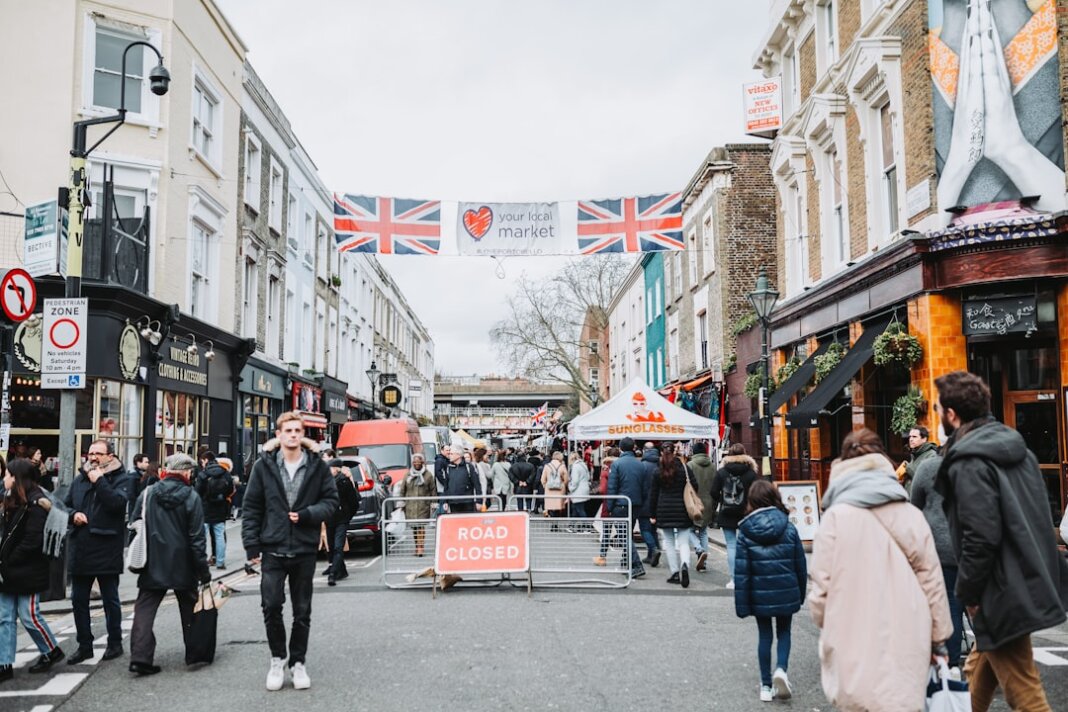
If you want to understand London as it actually exists rather than London as it exists in tourist brochures, you need to spend time in its markets. Markets are where you find actual Londoners doing real things—buying produce, hunting for vintage clothes, grabbing lunch from a street vendor, socializing with neighbors, haggling over prices. Markets are where the city feels alive in a particular way.
London’s market culture goes back centuries. Medieval Londoners conducted business in markets. Georgian Londoners shopped in markets. Victorian Londoners worked in markets. Markets built London’s economy and shaped its neighborhoods. And they still exist today, still serving the same basic function but with a modern twist. Some are touristy, some are for locals, most are a mix. This guide will help you navigate them and find the ones worth your time.
Borough Market
Let’s start with the big one, the most famous, the one every guidebook mentions, the one where every tourist and half of London goes on a Saturday.
Location: South of the river, near London Bridge, in Southwark.
What to expect: Borough Market is the most high-end of London’s food markets. It’s a covered market (built in Victorian times) with permanent stalls and vendors selling high-quality food: artisan cheeses, specialty meats, fresh vegetables, prepared food, bakery items, and about a thousand other things. It’s crowded, especially on weekends. It’s touristy, especially on weekends. But it’s also genuinely good.
What’s actually good here: The prepared food is excellent. Buy a proper steak sandwich from the vendors who do them—it’s expensive but genuinely worth it. The cheese stalls are excellent if you’re interested in British cheese (which you should be—British cheese is genuinely good and not well-known outside Britain). The fishmonger stalls are high-quality. The bakery items are excellent. The vegetable stalls have beautiful, interesting produce that you won’t necessarily find in supermarkets.
When to go: Weekday mornings or early afternoons are much less crowded than weekends. If you go on Saturday or Sunday, go early (before 10 AM) or prepare to navigate crowds. The market is open Monday through Sunday, but the vibe is completely different on weekdays versus weekends. Weekday visitors are mostly older Londoners and people doing regular shopping. Weekend visitors are tourists and people making a day of it.
Food stalls worth seeking out: Pieminister (excellent pies), The Scotch Egg Co. (genuinely good scotch eggs), various roast meat vendors, fish vendors, and countless others. You’ll find your own favorites.
The catch: Borough Market has become victim to its own popularity. It’s expensive, it’s crowded, and it’s been somewhat sanitized for tourist consumption. The real London shopping here is the vegetables and the specialty ingredients—the actual food that Londoners cook with. The prepared food and street food is delicious but pricey.
Best for: High-quality food, British cheese, specialty ingredients, excellent lunch, the experience of an old market hall in London.
Portobello Road Market
Location: Notting Hill, west London.
What to expect: Portobello is famous for antiques and vintage fashion, but it’s actually more diverse than that. The market stretches for about a kilometer along Portobello Road. Different sections specialize in different things: antiques, vintage clothing, produce, street food, bric-a-brac, and art. On a Saturday (the main market day), the street is completely filled with market stalls and it’s absolutely packed with people.
The different sections: The southern end (closer to Notting Hill tube station) has antiques and vintage items. The middle sections have clothing, vintage goods, and a mix of everything. The northern end, beyond the flyover, has a more working-class vibe with fruit and vegetable vendors, household goods, and street food. The character changes depending on where you are along the road.
What to actually do here: If you want to hunt for vintage clothes, antiques, or interesting bric-a-brac, Portobello is genuinely good. The vendors are knowledgeable, the items are interesting, and you might find something genuinely special. The fruit and vegetable vendors at the northern end are where actual Londoners shop for cheap produce. The street food vendors sell excellent lunch—Caribbean food, Italian, Spanish tapas, all sorts of things.
When to go: Saturday is the main market day, and it’s absolutely rammed. You’ll see Portobello at its best and worst on Saturday—best in terms of variety and atmosphere, worst in terms of crowds. Wednesday is an intermediate day with fewer crowds. Other weekdays are much quieter and have fewer stalls. Notting Hill itself is lovely to walk around, so even if you visit Portobello on a less busy day, the area is worth exploring.
The catches: Saturday is genuinely crowded—you might barely be able to move. Prices at the antique end are very high. The vintage clothes stalls have beautiful items but they’re pricey. The “local experience” is less pure than other markets because so many tourists come here. It’s still worth it, but it’s worth understanding it’s become a destination.
Best for: Vintage and antique shopping, interesting bric-a-brac, experiencing one of London’s most famous neighborhoods, street food, people-watching.
Columbia Road Flower Market
Location: East London, near Bethnal Green.
What to expect: This is genuinely one of the loveliest markets in London. It specializes in plants and flowers, but it’s become more diverse, with small retail shops, cafés, and other vendors setting up. The street itself is charming, with independent shops and restaurants alongside the market. Sunday is the main market day, when the street is absolutely packed. Weekdays it’s quiet.
The experience: Walking down Columbia Road on a Sunday morning in spring or summer is genuinely delightful. The smell of flowers is incredible. The vendors are enthusiastic about their plants and happy to talk about them. The pace is slower than Borough or Portobello. Families come, older people come, young people come. It feels like a real neighborhood market.
What to buy: If you’re actually buying, the plants are genuinely good value and genuinely healthy. The flowers are beautiful. There are also small shops along the street selling gifts, vintage items, and art. Some selling plants year-round, some only on Sundays.
The cafés: After browsing the market, there are excellent cafés and small restaurants nearby to sit and have a coffee and brunch. This makes it a legitimate destination for a Sunday morning out.
When to go: Sunday morning is the proper time. It’s busy, but it’s a pleasant busy, not a stressful crowded. The weather matters more here than some markets—a gray, rainy Sunday is less charming than a bright spring Sunday.
The catch: If you can’t take plants home with you, the market is less useful. And honestly, some of the charm is specific to good weather and the right time of year.
Best for: Looking at beautiful plants and flowers, experiencing a lovely neighborhood, brunch, a pleasant Sunday morning outing.
Camden Market
Location: North London, near the canal.
What to expect: Camden is famous for being chaotic, alternative, and youthful. It’s got a reputation for vintage clothing, punk rock aesthetic, and alternative culture. The market itself is massive and sprawls across several areas. It’s absolutely rammed on weekends. It’s worth visiting, but it’s also genuinely quite touristy.
The different sections: Camden Lock Market is the original, set around a lock on the canal. Stable Market and other surrounding areas have been added as the market has expanded. Different sections specialize in different things: clothing, vintage, punk rock merchandise, art, jewelry, and a lot of nondescript tourist stuff.
What’s actually good here: The vintage clothing is genuinely good if you know what you’re looking for. The independent jewelry stalls are interesting. The food stalls are varied and decent (though you can get the same food at other markets without the chaos). The atmosphere and the people-watching is genuinely entertaining.
When to go: Weekends are absolutely rammed and can be more about navigating crowds than enjoying anything. Weekdays are much quieter and more navigable. Thursday to Sunday is when most things are open.
The reality check: Camden has a reputation for being “cool” and “alternative,” and it lives up to that reputation. But it’s been touristy for decades and has been commercialized quite a bit. There are chain shops mixed in with independent stalls now. It’s still worth a visit, but it’s worth understanding it’s both genuinely interesting and somewhat touristy.
Best for: Alternative aesthetic, vintage clothing, people-watching, experiencing London’s youth culture, street food, the canal setting.
Brick Lane Market
Location: East London, in Shoreditch, adjacent to Brick Lane’s famous street art area.
What to expect: Brick Lane has a famous street market on Sundays, but honestly, it’s become increasingly commercialized and touristy. The street itself is far more interesting than the market—it’s famous for street art, independent shops, vintage stores, and restaurants. The Brick Lane market exists, but it’s perhaps less essential than other markets.
The street itself: Brick Lane is worth walking down regardless of the market. The street art is genuinely impressive (it changes constantly), the vintage shops are good, the Indian restaurants are excellent (Brick Lane is London’s famous curry destination), and the independent shops are interesting.
When to go: Sundays for the market atmosphere; any day for the street and shops.
The catch: The market has become quite touristy and less interesting as a result. But the street itself remains genuinely interesting.
Best for: Street art, vintage shopping, curry, experiencing trendy East London.
Maltby Street Market
Location: East London, near Bermondsey.
What to expect: Maltby Street is a newer market in a redeveloped industrial area. It’s set in a railway arch area that’s been transformed into a food and artisan marketplace. It’s got a bit of that “Instagram-famous, touristy but actually quite good” vibe that characterizes some of modern London. Weekend food vendors, craft producers, vintage stalls, and street food.
What’s good here: The food vendors here are genuinely interesting and good. Street food from various cuisines, craft beer stalls, natural wine bars, artisan producers. It’s got a cool, casual vibe without being stuffy.
When to go: Weekends are when the vendors come out. Weekdays it’s quieter or closed.
Best for: Excellent street food, craft beer and wine, modern market atmosphere, weekend exploring.
Leadenhall Market
Location: City of London, near the Tower of London.
What to expect: This is one of London’s oldest markets, dating back to the 14th century. It’s set in a covered Victorian market hall that’s absolutely beautiful. It’s quite small compared to other markets and has become increasingly touristy. It’s still charming, though, and it’s genuinely historic.
The atmosphere: Walking into Leadenhall Market is like stepping into a film set—it’s that picturesque. The architecture is beautiful. The covered hall is atmospheric.
What’s sold: These days it’s mostly tourist-oriented—gift shops, restaurants, touristy things. It’s less of a “real market” than it used to be, more of a historic space that happens to have shops in it.
When to go: Weekdays are quieter and less touristy than weekends. Early mornings or late afternoons are better than peak tourist hours.
Best for: The historic market hall itself, photo opportunities, proximity to the Tower of London, getting a sense of historical London markets.
Broadway Market
Location: East London, Hackney.
What to expect: This is a Saturday market on a street called Broadway Market (creative, I know). It’s got a mix of food vendors, vintage, art, clothing, and general bric-a-brac. It’s got a good local vibe without being as touristy as some of the bigger markets. The street itself has excellent independent shops and restaurants.
The vibe: This is where you see East London locals actually shopping and eating, not just tourists hunting for Instagram moments. It feels like a real neighborhood market.
When to go: Saturday for the market; any time for the shops and restaurants on the street.
Best for: Genuine neighborhood atmosphere, street food, vintage, a neighborhood feel.
Greenwich Market
Location: South London, in Greenwich, near the Royal Observatory and Maritime Museum.
What to expect: Greenwich Market is set in a covered market hall in the historic Greenwich neighborhood. It’s a mix of antiques, vintage, art, crafts, and various other things. It’s become increasingly touristy because Greenwich itself is a major tourist destination.
When to go: Weekdays are less crowded than weekends.
Best for: Proximity to the Royal Observatory and other Greenwich attractions, antiques and crafts, experiencing a historic market, the historic neighborhood.
Smithfield Market
Location: City of London, near Barbican.
What to expect: Smithfield is one of London’s oldest markets, famous historically for meat trading. It’s still a wholesale meat market, but it’s also opened up to be more public-facing. It’s not a tourist market at all—it’s a working market where chefs and food professionals come to buy meat. The atmosphere is very industrial and working-class.
When to go: Early mornings are when the action happens. Daytime it’s quieter.
The catch: It’s not really a leisure market like Borough or Portobello. It’s a working market. But if you want to see real London commerce happening, it’s genuinely interesting.
Best for: Seeing real London working markets, the historical significance, a genuine industrial space.
Spitalfields Market
Location: East London, Spitalfields area.
What to expect: Spitalfields is in a historic building and has become increasingly commercialized. It’s got vintage clothing, antiques, art, and various other goods, but also a lot of tourist-oriented shops. It’s near excellent street art and good restaurants.
When to go: Different days have different vendors and vibes. Thursday through Sunday has the most activity.
Best for: Vintage clothing, the historic building, the neighborhood’s street art and restaurants.
Portobello vs. Camden vs. Borough: Which Should You Actually Go To?
All three are famous, all three are on every tourist list, all three are genuinely good but also genuinely touristy. Here’s my honest take:
Borough if you want excellent food and you’re willing to be around other tourists. Go on a weekday if possible to avoid the absolute crowds.
Portobello if you actually want to shop for vintage clothes or antiques. Saturday is the proper day, but be prepared for crowds. The northern end with fruit and vegetables feels more genuinely local.
Camden if you want to experience London’s alternative youth culture or you’re interested in punk aesthetics. Weekends are packed; weekdays are much better.
Columbia Road if the weather is nice and you want a genuinely lovely experience. Sunday mornings are special.
Broadway Market or Maltby Street if you want a more neighborhood feel with less obvious tourism.
The Bottom Line
London markets exist at every level—from high-end food (Borough) to working-class commerce (Smithfield) to alternative youth culture (Camden) to genuine historic neighborhoods (Columbia Road, Broadway). Go to the ones that appeal to you based on what you’re actually interested in, not just because they’re famous.
The best market experience in London happens when you walk into a space that’s genuinely serving a community or a purpose, and you get to participate in that for a while. Whether that’s shopping for plants on a Sunday in Columbia Road, hunting for vintage clothes in Portobello, or eating excellent street food at Maltby Street, the magic of markets is that they’re actual places where actual London stuff happens.


A Little Bit of London In Your Inbox Weekly. Sign-up for our free weekly London newsletter. Sent every Friday with the latest news from London!