

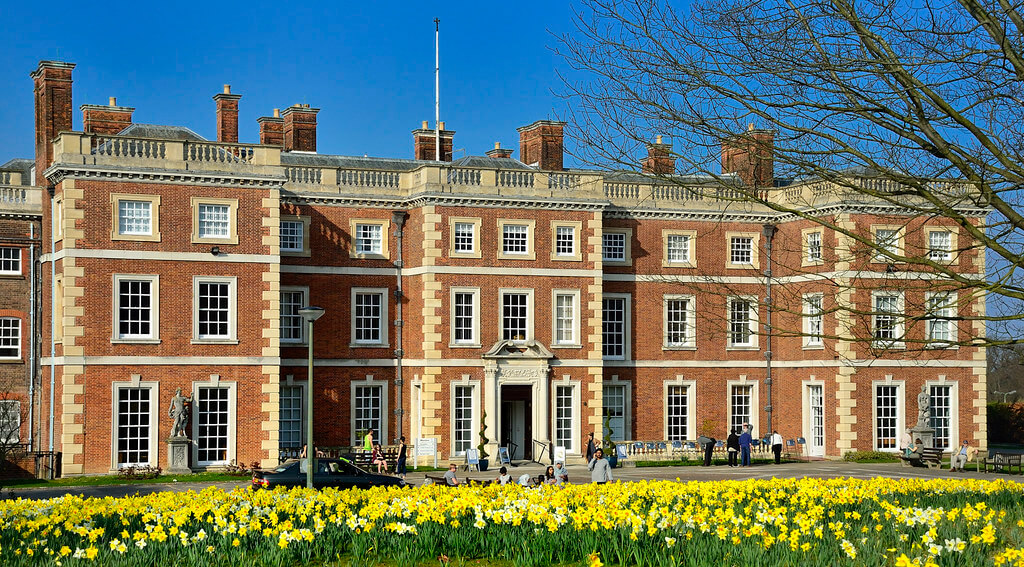

London is getting a remarkable new museum this month. Trent Park House of Secrets opens July 21 in a grand North London mansion with one of the most extraordinary stories of the Second World War—a tale of espionage, deception, and intelligence gathering that remained classified for over seven decades.
Set within the 413-acre Trent Country Park in Enfield, easily accessible via the Piccadilly line, the museum tells two intertwined stories: the glittering interwar social world of Sir Philip Sassoon, whose guests included Winston Churchill, Charlie Chaplin, Fred Astaire, and three kings—and a covert wartime intelligence operation comparable in importance to Bletchley Park.
The Secret Listeners
During the Second World War, Trent Park was transformed into one of the most audacious intelligence operations in history. Senior German officers—including 59 of the highest-ranking generals captured by the Allies—were held here in luxurious surroundings, wined and dined, taken on shopping trips to Harrods, and even treated to lunch at Simpson’s on the Strand.
What none of them knew was that the entire house was bugged.
In concealed basement rooms, teams of “Secret Listeners”—almost all of them German-speaking Jewish refugees who had fled Nazi persecution—recorded and translated every conversation. Hidden microphones were installed everywhere: in walls and skirting boards, light fittings, plant pots, window ledges, the billiard table, even the garden benches. The staircase itself was bugged.
The German generals, lulled into complacency by their comfortable surroundings, spoke freely about military secrets, Hitler’s state of mind, new weapons technology, U-boat bases, and—most chillingly—war crimes they had witnessed or participated in. One prisoner concluded that the British were “too stupid” to bug their conversations. He was catastrophically wrong.
The intelligence gathered at Trent Park provided crucial information about German rockets, flying bombs, jet-propelled aircraft, submarines, and Hitler’s plans for a gas attack on Britain. Lt. Col. St. Clare Grondona later wrote: “Had it not been for the information obtained at these centres, it could have been London and not Hiroshima which was devastated by the first atomic bomb.”
A Story Hidden in Plain Sight
The operation was run by MI19, a branch of British military intelligence, under the direction of Lieutenant Colonel Thomas Kendrick, a former spy who had worked for Britain’s Secret Intelligence Service in prewar Vienna. To further disarm the prisoners, Kendrick hired a fake Scottish aristocrat—”Lord Aberfeldy,” actually an MI19 agent named Ian Munro—to serve as the generals’ welfare officer, claiming to be a cousin of the King sent to ensure they were treated according to their status.
When Churchill learned that captured German generals were being treated to lunches at exclusive London restaurants, he was furious—until he understood that the prisoners spoke more freely when they felt comfortable.
The Secret Listeners themselves came from remarkable backgrounds. Many had fled Nazi Germany and Austria, and found themselves in the extraordinary position of listening to the very regime that had persecuted them. Helen Lederer, a museum trustee and comedian whose grandfather Ernst Lederer was one of the Secret Listeners, spoke at the museum’s café opening last month.
“The fact that my grandfather was a Secret Listener was a secret he took to the grave,” she said. “It means so much that this chapter of little-known history can be told through the museum. To imagine what the Secret Listeners may have felt as they listened to the captive generals upstairs is as important as it is humbling.”
Ernst Lederer worked as a “Stool Pigeon,” mingling with the German generals to manipulate conversations and tease out essential information. His work helped identify where prisoners fitted into the Nazi hierarchy and what intelligence they could be encouraged to reveal.
Sir Philip Sassoon’s Glittering World
Before the war, Trent Park was the country retreat of Sir Philip Sassoon, the flamboyant politician, art collector, and socialite who served as Under-Secretary of State for Air. Sassoon remodeled the house in the 1920s and filled it with guests from the highest echelons of British society.
Kings George V and VI visited. Edward VIII was a regular. Winston Churchill came to paint in what is now the museum’s café—the restored Blue Room, once decorated by artist Rex Whistler. Charlie Chaplin and Fred Astaire were among the celebrities who passed through its doors.
Visitors to the museum will be able to move between both worlds—the glamour of the 1920s and 30s and the covert surveillance operation hidden below stairs.
What You’ll See
The museum is spread over two floors of Trent Park House, featuring magnificently restored rooms that were the backdrop to Sassoon’s socialite world alongside the extraordinary story of the wartime intelligence operation. There’s a café in the restored Blue Room, a gift shop, and a Clore Learning Space for educational programs.
“For decades the story of Trent Park has been hidden in plain sight,” said Dr. Giuseppe Albano MBE, Director of Trent Park House of Secrets. “Many people were aware that something unusual had happened here during the war, but its full significance only became clear much later, and that is what makes it such a compelling place to explore today. We are opening the house with many secrets to share, and there will be more to discover in the years ahead as the story of Trent Park continues to unfold.”
Visiting Information
Opening date: July 21, 2026
Hours: Tuesday to Sunday, 10am–5pm (closed Mondays)
Tickets: Adults £14, Students £12, Children (5–17) £12, Under 5s free
Getting there: The nearest Underground stations are Cockfosters and Oakwood, both on the Piccadilly line, approximately a 20-minute walk from Trent Park House. Free parking is available in the Trent Country Park car parks.
Address: Trent Park House of Secrets, Daffodil Crescent, Enfield EN4 0PS
Booking: Advance tickets available from early July at trentparkhouse.org.uk. Tickets can also be purchased at the museum shop from July 21, subject to availability.
The museum is wheelchair and buggy accessible to both floors via a lift, with accessible toilets on the ground floor and a hearing loop available.


A Little Bit of London In Your Inbox Weekly. Sign-up for our free weekly London newsletter. Sent every Friday with the latest news from London!