


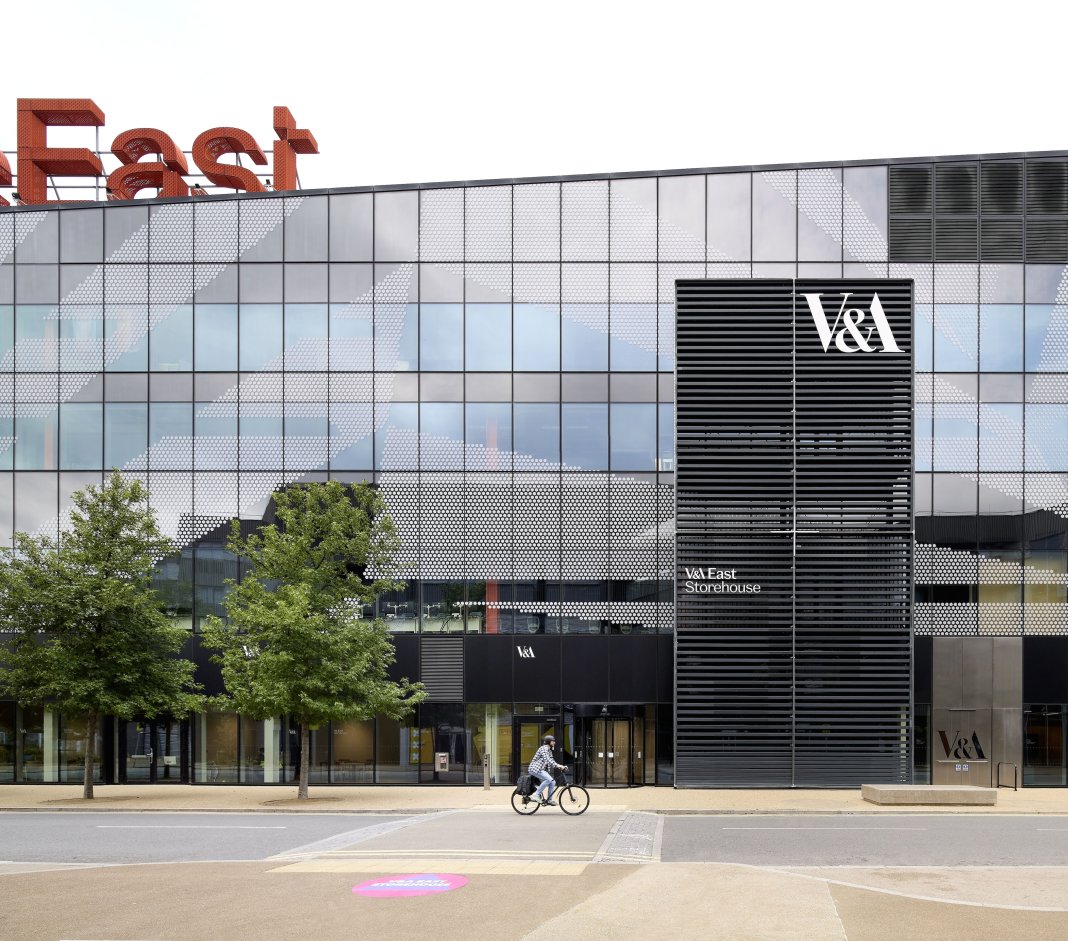

London’s cultural landscape is about to be transformed forever. On Saturday, May 31, 2025, the V&A East Storehouse opens its doors to the public, introducing a completely new type of museum experience that blurs the lines between storage facility, working museum, and interactive cultural destination. This isn’t just another museum opening—it’s a paradigm shift that could change how we think about accessing art, design, and cultural heritage worldwide.
Breaking Down Museum Walls
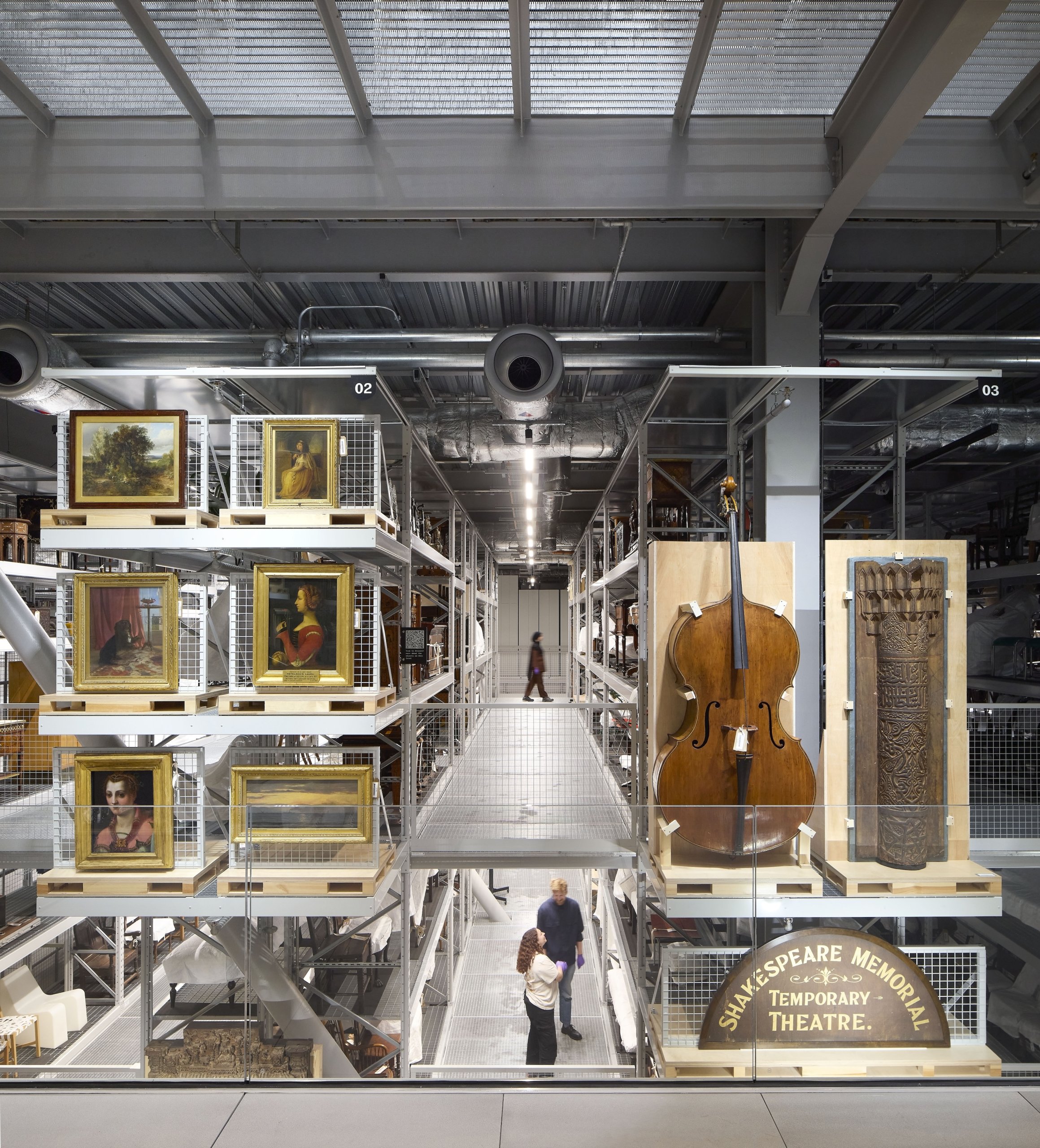
For centuries, museums have operated on a simple principle: a small percentage of collections are displayed in carefully curated galleries, while the vast majority remains hidden away in storage, accessible only to researchers and scholars. The V&A East Storehouse shatters this model entirely. Designed by world-renowned architects Diller, Scofidio + Renfro—the visionaries behind New York’s High Line and Lincoln Center renovations—this groundbreaking facility gives the public unprecedented access to over half a million works spanning every creative discipline imaginable.
“V&A East Storehouse is a completely new cultural experience and backstage pass to the V&A, transforming how people can access their national collections on a scale unimaginable until now,” explains Tim Reeve, Deputy Director and COO of the V&A, who developed the concept. This isn’t hyperbole—it’s a revolution 10 years in the making.
The Numbers Are Staggering
Spanning 16,000 square meters—larger than 30 basketball courts—the V&A East Storehouse houses over 250,000 objects, 350,000 books, and 1,000 archives in a purpose-built facility that occupies a significant portion of the former London 2012 Olympics Media and Broadcast Centre. This makes it a world-first in size, scale, and ambition, offering visitors access to everything from ancient Egyptian textiles to contemporary street art, from medieval manuscripts to modern fashion, from classical sculptures to pop culture memorabilia.
The facility represents the largest single expansion of public access to museum collections in history. To put this in perspective, most major museums display only 3-5% of their holdings at any given time. The V&A East Storehouse makes accessible approximately 15% of the entire V&A collection, with the revolutionary “Order an Object” service providing on-demand access to virtually everything else.
Revolutionary “Order an Object” Experience
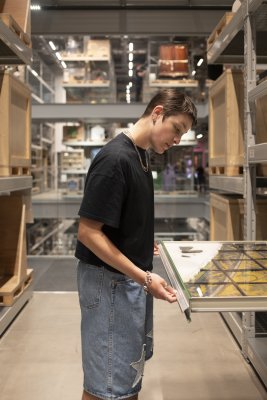
Perhaps the most innovative aspect of the V&A East Storehouse is the “Order an Object” service—a concept so novel it has no parallel anywhere in the world. Through this system, visitors can browse the V&A’s entire collection online, select up to five items that intrigue them, book a viewing appointment, and see these objects up close in dedicated study spaces.
Since the service went live on May 13, the response has been overwhelming. Over 250 appointments have already been booked to examine more than 1,000 objects, ranging from 14th-century ceramics to contemporary fashion. The most popular item? A stunning 1954 pink silk taffeta evening dress by Cristóbal Balenciaga—a testament to the enduring appeal of haute couture.
“These are your collections, and through Order an Object, you can have a personal experience with them—seeing them up-close, on demand, in ways that mean something to you,” explains Kate Parsons, Director of Collections Care and Access at the V&A. “Want to look closer at an iconic Jimi Hendrix poster or a Marcel Breuer desk? Study the stitching of a Dior dress or legendary Comme des Garcons or Azzedine Alaïa look? Examine an ancient Egyptian woven textile fragment with a story to tell? You decide what you want to order and why.”
This democratization of access extends to extraordinary pieces typically reserved for scholars: Mid-Century furniture, ancient Egyptian artifacts, Roman frescoes, early 14th-century Simone Martini paintings, Leigh Bowery costumes, Althea McNish fabrics, vintage band t-shirts, performance posters, and avant-garde fashion from legendary houses like Balenciaga, Schiaparelli, Comme des Garcons, Issey Miyake, and Vivienne Westwood.
The Architectural Marvel: A Building Turned Inside-Out
The architectural design itself tells a story of innovation. Elizabeth Diller, Founding Partner of Diller Scofidio + Renfro, describes the challenge: “To celebrate the heterogeneity of the V&A’s collection of collections—spanning a broad variety of mediums, scales, and historical periods—visitors will experience a sense of being immersed in a vast Cabinet of Curiosities.”
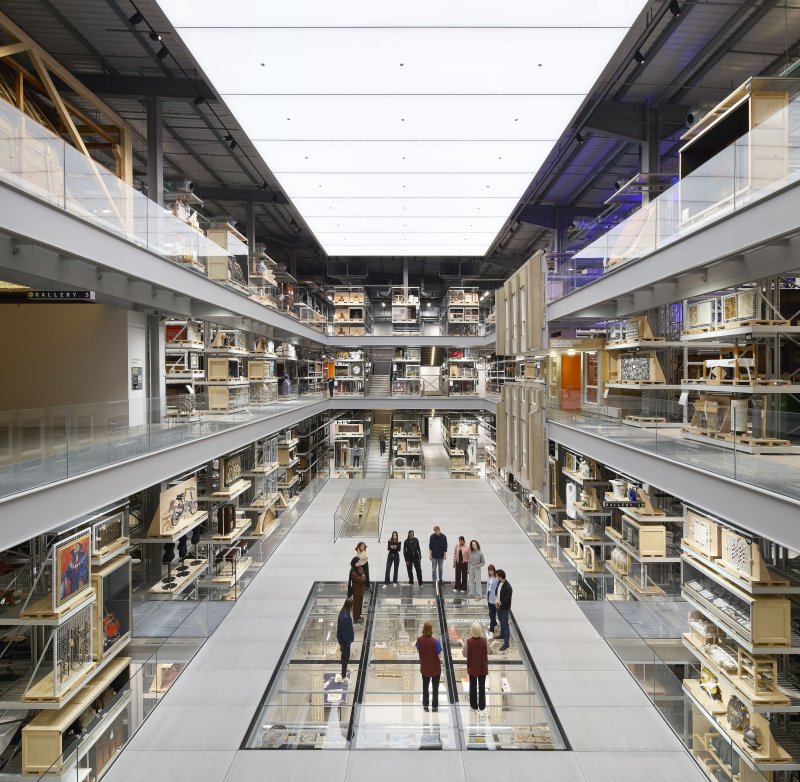
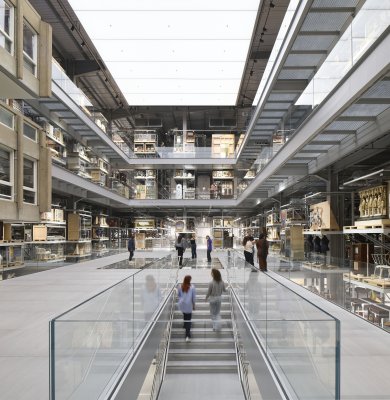
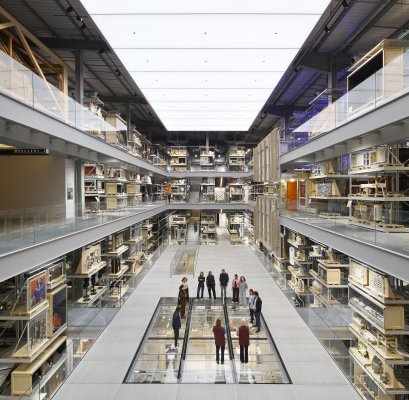
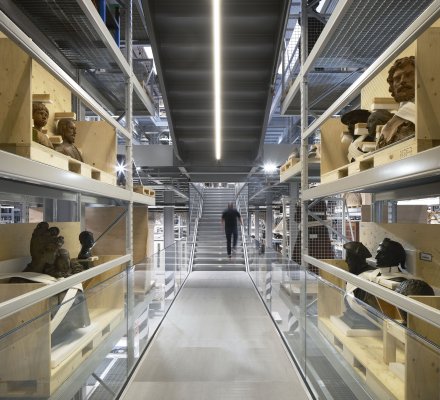
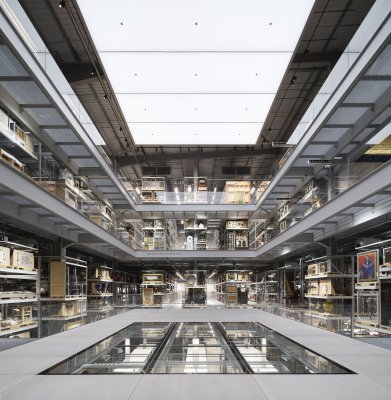
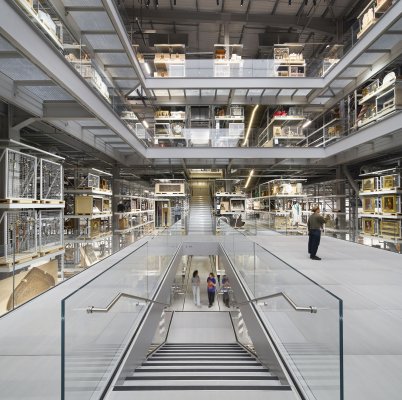
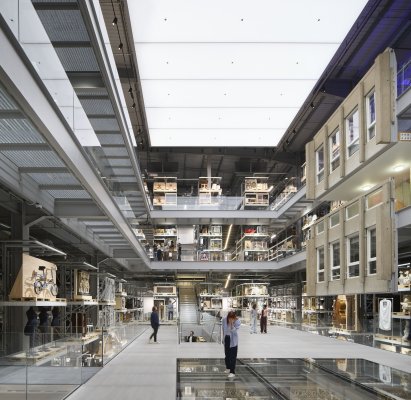
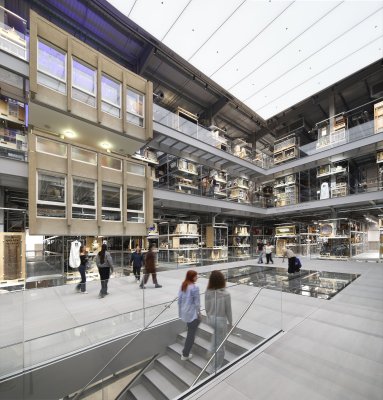
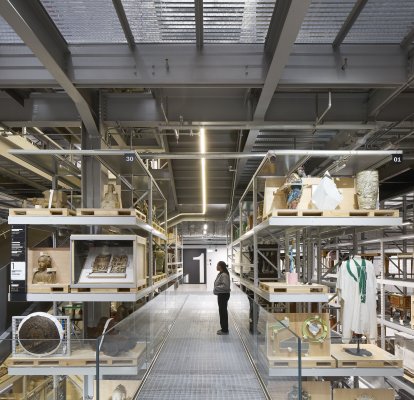
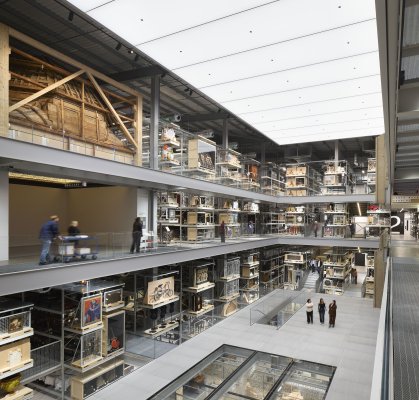
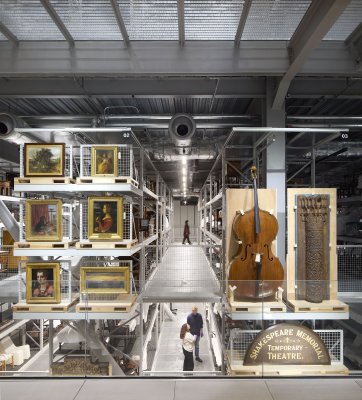
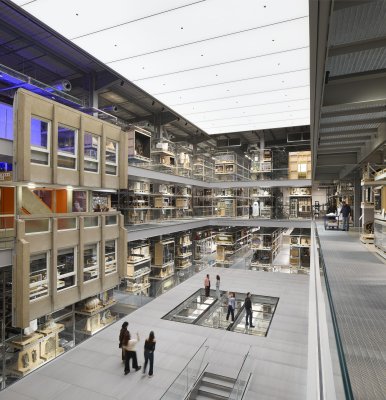
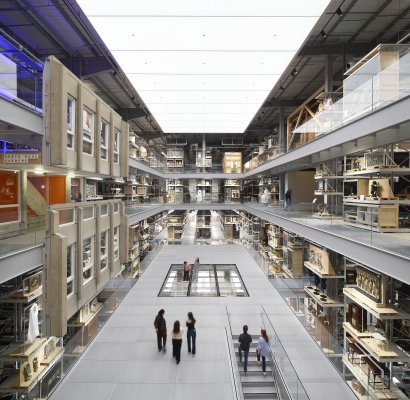
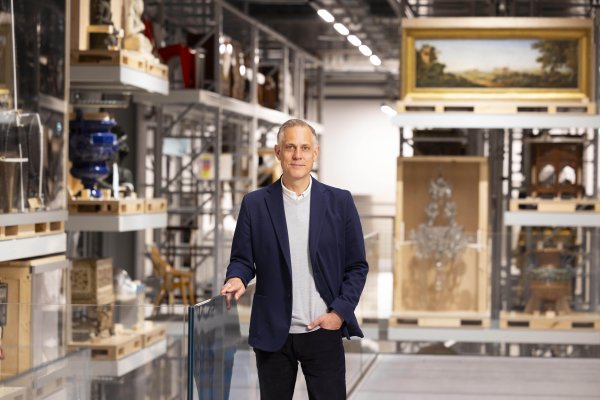
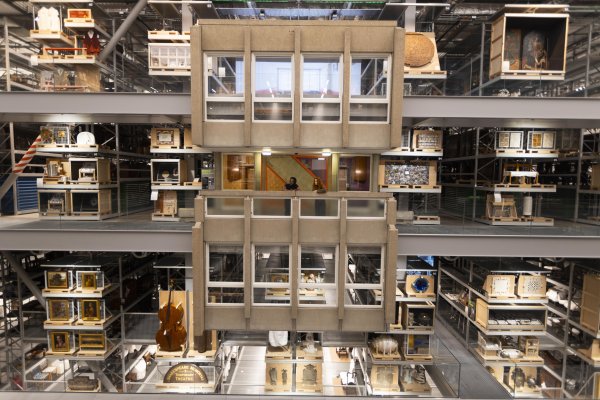
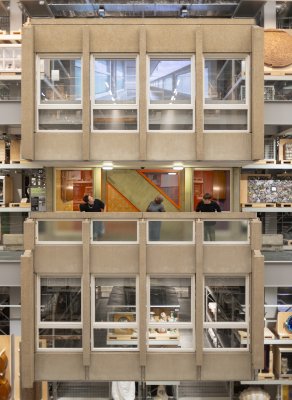
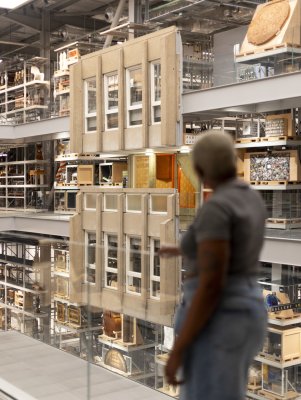
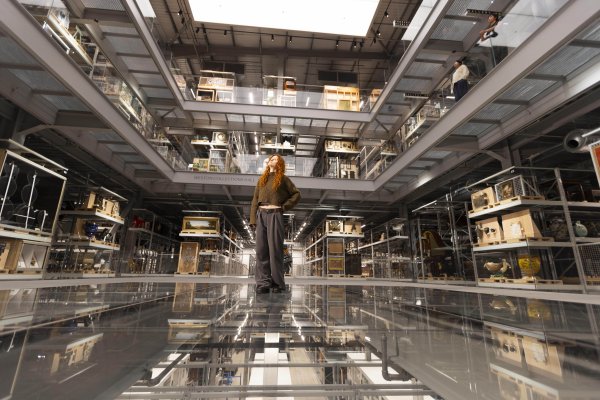
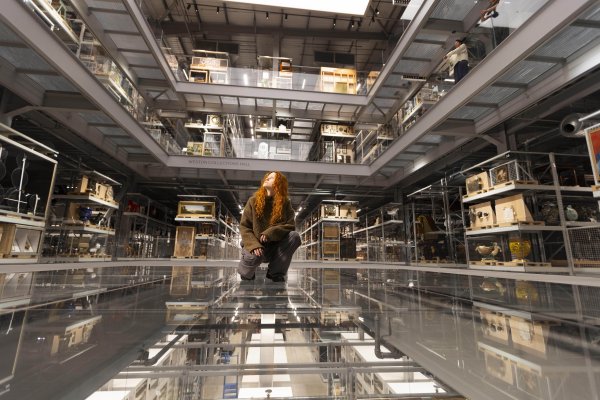
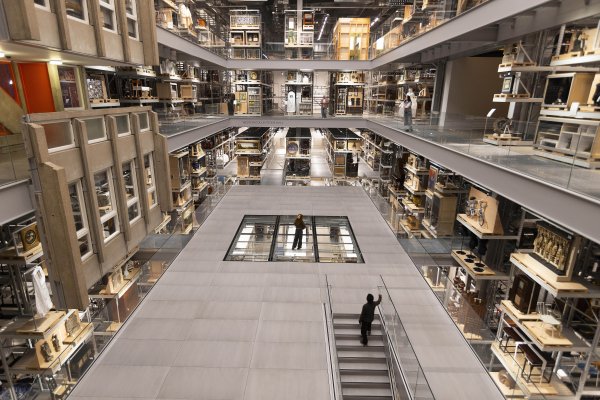
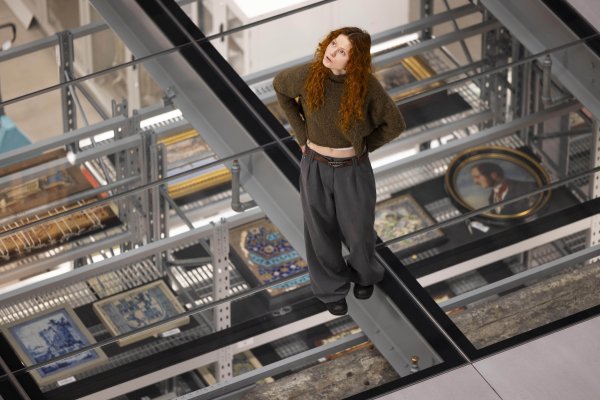
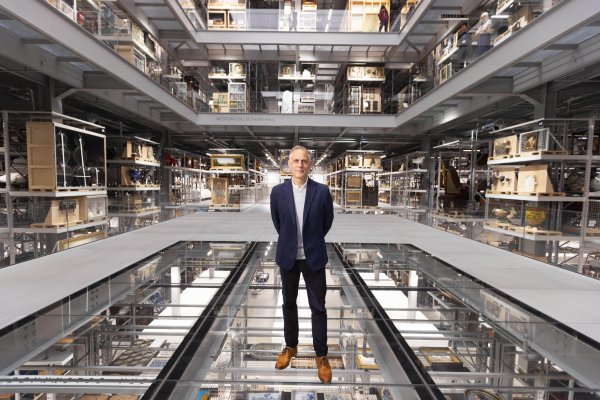
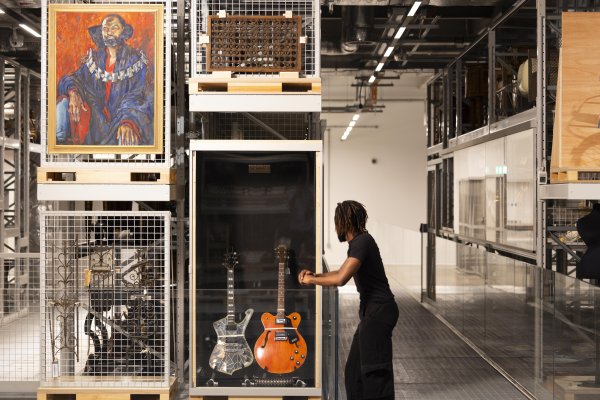
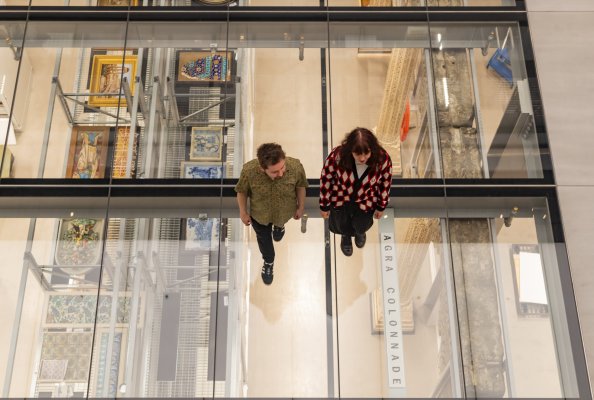
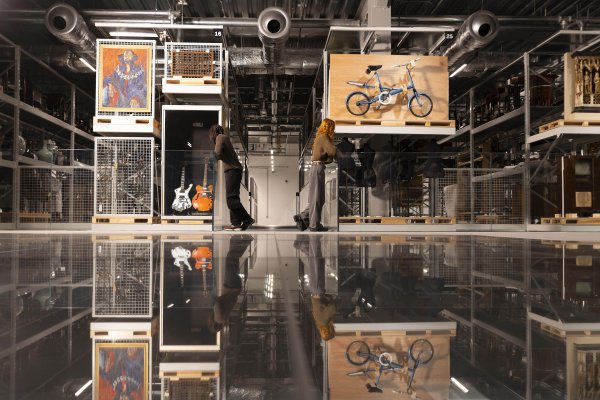
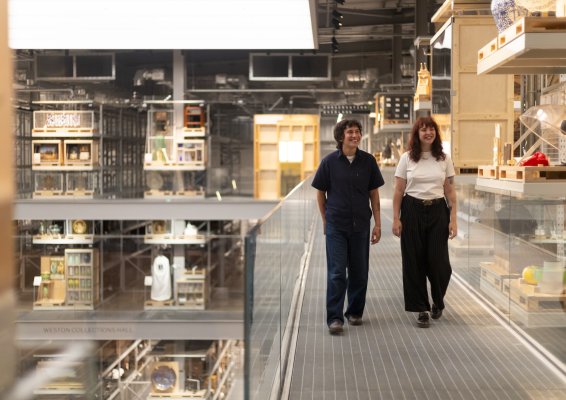
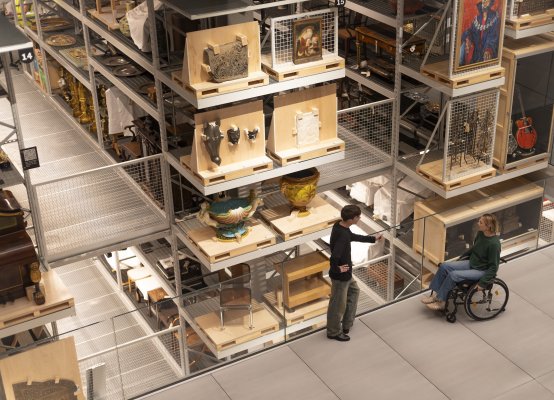
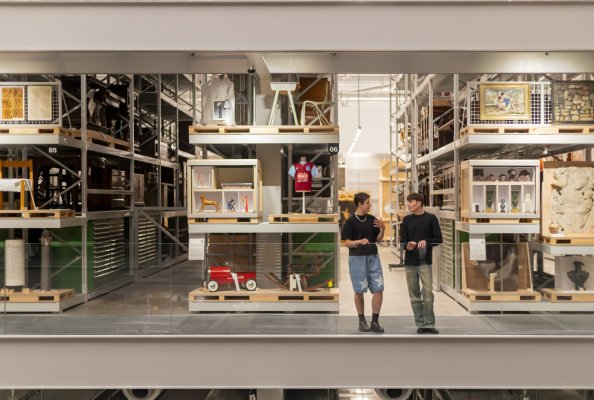
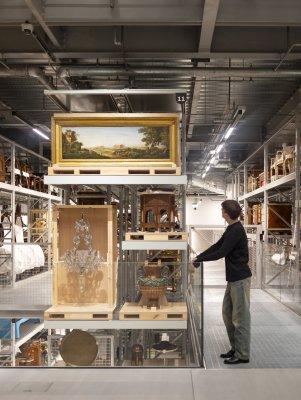
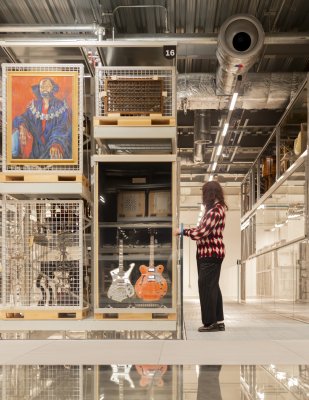
The solution was radical: turn the traditional museum inside-out. Visitors enter through a street-level lobby and pass through a walkway that cuts directly through the storage racks before emerging into the spectacular 20-meter-high Weston Collections Hall. This dramatic central space feels like a void carved from a solid mass of stored treasures, with artifacts visible in every direction—even beneath your feet through sections of glass flooring.
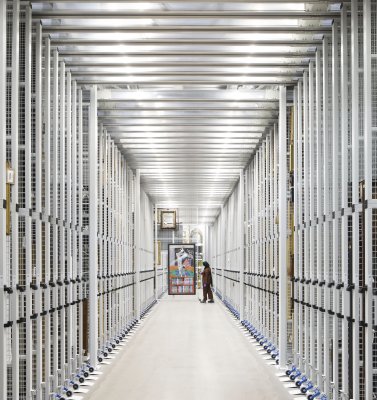
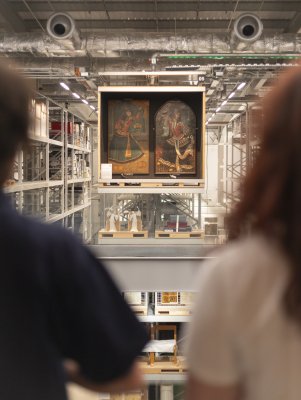
The building operates on concentric layers of accessibility. The innermost layer exposes open crates and displays to the public. The middle layer functions as a semi-public archive. The outermost layer contains private spaces for conservation work, research, and deep storage. This innovative approach creates what the architects call “a hybrid shared by staff and the public with expanded opportunities for access and exchange.”
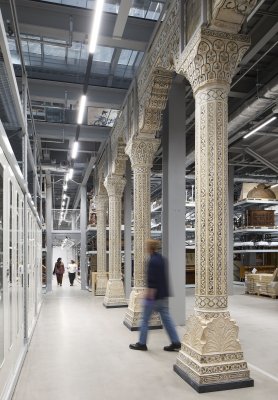
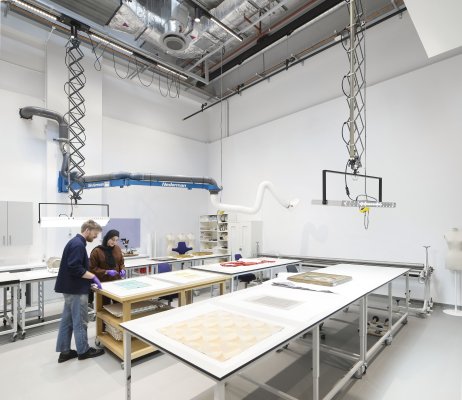
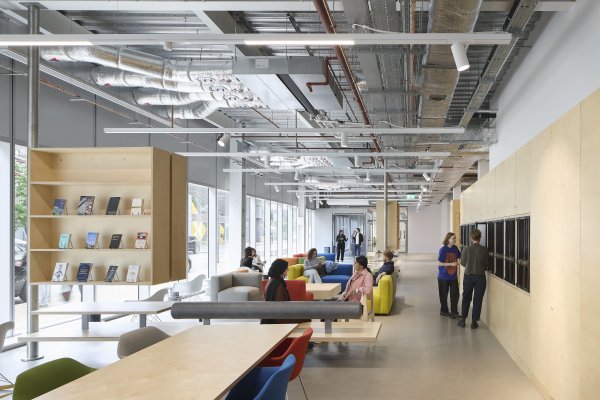
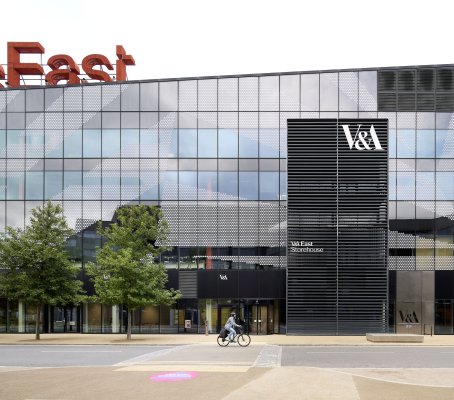
Here’s a gallery of pictures of the architecture:
Monumental Objects Return to Public View
One of the most exciting aspects of the V&A East Storehouse is the display of six large-scale objects that haven’t been seen by the public for decades due to their size. These installations represent some of the most ambitious technical challenges the V&A has ever undertaken, requiring years of dedicated conservation work and complex engineering solutions.
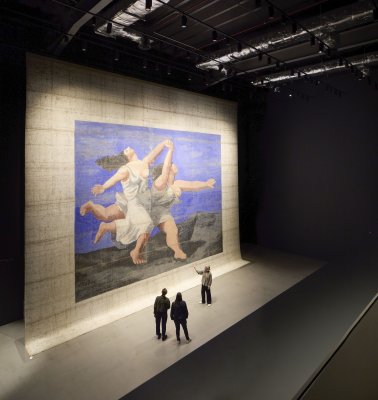
The centerpiece is undoubtedly the largest Pablo Picasso work in the world: a monumental Ballets Russes “Le Train Bleu” theater stage cloth standing over 10 meters high and 11 meters wide. This extraordinary piece, signed by Picasso himself, has been rarely displayed since its debut in 1924 and is now housed in the purpose-built David and Molly Lowell Borthwick Gallery.
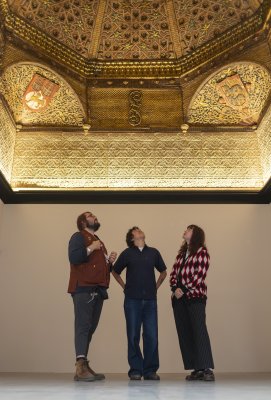
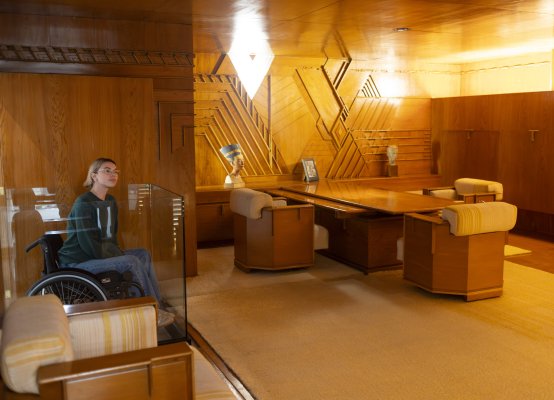
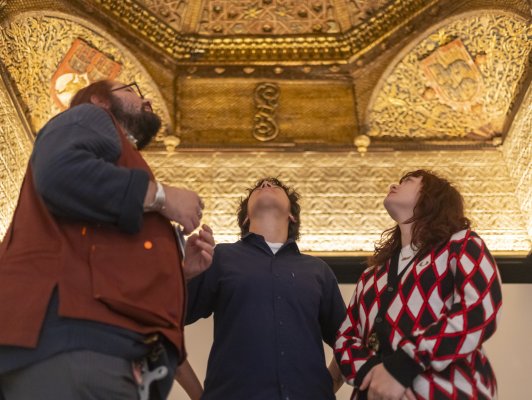
Equally impressive is the 1930s Kaufmann Office—the only complete Frank Lloyd Wright interior outside of the United States. This architectural treasure gives visitors the opportunity to step inside a Wright-designed space without traveling to America. Alongside it sits an exquisite 15th-century carved and gilded wooden ceiling from the now-lost Torrijos Palace near Toledo, Spain—a masterpiece of Renaissance craftsmanship that survived the centuries only to find a new home in East London.
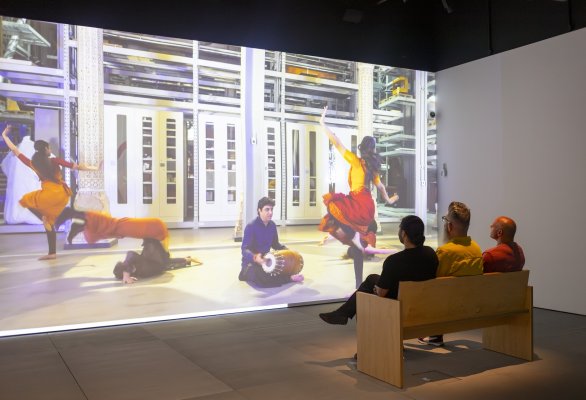
The collection of large objects also includes a full-scale Frankfurt Kitchen designed by Margarete Schütte-Lihotzky, which transformed kitchen design in the 20th century; an architectural fragment from Robin Hood Gardens, the controversial Brutalist housing estate in nearby Poplar; and the 17th-century Agra Colonnade, an extraordinary example of Mughal architecture from the bathhouse at the fort of Agra.
These monumental pieces are enhanced by innovative co-production projects created in collaboration with young East Londoners, communities, and creatives. For the Agra Colonnade, these include new artworks exploring the architecture and stone carving techniques of Mughal artisans, as well as a film featuring young dancers from South Asian backgrounds performing in response to themes of identity and belonging. The Robin Hood Gardens display incorporates oral history recordings from former residents, new publications featuring essays and poetry, and artworks created through an eight-month mentoring scheme.
Living, Breathing Museum Operations
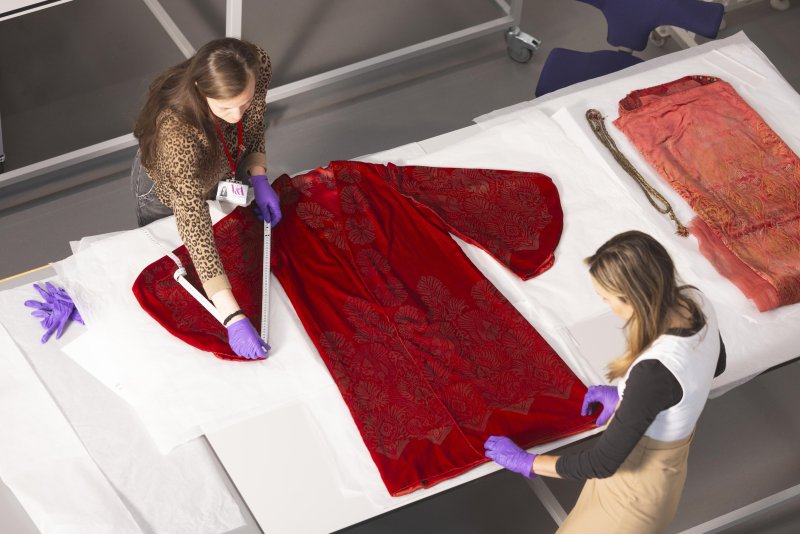
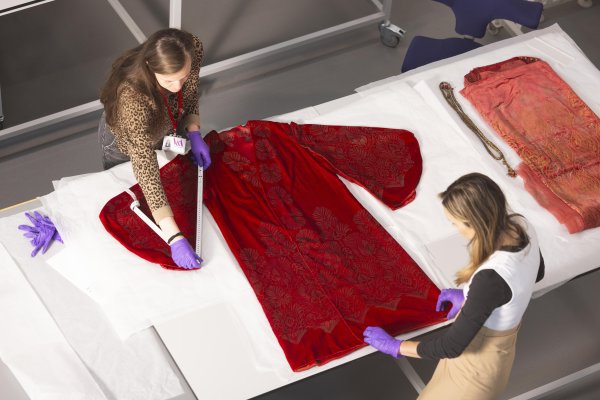
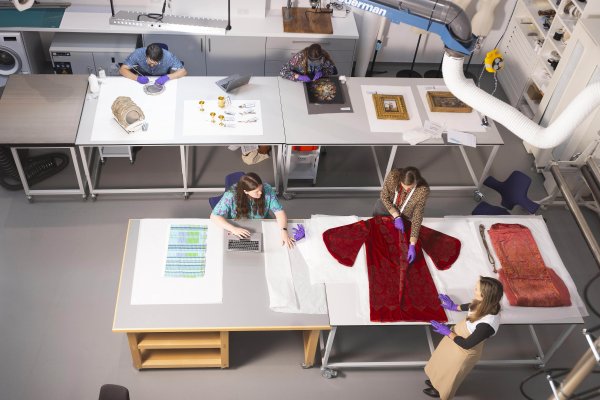
Unlike traditional museums where conservation and curation happen behind closed doors, the V&A East Storehouse puts these essential activities on full display. Visitors can watch conservators at work through glass overlooks into four state-of-the-art conservation studios, with live feeds and mobile cameras allowing conservators to demonstrate their techniques and interact with the public.
The facility houses new photography and post-production studios where the V&A’s collections are documented using advanced techniques including 3D modeling, photogrammetry, and infrared thermography. Visitors can observe Collections Care and Access teams using specialized equipment to move and install objects, with museum technicians opening threshold gates whenever safe to allow public access to ongoing activities.
“V&A East Storehouse is a hive of activity and rare opportunity to watch, listen and get up close to the day-to-day activity of a busy working museum store,” notes Kate Parsons. “From intricate conservation work to new acquisitions arriving for processing, and objects being installed or carefully packed by our specialist technicians to go in and out on loan, there’s always something new to see here.”
Curated Mini-Displays: A New Way to Discover
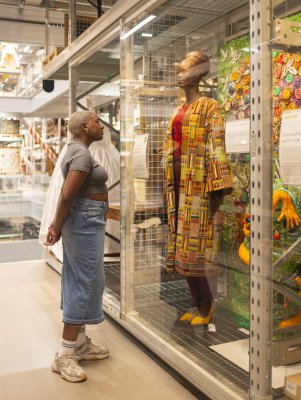
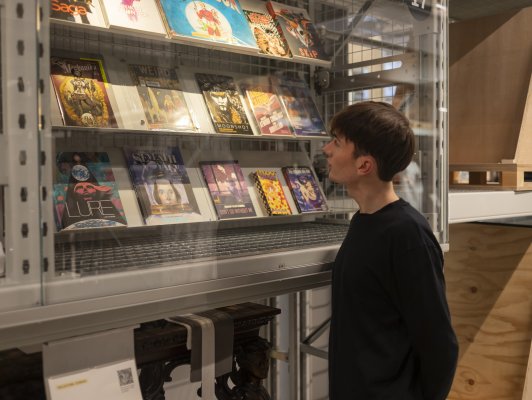
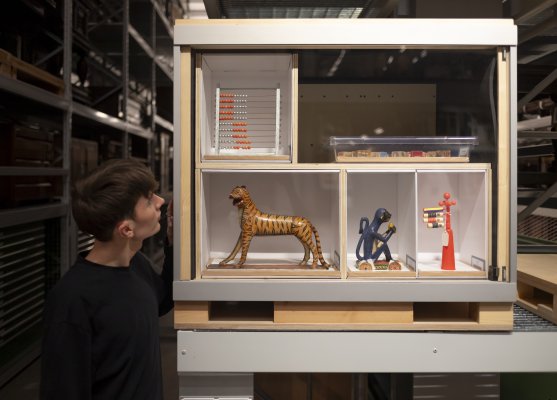
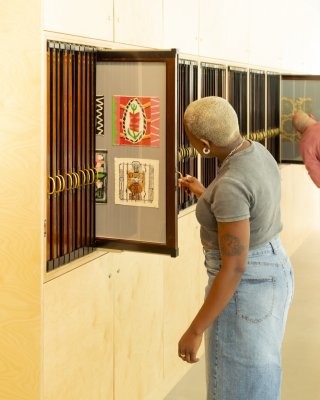
The central Weston Collections Hall features over 100 mini curated displays literally “hacked” into the ends and sides of storage racking. These flexible displays, organized around three themes—Collecting Stories, Sourcebook for Design, and The Working Museum—change regularly and tell diverse, topical stories about the V&A’s collections.
Current displays showcase the breadth and diversity of the collections with items ranging from ancient Buddhist sculpture to PJ Harvey’s guitar, paintings by Angelica Kauffman’s circle to costumes worn by Vivien Leigh, works by contemporary artists Sir Frank Bowling and Hew Locke to items from the Glastonbury Music Festival, Suffragette scarves to vintage football shirts, and Thomas Heatherwick’s model for the London 2012 Olympic Cauldron to road signs designed by Margaret Calvert.
Specialized displays focus on contemporary issues and historical connections. “African Textiles: Archives of Knowledge” unites newly acquired fashion by Imane Ayissi with Xanthe Somers’ 2022 sculpture exploring colonial history in Zimbabwe and Sanaa Gateja’s intricate wall hanging reflecting on the importance of beads in African history. “Conservation – Modern Materials” explores how synthetic materials deteriorate over time, featuring everything from Vivienne Westwood’s 1990s rubberized cotton raincoat to electronics including headphones and iPhones. “Collecting Protest” examines creativity’s power to bring social change, displaying items from a 1993 Hackney Pride t-shirt to a c.1910 “VOTES FOR WOMEN” scarf.
Interactive Experiences and Daily Programming
Beyond the self-guided experience, the V&A East Storehouse offers daily “Object Encounters”—serendipitous opportunities for small groups to go behind the scenes with Collections Access team members. These intimate sessions, limited to six people and available for same-day signup, feature different objects each day.
Early Object Encounters include examining a 1958 Givenchy silk taffeta evening cape like that worn by Audrey Hepburn in “Funny Face,” exploring a 16th-century Japanese suit of armor altered over generations, studying Arne Jacobsen’s iconic 1958-designed Egg armchair, investigating a rare 17th-century Iranian astronomical instrument, and discovering a 1980-designed Punk helmet hat complete with red ostrich feather ‘mohawk’ by milliner and artist David Shilling.
The Study Centre and Research Facilities
The V&A East Storehouse’s Study Centre serves as the hub for the Order an Object service and houses multiple specialized research spaces. The Clothworkers’ Centre for the Study and Conservation of Textiles and Fashion provides access to the V&A’s collection of over 100,000 items of fashion, accessories, and textiles. The Patricia Baines Seminar Room and dedicated reading room offer spaces for scholarly research, while a specialized digital viewing area provides access to born-digital art and design as well as the V&A’s National Video Archive of Performance (NVAP).
The NVAP contains over 300 live performance recordings made since 1992, including significant productions like Royal Court Theatre’s “Jerusalem” by Jez Butterworth (2009) and Bush Theatre’s “Strange Fruit” by Caryl Philips (2019). From September 13, 2025, the Study Centre will also house the David Bowie Centre, providing access to David Bowie’s archive in a dedicated space made possible by the David Bowie Estate and generous donations from the Blavatnik Family Foundation and Warner Music Group.
Archives and Special Collections
The V&A East Storehouse serves as home to the V&A’s Archive of Art and Design and Archive of Theatre & Performance, comprising over 1,000 individual archives from creative luminaries and organizations. These range from personal papers of Vivien Leigh to comprehensive records of Talawa Theatre Company (the first Black British Theatre Company), from Wilton’s Music Hall archives to The Glastonbury Festival Archive, from the design papers of Lucienne and Robin Day to the complete archives of fashion houses like Worth and Paquin.
Notable holdings include Cecil Beaton’s scrapbooks, Sir Eduardo Paolozzi’s Krazy Kat Arkive of Twentieth Century Popular Culture, and comprehensive Biba fashion house records. The facility also houses over 10,000 National Art Library items, including extensive collections of comic books and graphic novels. Access to these archival treasures can be arranged by appointment through the V&A’s archive and library enquiry service.
A Hub for Contemporary Creative Programming
The V&A East Storehouse isn’t just about historical collections—it’s a vibrant space for contemporary creative programming. The opening season features specially curated events celebrating East London’s creative community and exploring themes relevant to the local area.
The inaugural live event, “back2back: Archival Bodies,” takes place on June 7, 2025, taking over all three publicly accessible floors with installations, DJ sets, live performances, and unique experiences celebrating East London talent. The event explores themes of intimacy, care, and trust, with creative collective playbody reimagining the entire space as a playground through installations, sound, performance, and interventions.
Ongoing programming includes “A Life in the Work of Others,” a new series where artists, designers, and creatives share their creative journeys and the works that have inspired them. Turner Prize-winning artist Jasleen Kaur launches the series on June 26, followed by artist Abbas Zahedi on August 21. “How We Made It” focuses on single creative projects, beginning July 17 with experiential art collective Marshmallow Laser Feast.
Community Engagement and Learning Opportunities
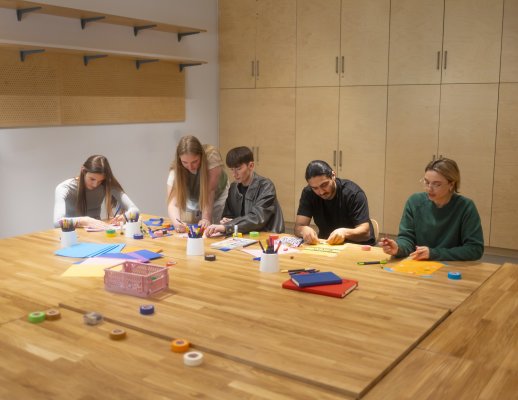
Central to the V&A East Storehouse mission is community engagement, particularly with young people from East London. The facility houses the Foyle Creative Centre with four state-of-the-art studio and workshop spaces for hands-on making and participatory events designed for schools, community groups, and the public.
The V&A East Youth Collective—a rolling 10-month paid opportunity for East Londoners between 16 and 24—plays a key role in shaping the institution. Now in its fifth cohort, Youth Collective members contribute to programming, gallery design, brand development, and creative commissions. Their mixed media artwork “How We Make”—a reimagined East London tube map highlighting cultural places important to Youth Collective members—features prominently in the opening displays.
The V&A has prioritized local employment, with 77% of new Front of House and Collections Access team recruits living in the four Olympic Boroughs (Hackney, Newham, Tower Hamlets, Waltham Forest). This commitment extends to working with local organizations including Newham-based Nourishment, a collective connecting Black British creatives with arts and culture, which leads a new drop-in program called “Ideas Exchange” for East London-based creatives.
Dining and Social Spaces
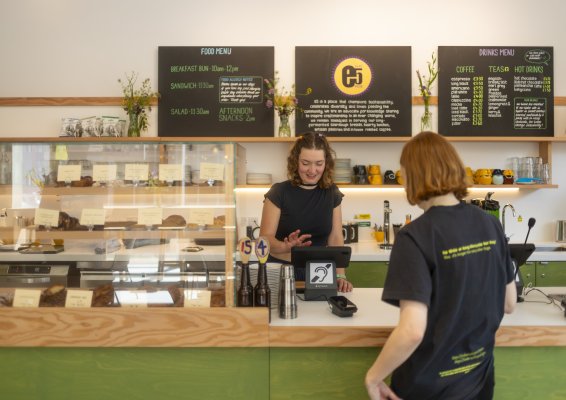
The V&A East Storehouse experience extends beyond the collections to include e5 Storehouse, a new café and social space from the team behind the acclaimed e5 Bakehouse and Poplar Bakehouse. Open for breakfast, throughout the day, and two evenings a week (Thursday and Saturday), e5 Storehouse offers locally sourced food and drink with a seasonal menu covering pastries, breakfast items, sandwiches, and salads, including extensive vegetarian, vegan, and gluten-free options.
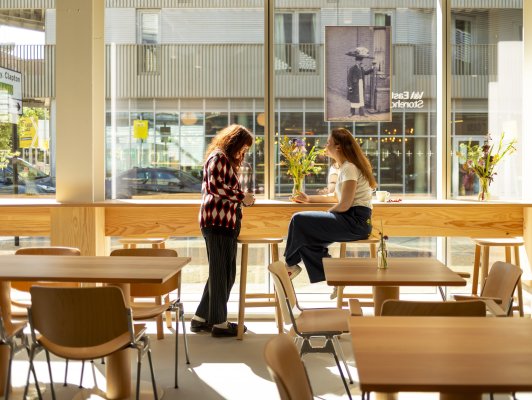
The café space, designed by emerging architecture studio ‘Thing’ in collaboration with e5, features warm solid Douglas fir, bold blocks of color, and flowing white muslin, referencing the baking and milling traditions of e5 Bakehouse’s original railway arch home. Three striking light boxes spotlighting photography from the V&A’s collection highlight the historical significance of wheat growing and baking in East London, connecting the space to local heritage.
Fashion and Design Innovation
Even the staff uniforms represent innovation and local connection. Dublin-born designer Robyn Lynch, whose studio has been based in Hackney Wick since 2019, designed V&A East’s staff uniforms in consultation with the Youth Collective. Inspired by 1990s vintage fishing vests and exploring themes of nostalgia and practicality, Lynch created a burnt orange vest designed to be worn layered over staff’s own clothing.
The uniform showcases the design process through screen-printed visible labels detailing locations where the garment’s fabric was designed, constructed, and screen-printed. This transparency reflects the V&A East Storehouse’s broader commitment to revealing usually hidden processes and celebrating East London’s rich heritage of making.
A New Model for Cultural Access
The V&A East Storehouse represents more than a new tourist attraction—it’s a blueprint for the future of cultural institutions worldwide. By eliminating traditional barriers between collections and public, between conservation and exhibition, between storage and display, it creates a new model that other museums are already studying and considering for implementation.
Museums Minister Sir Chris Bryant praised the innovation: “It’s great to see the V&A innovating in this way – V&A East Storehouse makes it possible for everyone to delve into a massive treasure trove of art, design and performance history in ways never seen before.”
The Mayor of London, Sadiq Khan, emphasized the broader significance: “V&A East Storehouse is a brand-new, groundbreaking museum experience in East Bank, London’s new educational and cultural district, that will revolutionise access to the world’s leading collection of art, design and performance.”
Part of a Larger Cultural Renaissance
The V&A East Storehouse is the first of two V&A East destinations to open in East London. The second, V&A East Museum, scheduled to open in spring 2026, will celebrate making and creativity’s power to bring change. Created with young people and rooted in East London’s heritage, the museum will spotlight the people, ideas, and creativity shaping global culture today.
Both institutions are part of East Bank, the UK’s newest cultural quarter at the heart of Queen Elizabeth Olympic Park. This ambitious development represents the biggest cultural investment ever made by the Mayor of London, with support from HM Government and the four Olympic boroughs. East Bank includes BBC Music Studios, London College of Fashion (UAL), Sadler’s Wells East, UCL (University College London), and the two V&A East venues.
London College of Fashion and UCL East opened in autumn 2023, Sadler’s Wells East opened in February 2025, and the V&A East Storehouse opens May 31, 2025. The V&A East Museum follows in spring 2026, with BBC Music Studios completing the development in late 2026/early 2027. Together, these institutions create a powerhouse for innovation, creativity, and learning rooted in East London’s diverse communities while reflecting the creative spirit and legacy of the London 2012 Olympic and Paralympic Games.
Gallery of the New Museum
Here is a gallery of pictures of the new museum that were sent to us by the V&A and used with permission.



Planning Your Visit
Opening Date: Saturday, May 31, 2025
Opening Hours:
- Daily: 10:00 AM – 6:00 PM
- Late nights: Thursday and Saturday until 10:00 PM (includes access to Order an Object service, special events, and e5 Storehouse)
Location: V&A East Storehouse is located within Here East (the former London 2012 Olympics Media and Broadcast Centre) in Queen Elizabeth Olympic Park, Stratford, East London.
Getting There:
- By Tube: Stratford station (Central, Jubilee, and DLR lines) – approximately 10-minute walk to Here East
- By Bus: Multiple bus routes serve Stratford, including the 25, 86, 97, 104, 158, 241, 262, 308, 339, 425, and 473
- By Train: Stratford station serves Greater Anglia, London Overground, and TfL Rail services
- By Car: Limited parking available at Here East; public transport strongly recommended
- By Bike: Cycle parking available on site
Booking:
- General admission is free, though advance booking recommended during peak periods
- Order an Object appointments must be booked in advance via the V&A website
- Object Encounters are available for same-day signup (groups of up to 6 people)
- David Bowie Centre access begins September 13, 2025 (booking details to be announced)
Access: The facility is fully accessible, with step-free access throughout and facilities for visitors with mobility, sensory, and learning differences.
What to Bring: Photography is permitted in most areas (no flash), making the V&A East Storehouse perfect for social media enthusiasts and art lovers alike.
The V&A East Storehouse isn’t just London’s newest cultural attraction—it’s a glimpse into the future of how we experience and interact with our shared cultural heritage. For tourists seeking something genuinely unique and locals wanting to rediscover their national collections, this revolutionary space offers unprecedented access to half a millennium of human creativity, all housed in one of London’s most innovative architectural spaces. Whether you’re a fashion enthusiast eager to examine couture construction techniques, a design lover wanting to study iconic furniture pieces, or simply curious about the treasures usually hidden away in museum storage, the V&A East Storehouse provides an experience unlike anywhere else in the world.
A Little Bit of London In Your Inbox Weekly. Sign-up for our free weekly London newsletter. Sent every Friday with the latest news from London!