


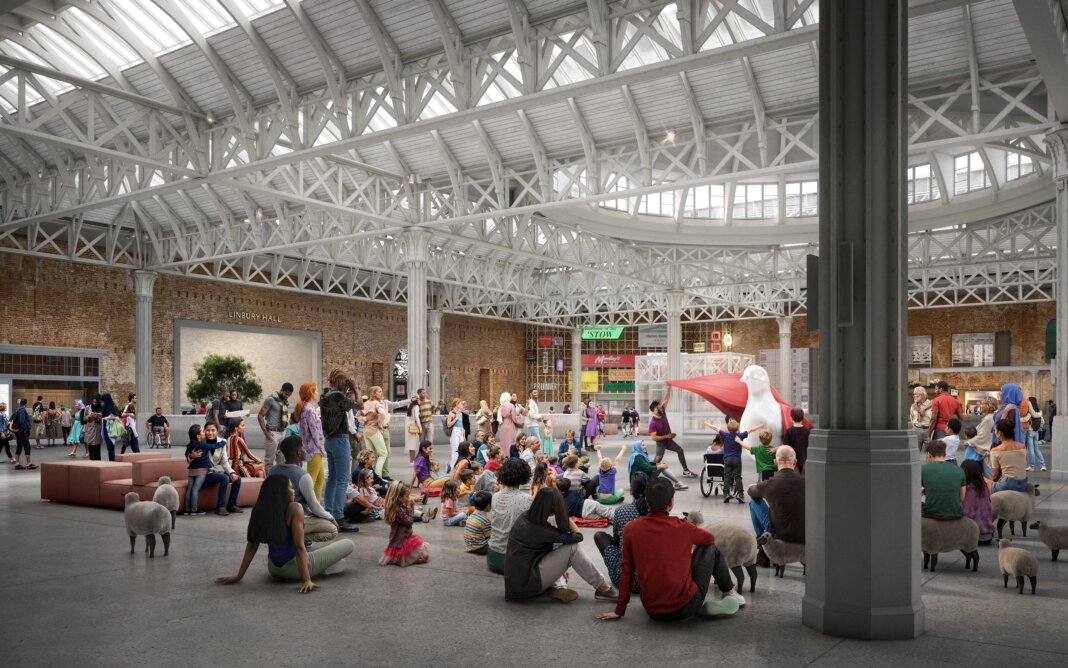

This is a watershed moment for London’s museums. After more than three decades shuttered and out of public reach, Smithfield’s grand Victorian General Market is reopening as the new home of the London Museum (formerly the Museum of London) — and on 28 November 2026, the doors swing open on what is billed as the world’s largest city museum, with free permanent galleries telling thousands of years of London’s story in one of the oldest corners of the capital. For American visitors who thought they’d seen everything London has to offer, this is one to put straight on the itinerary.
From London Wall to Smithfield
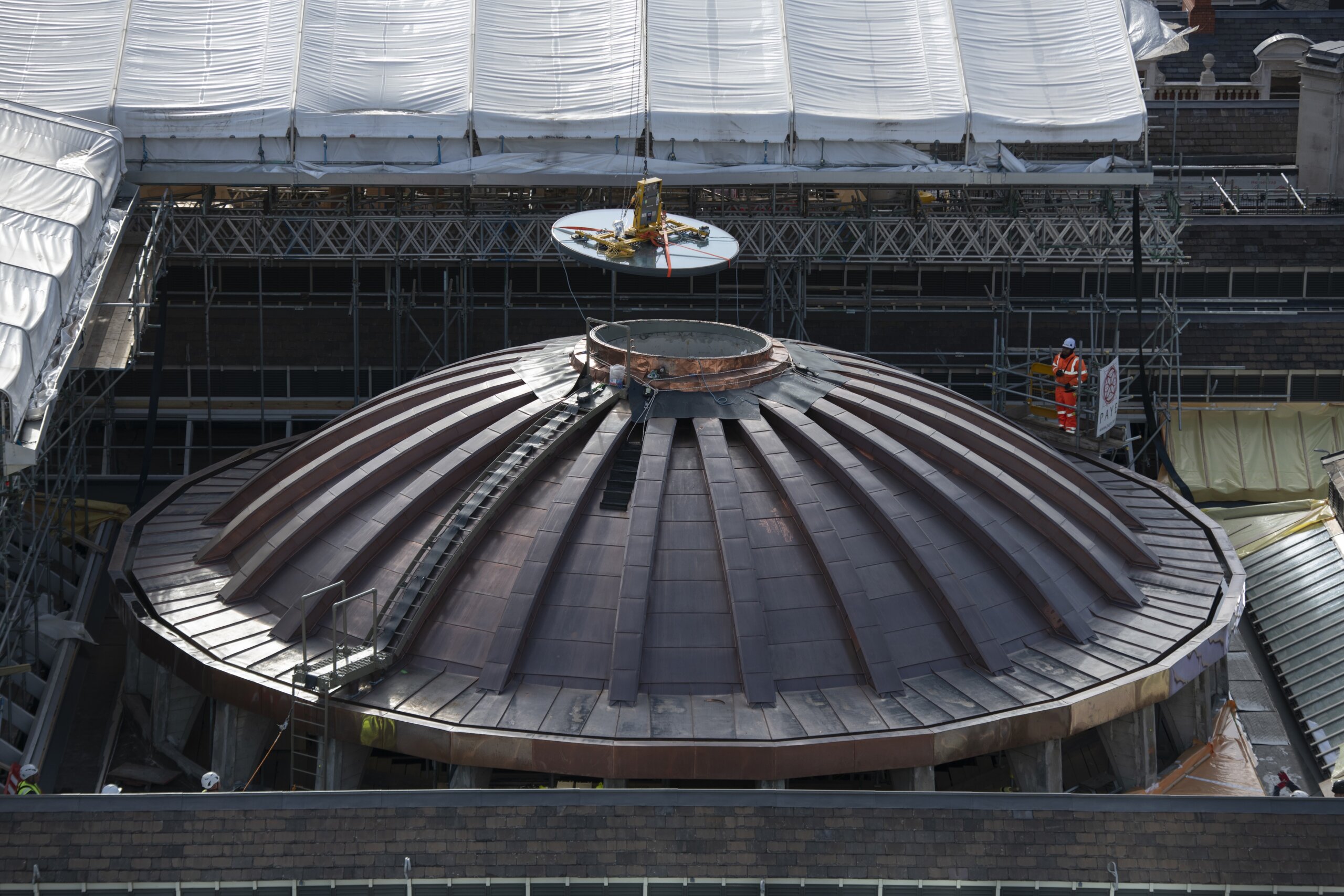
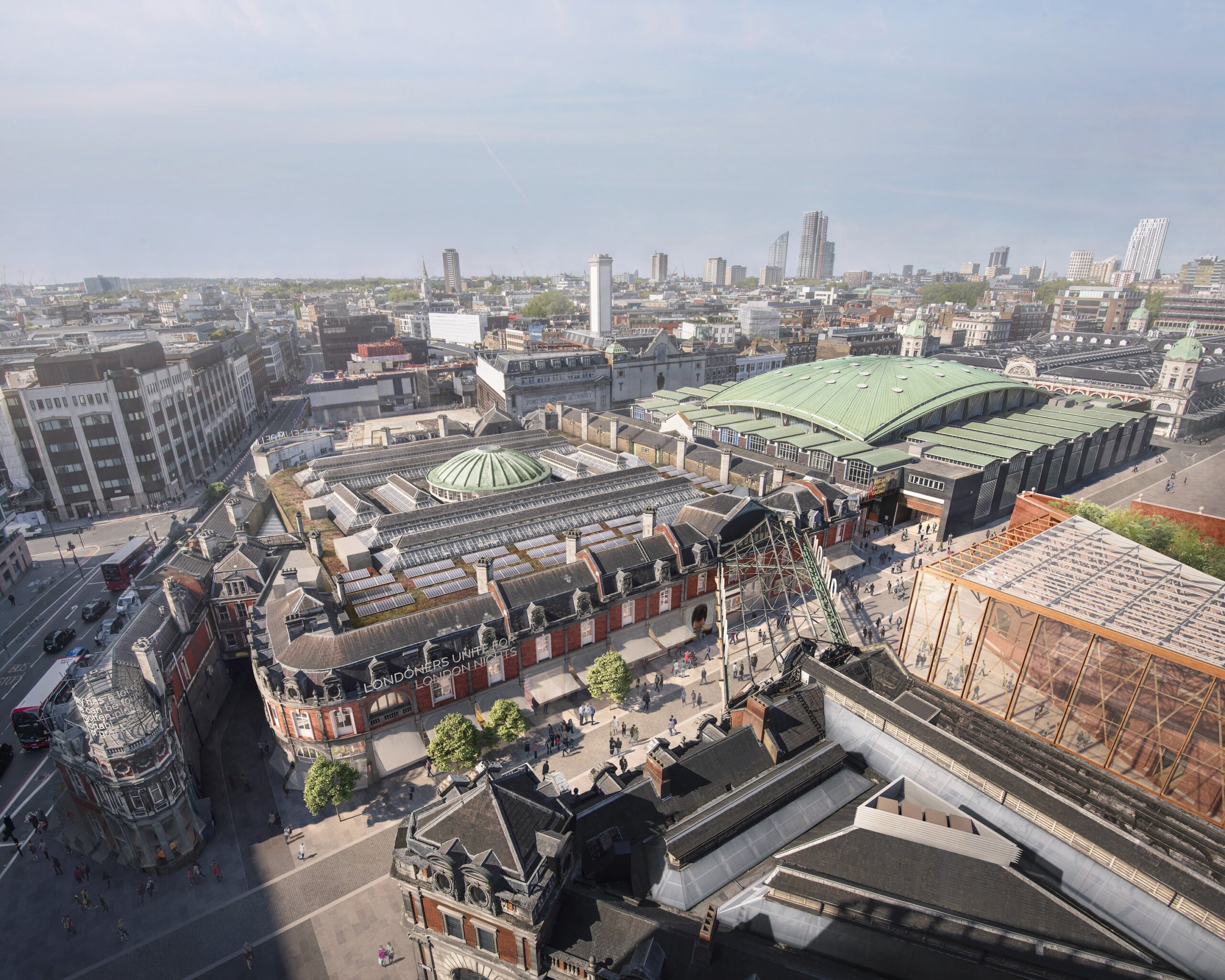
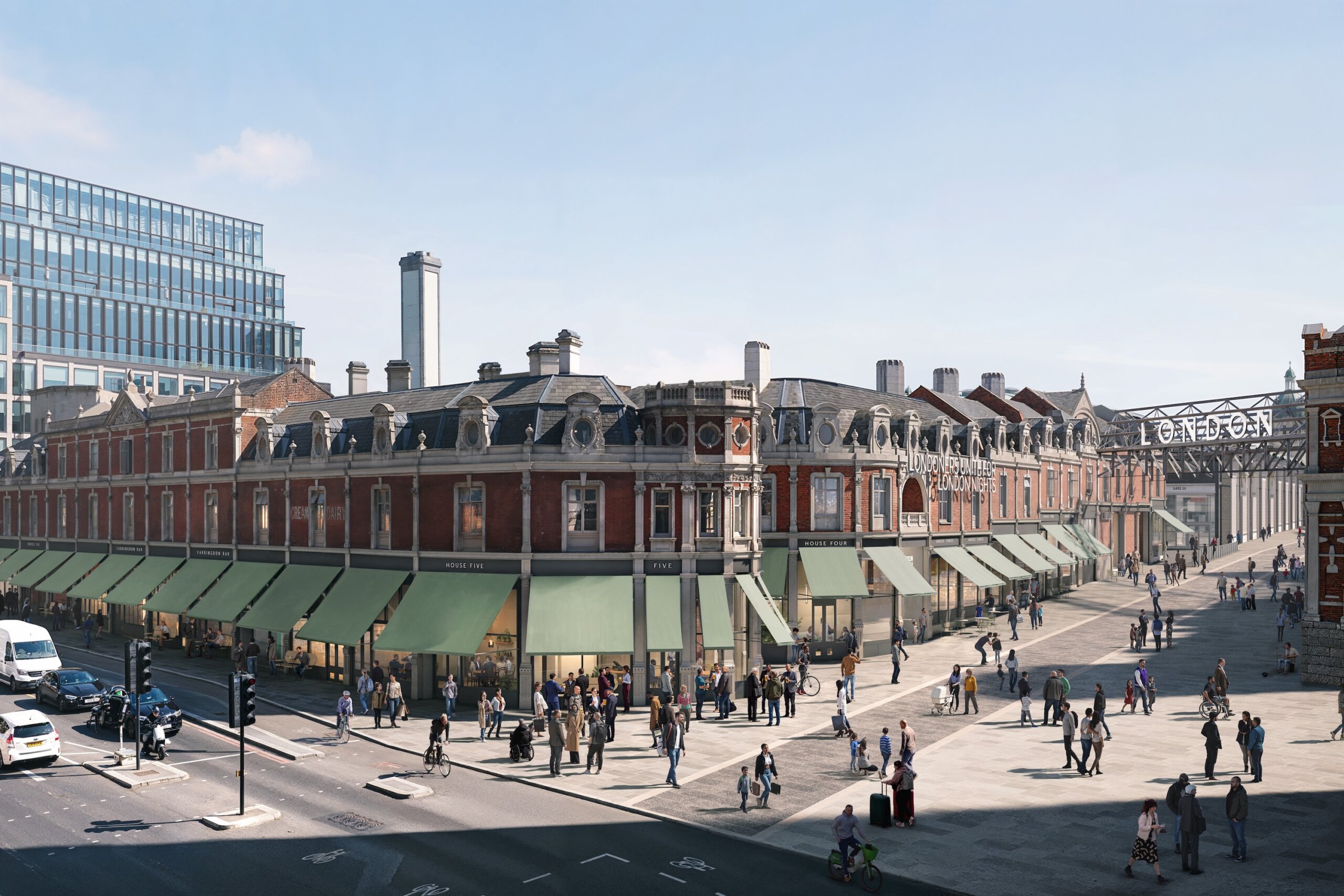
For decades, Londoners knew it as the Museum of London, tucked into a hard-to-love 1970s building on the edge of the Barbican at London Wall. That site closed its doors in December 2022 after nearly half a century — the end of an era, but really the start of something far more ambitious. Rebranded simply as the London Museum, the institution has spent the years since pouring a remarkable £437 million (about $586 million) into resurrecting a piece of the city’s working heritage: the General Market, opened in 1883 and designed by Sir Horace Jones, the same architect behind Tower Bridge and Leadenhall Market.
Designed by Stanton Williams and Asif Khan, with conservation architects Julian Harrap, the new museum returns this disused landmark to public use for the first time in over thirty years. It’s the culmination of a decade-long restoration delivered through a partnership between the City of London Corporation and the Mayor of London, with support from Bloomberg Philanthropies, the Goldsmiths’ Foundation, The Linbury Trust and The National Lottery Heritage Fund — and it reopens in time for the museum’s 50th anniversary.
At the beginning we asked ourselves how to be the best museum for London. The answer is: to be London itself, in all its grit and glitter… I hope our museum is a place where people can come together, feel at home, and find themselves grounded in the lives, treasures, challenges and innovations of this city’s vast history. Above all, I hope we make Londoners proud!
Sharon Ament, Director, London Museum
Three spaces: Real Time, Our Time and Past Time
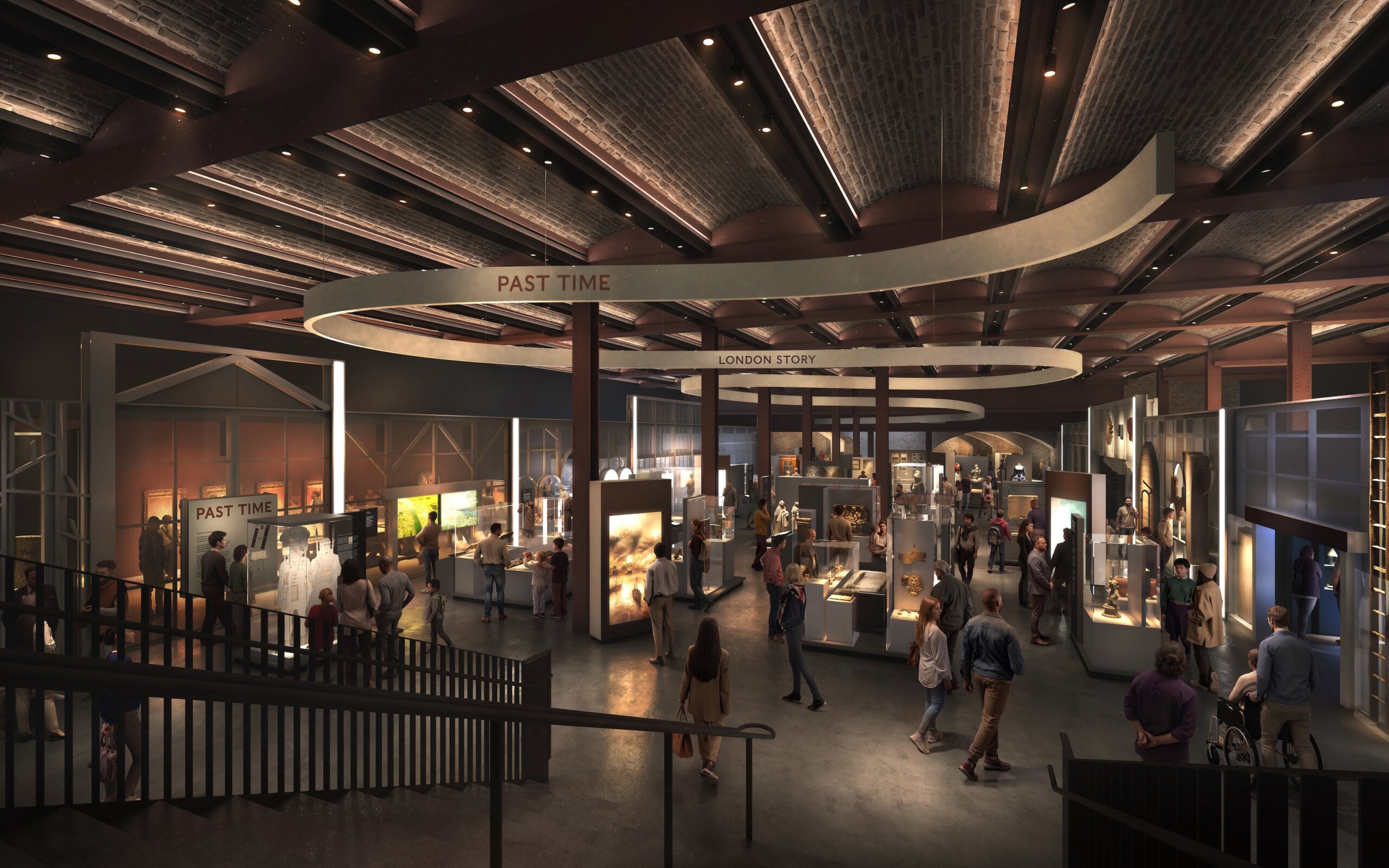
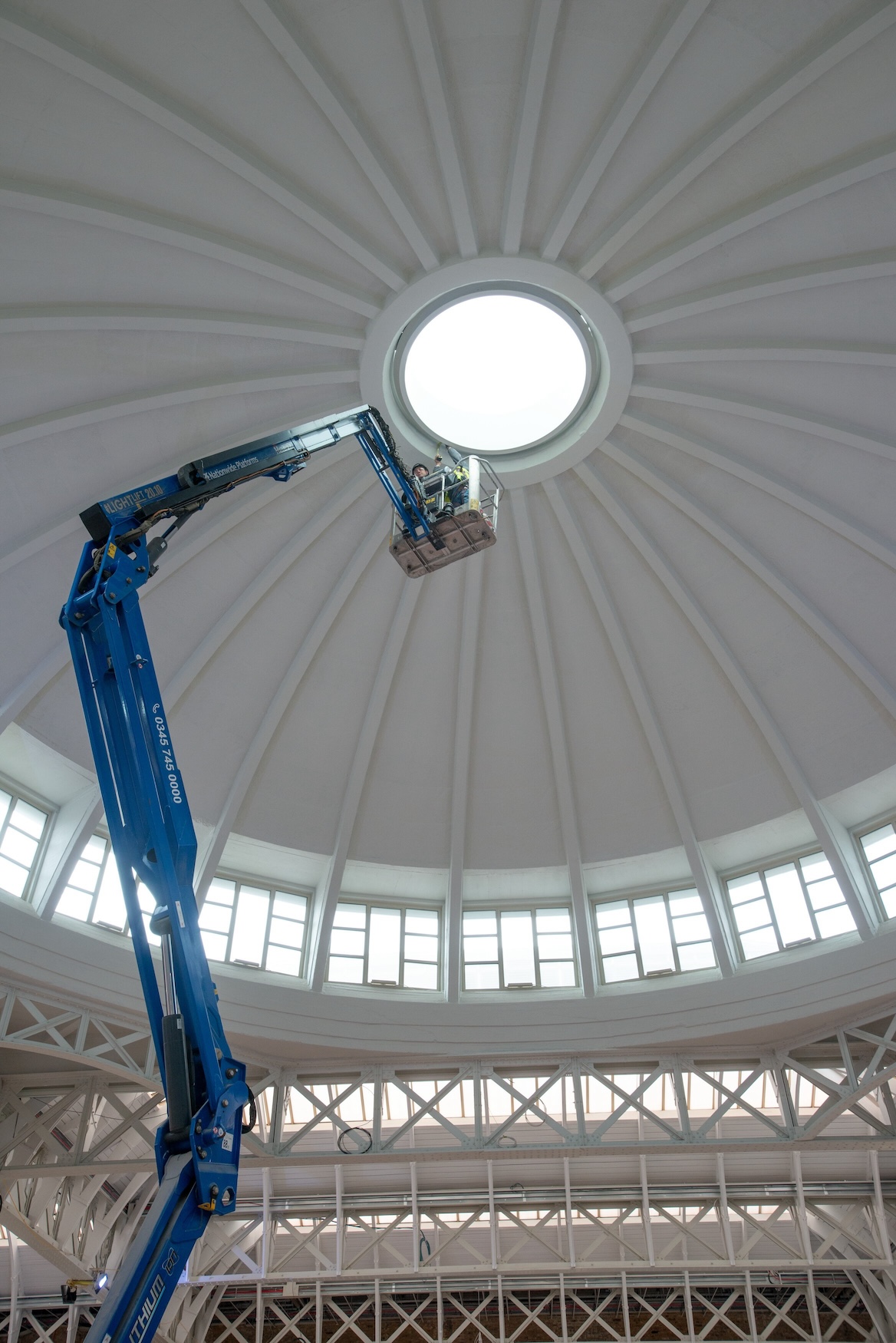
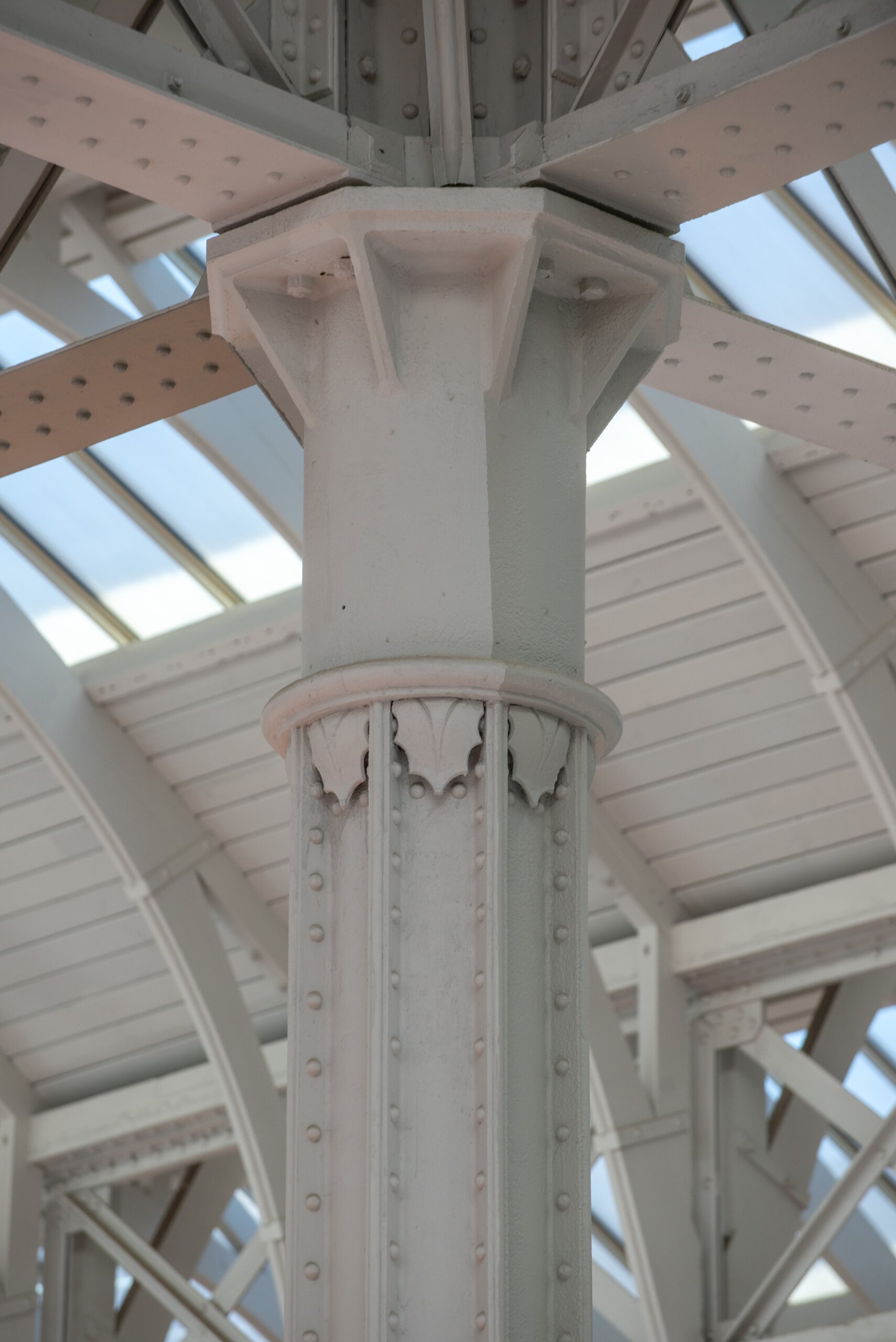
Inside, the museum unfolds across three interconnected spaces. Visitors enter via Real Time, a covered former street enriched by live data capturing London in the moment. That opens into Our Time, a vibrant social hub set beneath the market’s restored dome, anchored by 13 large installations of London in living memory — among them the Lord Mayor’s Coach and the East End’s beloved Syd’s Coffee Stall. Below ground, set at Roman street level, the cavernous Past Time galleries deliver a sweeping, theatrical overview of London’s history, presented both chronologically and thematically for the first time.


Visualizations and photographs © Secchi Smith / Atelier Brückner / Asif Khan / London Museum / Will Scott for Stanton Williams / Luke Hayes, courtesy of London Museum.
Grit and glitter: what you’ll see
Drawn from a collection of seven million objects — the world’s largest relating to a single city — the displays mix the iconic, the surprising and the never-before-seen. The dazzling Cheapside Hoard of Elizabethan and Jacobean jewellery will be shown in its fullest display ever assembled, in The Goldsmiths’ Gallery. Old favorites return, including the glamorous Selfridges lift and a famously pungent chunk of the Whitechapel Fatberg.
Elsewhere you’ll find the vest believed to have been worn by Charles I at his execution (on display for six months), Queen Victoria’s mourning dress, Charles Dickens’ chair, Tom Daley’s 2012 Olympic diving trunks, and Roman writing tablets from the Bloomberg Collection — over 14,000 artefacts capturing the city’s earliest surviving voices. London’s long history of protest is here too, from Emmeline Pankhurst’s hunger strike medal to placards from disabled-led campaigners Transport for All. And for music fans: the smashed Fender Precision bass that Paul Simonon immortalised on The Clash’s London Calling, plus Anna Pavlova’s ‘Dying Swan’ costume.
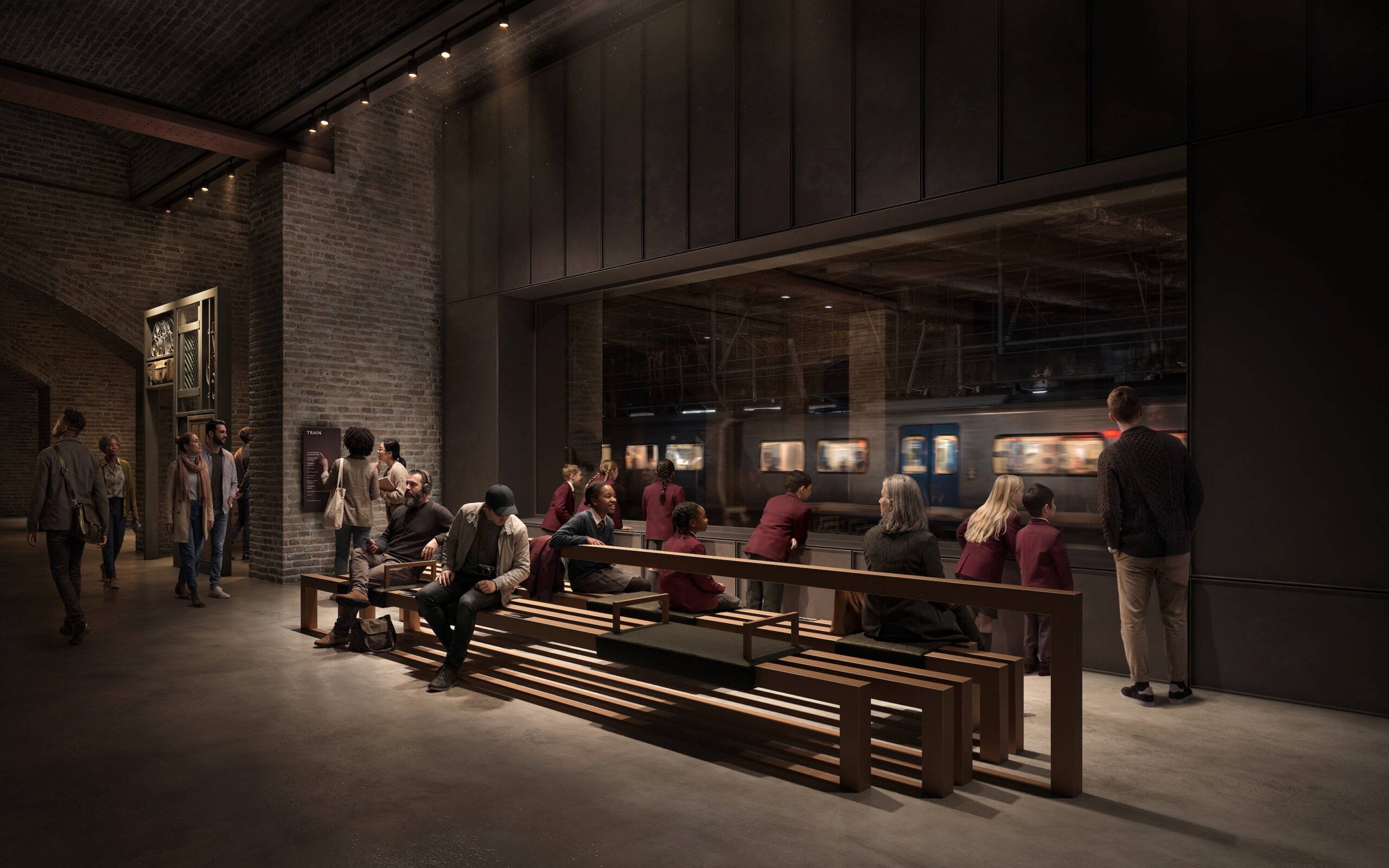
In a genuine world-first, a six-meter viewing window lets visitors watch live Thameslink trains rumble past the galleries — as bemused passengers peer back in.
A museum that’s also a night out: London Tastes
Crucially, the London Museum has been conceived as a social space, not just a collection. A day-to-night program shaped by rotating Guest Editors will animate the Our Time hall — and the inaugural season, London Tastes (November 2026 – August 2027), celebrates the city’s food culture, co-curated by Ruby Tandoh and Jonathan Nunn (of Vittles) and sponsored by Sainsbury’s. Expect a spotlight exhibition on the city’s changing appetites, plus a Tuesday Tea Club at Syd’s Coffee Stall, monthly Dinner Clubs, family Playdates with immersive theater company Punchdrunk Enrichment, and a monthly House Party thrown with nightclub-in-residence fabric — yes, you can dance on the old market floor.
Historic surroundings
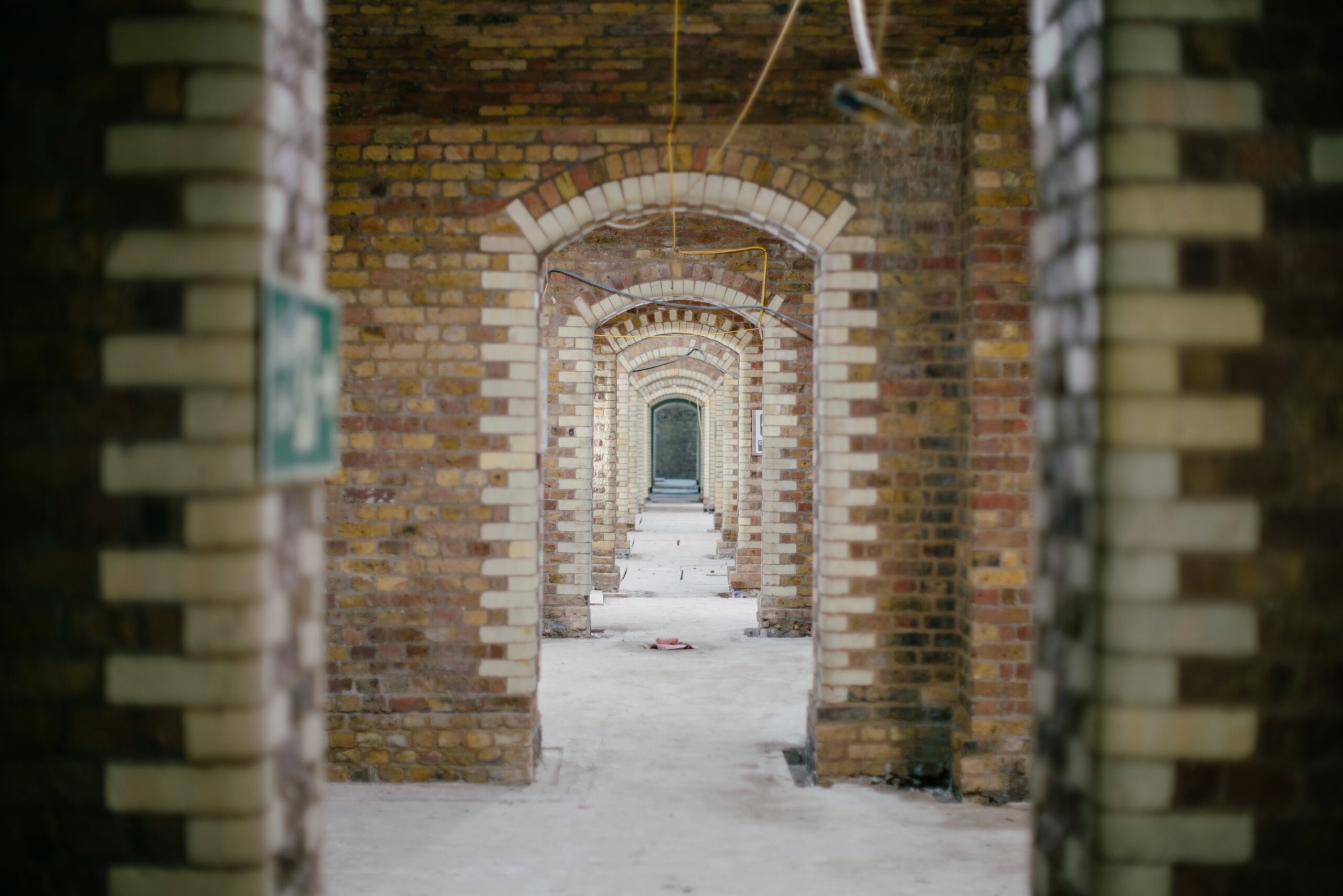
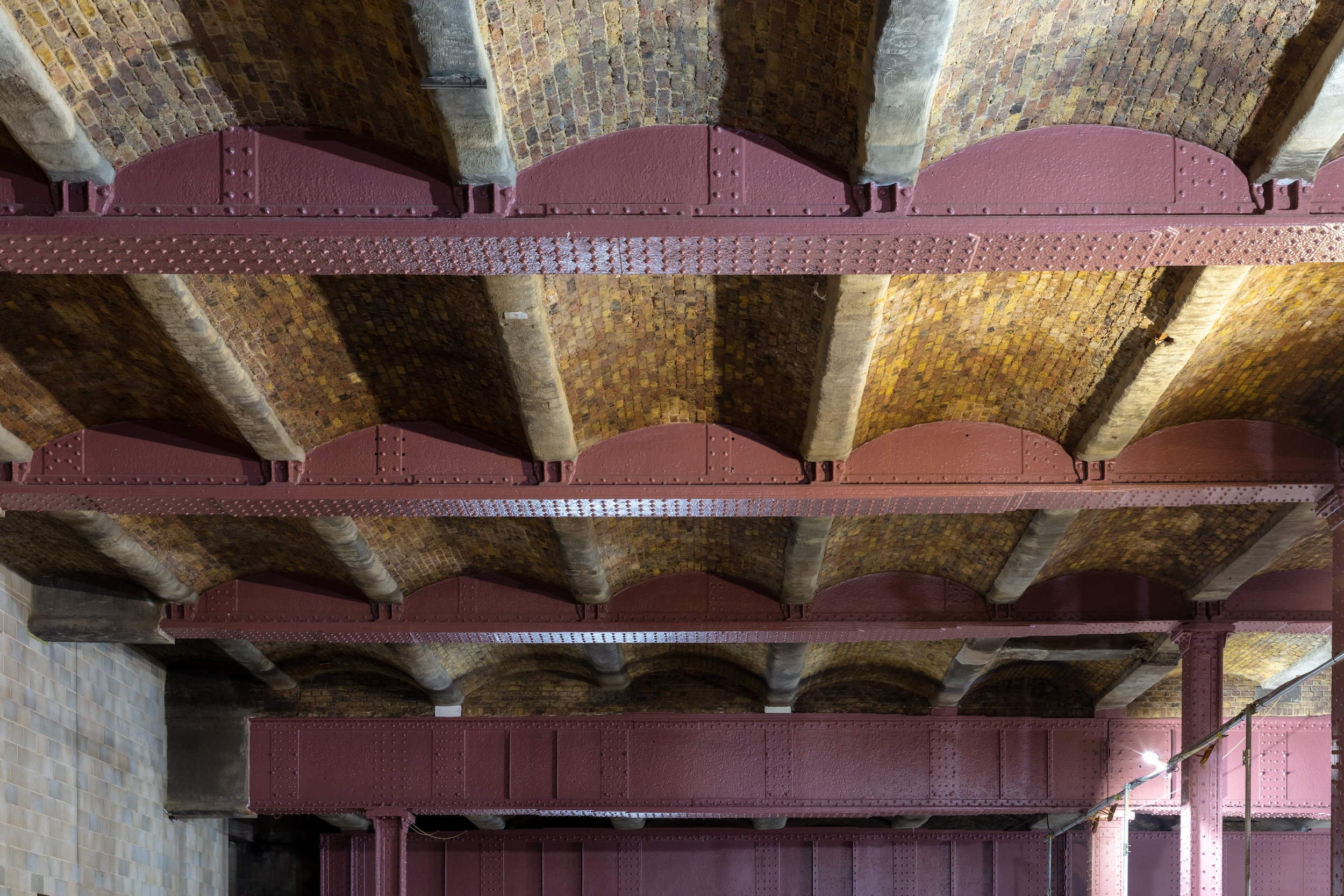
Few museums can claim a setting like this. Smithfield has been a center of trade and exchange for almost a thousand years, and the museum sits opposite the 900-year-old St Bartholomew’s Hospital, a short walk from the Barbican Arts Centre and St Paul’s Cathedral. The surrounding City of London — the capital’s most historic square mile, home to some 600 listed buildings and a backdrop for everything from The Crown to Slow Horses — could hardly be a more fitting frame. The restoration itself is a marvel: drawing on more than 70 trades and the UK’s last heritage coppersmiths, master stonemasons and Welsh blacksmiths, it has uncovered an 800-square-meter system of vaults beneath the streets and is targeting a top-1% ‘BREEAM Outstanding’ green rating.
Visiting
The London Museum’s new permanent galleries open at the General Market, West Smithfield, London EC1A 9PS on 28 November 2026, with entry free. The nearest stations are Farringdon (Underground and Elizabeth line) and Barbican. A second phase at the adjacent Poultry Market — adding temporary exhibition spaces, a learning center and a collections store — follows in 2028. Full details at londonmuseum.org.uk, or see our London Museum guide.

A Little Bit of London In Your Inbox Weekly. Sign-up for our free weekly London newsletter. Sent every Friday with the latest news from London!