
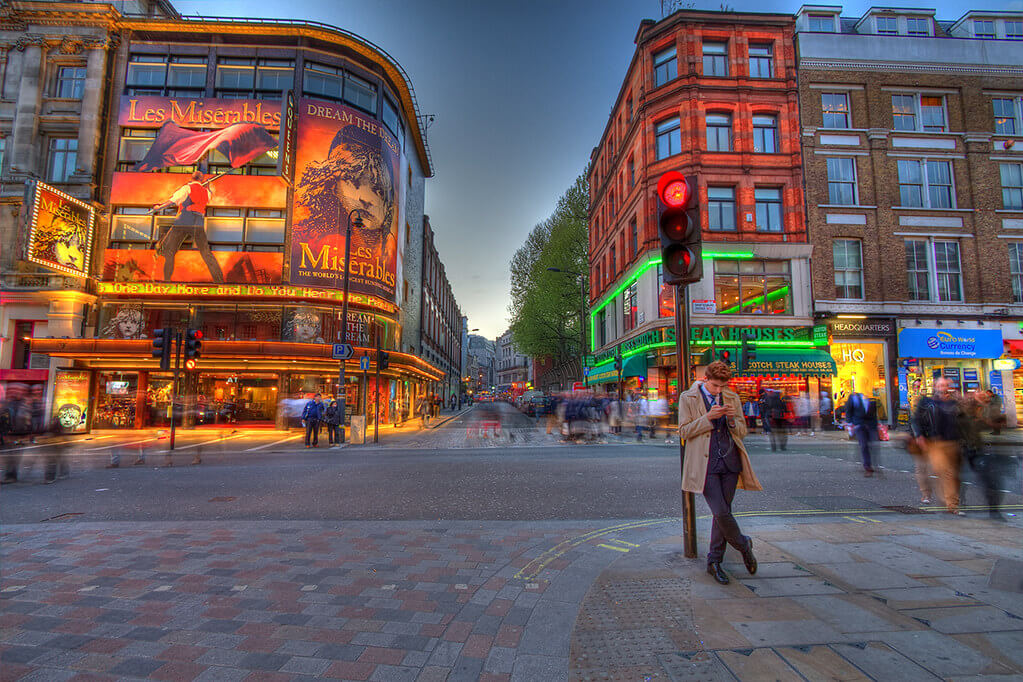


When someone mentions “the West End,” the image that springs to mind is unmistakable: blazing neon marquees, crowds spilling out of theatres onto rain-slicked pavements, the electric anticipation of curtain-up, and the collective gasp of an audience witnessing theatrical magic. London’s West End isn’t just a geographical location—it’s a cultural phenomenon, a global brand, and arguably the most concentrated collection of theatrical excellence anywhere on Earth.
Alongside Broadway, the West End represents the pinnacle of English-language theatre. But while Broadway occupies a single famous street, the West End sprawls across a glittering constellation of venues scattered through Soho, Covent Garden, and the streets surrounding Leicester Square and Piccadilly Circus. Within roughly one square mile, you’ll find nearly forty major theatres presenting everything from Shakespeare to spectacle, intimate dramas to massive musicals, experimental works to shows that have been running for decades.
From Aristocratic Playground to Theatre Capital
The term “West End” originally had nothing to do with theatre. It simply described the fashionable western part of London where the aristocracy and wealthy classes settled from the 17th century onwards, escaping the crowded, commercial City of London to the east. While the City was for making money, the West End was for spending it—on elegant townhouses, exclusive clubs, fine dining, and entertainment.
Theatre had existed in London for centuries, of course. Shakespeare’s Globe and the other Elizabethan playhouses stood south of the Thames in Southwark, safely outside the City’s jurisdiction. But after the Restoration of Charles II in 1660, theatre moved westward. The king granted royal patents to just two theatres—Drury Lane and what would become the Royal Opera House in Covent Garden—giving them exclusive rights to present “legitimate” drama in London.
This monopoly shaped the West End’s development for nearly two centuries. The patent theatres grew grand and prestigious, while other venues had to content themselves with musical entertainments, spectacles, and variety shows that technically didn’t count as “drama.” When the monopoly finally ended in 1843, an explosion of theatre-building followed. Many of the venues that define the West End today—the Lyceum, the Adelphi, the Garrick, the Criterion—date from the Victorian building boom that followed.
The Golden Age and Beyond
The late Victorian and Edwardian eras represented the West End’s first golden age. Actor-managers like Henry Irving at the Lyceum and Herbert Beerbohm Tree at Her Majesty’s Theatre created lavish productions that drew audiences from across society. The West End became synonymous with glamour, sophistication, and the very best in theatrical entertainment.
The 20th century brought challenges and transformations. Two world wars damaged or destroyed several theatres, and the rise of cinema threatened live entertainment’s dominance. Yet the West End adapted and survived. The post-war decades saw the emergence of the “angry young men” playwrights who revolutionized British drama, while the 1980s brought the megamusical—spectacular productions like Cats, Les Misérables, The Phantom of the Opera, and Miss Saigon that transformed the economics of theatre and drew tourists from around the world.
Andrew Lloyd Webber and Cameron Mackintosh became household names, their productions running for years, even decades. The Phantom of the Opera opened in 1986 and only closed in 2020—a 34-year run. Les Misérables, which premiered in 1985, continues to this day at the Sondheim Theatre. These long-running shows became destinations in themselves, as essential to the London tourist experience as Buckingham Palace or the Tower of London.
The Theatres Themselves
Part of the West End’s magic lies in its historic theatres. Unlike Broadway, where many venues have been demolished and rebuilt over the years, the West End retains an extraordinary collection of Victorian and Edwardian playhouses. Step inside the London Palladium, the Theatre Royal Drury Lane, or the Palace Theatre, and you’re surrounded by gilt, velvet, and ornate plasterwork that transports you to another era.
These buildings weren’t always treasured. In the 1950s and 60s, several historic theatres were demolished, victims of property development and changing tastes. The destruction of the St. James’s Theatre in 1957, despite public protests led by Vivien Leigh, galvanized the preservation movement. Today, most West End theatres are protected by listing status, their historic interiors safeguarded for future generations.
Each theatre has its own character and history. The Theatre Royal Drury Lane, the oldest theatre site in London with a playhouse on the location since 1663, has seen David Garrick, Edmund Kean, and countless legends tread its boards. The Savoy Theatre, built by Richard D’Oyly Carte to house Gilbert and Sullivan operas, was the first public building in the world lit entirely by electricity. The tiny Ambassadors Theatre hosted Agatha Christie’s The Mousetrap from 1952 to 1974, when it moved next door to the slightly larger St Martin’s Theatre, where it continues today as the longest-running show in history.
More Than Musicals
While blockbuster musicals may dominate the headlines, the West End offers far more than spectacle. The National Theatre on the South Bank (technically not in the West End geographically, but part of the broader London theatre scene) presents challenging new work and reimagined classics. The Royal Court in Sloane Square has launched the careers of countless playwrights. The Donmar Warehouse, the Almeida, and other smaller venues push boundaries and nurture new talent.
Commercial West End theatres increasingly balance long-running hits with limited engagements featuring star actors. The chance to see a Hollywood name performing Shakespeare or Chekhov in an intimate 900-seat Victorian theatre draws audiences who might never otherwise experience live drama. These productions often transfer to Broadway, creating a theatrical exchange that benefits both theatre capitals.
The Experience
What makes the West End special isn’t just what happens on stage—it’s the entire experience. The ritual of dressing up (or not—West End audiences are far more casual than they once were), the pre-theatre dinner at one of countless nearby restaurants, the crush at the bar during interval, the walk through Theatreland’s glowing streets afterward. Even the buskers in Leicester Square and the crowds in Covent Garden contribute to the atmosphere.
For visitors, the West End represents London at its most vibrant and alive. The theatres cluster so densely that you can wander from venue to venue, reading the posters, watching the queues form, feeling the anticipation in the air. On a typical evening, over 15,000 people will attend West End performances—an audience larger than many football stadiums, gathering to share the ancient, irreplaceable experience of live storytelling.
The West End has survived plagues, fires, wars, economic depressions, and the rise of every competing entertainment technology from cinema to streaming. It survives because nothing can replicate the alchemy of performers and audience sharing the same space, breathing the same air, creating something that exists only in that moment and then vanishes forever.
That’s what those glowing marquees promise every night: the chance to witness something unrepeatable. And that’s why the West End remains one of London’s most enduring and beloved icons.
A Little Bit of London In Your Inbox Weekly. Sign-up for our free weekly London newsletter. Sent every Friday with the latest news from London!