


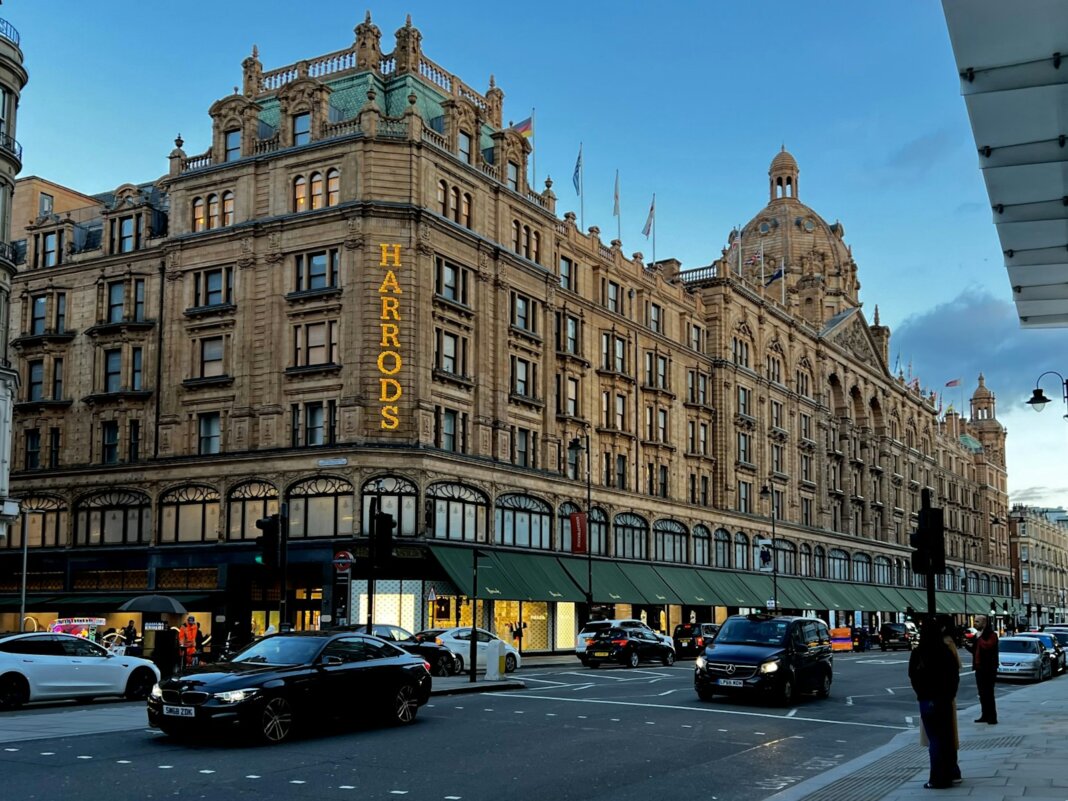


Standing majestically on Brompton Road in Knightsbridge, Harrods represents far more than a department store. This iconic London institution has evolved from a humble tea merchant’s shop into one of the world’s most famous luxury retail destinations, embodying British commercial ambition, aristocratic taste, and the enduring allure of exceptional service. For over 170 years, Harrods has been synonymous with luxury, quality, and the very essence of upscale London shopping.
The store’s distinctive Edwardian facade, illuminated by over 12,000 lights each evening, has become as recognizable as Big Ben or Tower Bridge. Behind those glowing windows lies a retail empire that has served royalty, celebrities, and discerning customers from around the globe, while establishing itself as an integral part of London’s cultural and commercial landscape.
Key Facts
- Founded: 1849 by Charles Henry Harrod as a small grocery shop in Knightsbridge
- Current Building: Opened in 1905, designed by Stevens and Munt in Edwardian Baroque style, covering 4.5 acres across seven floors
- Famous Motto: “Omnia Omnibus Ubique” (All Things for All People, Everywhere), reflecting its comprehensive luxury retail philosophy
- Royal Warrants: Holds multiple Royal Warrants, having served the Royal Family for over a century with everything from food to furnishings
- Annual Visitors: Attracts approximately 15 million visitors annually, making it one of London’s most visited tourist attractions
Historical Evolution and Commercial Innovation
Victorian Foundations
Charles Henry Harrod’s transformation from a humble tea merchant to retail pioneer began in 1849 when he established his first shop with £20 in capital. The move to Knightsbridge proved prescient, positioning the business in an area experiencing rapid development as London’s wealthy expanded westward. Harrod’s early success stemmed from understanding that affluent customers demanded quality, variety, and convenience in a single location.
The store’s evolution accelerated under Charles Digby Harrod, who inherited the business in 1861. His vision extended beyond mere retail to creating a comprehensive shopping experience. By the 1880s, Harrods had expanded into adjacent buildings, offering everything from perfumes to pianos, establishing the department store concept that would define modern luxury retail.
The devastating fire of 1883, rather than destroying the business, became a catalyst for transformation. Harrod famously declared, “I greatly regret to inform you that our premises are burnt out, but we shall be delivering your goods as usual in the morning.” This commitment to customer service, maintained despite adversity, established the legendary Harrods service standard that continues today.
Edwardian Grandeur and Technological Innovation
The construction of the current Harrods building between 1901 and 1905 marked the store’s emergence as a global retail destination. Architects Stevens and Munt created a masterpiece of Edwardian commercial architecture, featuring a distinctive terracotta facade, elaborate internal courtyards, and innovative steel frame construction that maximized retail space while creating architectural grandeur.
Harrods pioneered numerous retail innovations that became industry standards. The store introduced Britain’s first escalator in 1898, complete with brandy and smelling salts for nervous customers. The famous Food Halls, opened in 1902, featured revolutionary refrigeration systems and elaborate decorative schemes that transformed grocery shopping into theatrical experience. These innovations established Harrods as a destination where shopping became entertainment.
The store’s international reputation grew through ambitious marketing and unparalleled service offerings. Harrods’ delivery department famously shipped everything from wedding cakes to live animals across the British Empire, while the personal shopping service catered to aristocratic customers who expected the store to anticipate their every need.
Twentieth Century Expansion and Global Recognition
The interwar period saw Harrods solidify its position as the world’s premier luxury department store. The addition of services like the famous Pet Department, which sold everything from exotic animals to diamond-studded collars, captured public imagination and cemented the store’s reputation for providing “anything for anyone.”
The store’s relationship with the Royal Family, formalized through multiple Royal Warrants, enhanced its prestige immeasurably. Harrods became the unofficial supplier to Britain’s aristocracy, creating bespoke services and exclusive products that reinforced its position at the apex of British retail hierarchy.
Mohamed Al-Fayed’s acquisition of Harrods in 1985 marked another transformative period. Under his ownership, the store underwent extensive renovation and expansion, while maintaining its traditional values of quality and service. The controversial memorial to Princess Diana and Dodi Al-Fayed, installed in the store, reflected the complex relationship between commerce, celebrity, and public emotion in contemporary Britain.
Contemporary Luxury and Digital Evolution
The 2010 acquisition by Qatar Holdings brought Harrods into a new era of international luxury retail. Extensive renovations have modernized the store while preserving its historic character, creating spaces that blend traditional grandeur with contemporary luxury retail concepts. The transformation of departments like Fine Jewellery and Watches, Designer Fashion, and the reimagined Beauty Halls reflects evolving customer expectations while maintaining Harrods’ commitment to exclusivity.
Modern Harrods has successfully adapted to digital retail challenges while leveraging its physical presence as an experiential destination. The store’s online platform extends Harrods’ reach globally, while initiatives like personal shopping services, exclusive events, and limited-edition collaborations maintain its appeal to luxury consumers seeking unique experiences rather than mere transactions.
Legacy and Cultural Impact
Symbol of British Luxury
Harrods has transcended retail to become a symbol of British luxury and craftsmanship. The store’s influence on luxury retail practices worldwide cannot be overstated – from customer service standards to visual merchandising, Harrods innovations have been copied globally. The famous green and gold branding has achieved iconic status comparable to luxury fashion houses, representing quality, tradition, and exclusivity.
The store’s cultural impact extends beyond commerce into literature, film, and popular culture. Harrods appears in countless novels, films, and television productions as shorthand for luxury and sophistication, while its distinctive shopping bags have become status symbols recognizable worldwide.
Economic and Social Influence
As one of London’s largest private employers and taxpayers, Harrods contributes significantly to the local economy. The store’s presence has shaped Knightsbridge’s development as a luxury retail district, attracting international brands and maintaining property values that reflect the area’s prestigious commercial character.
Harrods’ commitment to British craftsmanship through partnerships with heritage brands and emerging designers supports the UK’s luxury goods sector. The store’s platform has launched numerous fashion careers while preserving traditional British manufacturing through exclusive collaborations and bespoke services.
Tourism and London Identity
For millions of international visitors, Harrods represents an essential London experience. The store’s tourist appeal generates significant revenue for London’s economy while promoting British luxury brands globally. The distinctive architecture, historic interiors, and legendary service create memorable experiences that reinforce London’s reputation as a world-class destination.
The Christmas decorations and window displays have become annual London traditions, drawing crowds that rival major tourist attractions. These seasonal spectacles demonstrate how retail can contribute to a city’s cultural calendar while maintaining commercial objectives.
Harrods endures as more than a department store – it represents the enduring appeal of luxury, quality, and service in an increasingly digital world. Its ability to adapt while preserving core values ensures its continued relevance as both a commercial enterprise and a London icon that embodies the city’s commitment to excellence, tradition, and innovation.
A Little Bit of London In Your Inbox Weekly. Sign-up for our free weekly London newsletter. Sent every Friday with the latest news from London!