


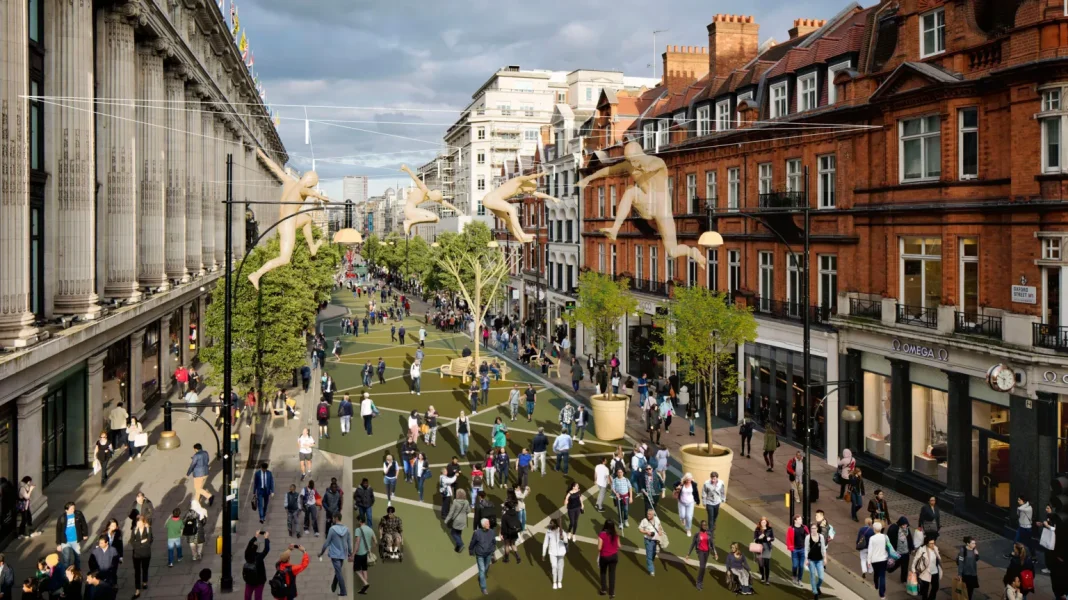


Mayor Sadiq Khan is pushing forward with ambitious plans to transform Oxford Street into a car-free shopping paradise, fundamentally changing how visitors experience one of the world’s most famous retail destinations.
London stands on the brink of a historic transformation as Mayor Sadiq Khan accelerates plans to pedestrianize Oxford Street, promising to create what could become Europe’s grandest car-free shopping boulevard. The ambitious project would fundamentally alter how the half-million daily visitors experience one of the world’s most recognizable retail destinations.
A Bold Vision for London’s Shopping Crown Jewel
The proposed transformation would ban all vehicles from a significant 0.7-mile stretch of Oxford Street, running from the bustling Oxford Circus intersection to the historic Marble Arch. Additional changes extending toward Tottenham Court Road are also under consideration, potentially creating an uninterrupted pedestrian corridor through the heart of London’s retail district.
Khan’s vision extends far beyond simply removing cars. The mayor envisions a “world-class, accessible, pedestrianised avenue” that would establish Oxford Street as a global leader for shopping, leisure, and outdoor events. Computer-generated images reveal plans for green pavements, strategic tree planting, and overhead artistic installations that would create an entirely new atmosphere for the historic thoroughfare.
What This Means for Tourists and Visitors
For the millions of international visitors who flock to Oxford Street annually, the transformation promises a dramatically different experience:
Enhanced Shopping Experience: Without the constant noise and pollution of traffic, tourists would enjoy a more relaxed, continental-style shopping environment. The pedestrian-only zone would allow for outdoor dining, street performances, and seasonal markets that could rival European destinations like Las Ramblas in Barcelona or the Champs-Élysées in Paris.
Improved Safety and Accessibility: The removal of vehicles would eliminate the danger of navigating heavy traffic while laden with shopping bags. Families with children, elderly visitors, and those with mobility challenges would find the area significantly safer and more welcoming.
New Tourist Attractions: The mayor’s plans include space for outdoor events and installations, potentially creating new reasons for tourists to visit beyond traditional shopping. Seasonal festivities, pop-up exhibitions, and cultural events could transform Oxford Street into a year-round destination for experiences, not just purchases.
Photography and Social Media Opportunities: The new green spaces and artistic installations would create Instagram-worthy backdrops that don’t currently exist on the traffic-heavy street, appealing to social media-savvy younger tourists.
Navigation Changes Tourists Should Know
The transformation would require significant adjustments to how visitors navigate central London:
Bus Route Disruptions: Sixteen bus routes currently serving Oxford Street would be diverted to surrounding streets in Marylebone and Fitzrovia. Tourists relying on London’s bus network would need to adapt to new pickup points and potentially longer walking distances to reach the shopping district.
Taxi and Ride-Share Access: Black cabs and ride-sharing services would no longer be able to drop passengers directly on Oxford Street. Visitors would need to be deposited at the edges of the pedestrian zone, requiring short walks to reach specific stores.
Underground Stations Become Key: Tube stations along the route—Oxford Circus, Bond Street, Marble Arch, and Tottenham Court Road—would become even more crucial as the primary access points to the pedestrianized area.
Cycling Considerations: Questions remain about bicycle access through the pedestrian zone, which could affect tourists using London’s bike-sharing schemes or cycle tours.
The Tourism and Economic Impact
City Hall’s polling suggests overwhelming support from visitors, with 62% backing the pedestrianization compared to lower support from local residents (34%) and businesses (19%). This enthusiasm from tourists aligns with the mayor’s broader economic strategy for the project.
The transformation aims to attract more international visitors by creating a unique destination that stands out in the competitive global tourism market. London would join cities like Copenhagen, Brussels, and parts of Paris that have successfully pedestrianized major shopping areas, often seeing increased foot traffic and tourist satisfaction.
Recent retail investment suggests confidence in Oxford Street’s future. According to property consultants Savills, existing brands have invested £118 million in store renovations over the past twelve months alone, indicating strong commercial faith in the area’s potential.
Overcoming Past Challenges
This latest push represents Khan’s most determined effort to achieve a goal that has faced resistance for years. In 2018, Westminster City Council blocked similar plans, citing insufficient local support. The council’s subsequent attempt to boost the area with the infamous Marble Arch Mound—a failed artificial hill that opened incomplete and over budget—became a cautionary tale about poorly executed regeneration projects.
The mayor’s new approach involves creating a mayoral development corporation with special planning powers, requiring approval from Deputy Prime Minister Angela Rayner. This strategy would effectively bypass local council objections that have previously stalled progress.
Addressing Tourist Concerns
Critics raise valid concerns that could affect the visitor experience:
Congestion Displacement: Traffic displaced from Oxford Street would likely increase congestion on surrounding streets, potentially making it more difficult for tourists to reach the area by car or taxi.
Accessibility Issues: Disability rights advocates worry about reduced access for visitors with mobility challenges who rely on taxis or specialized transport.
Implementation Timeline: The consultation process beginning later this year means tourists planning visits in 2025 should expect ongoing construction and potential disruptions.
A European Shopping Experience in London
If successful, the Oxford Street transformation would give London something it currently lacks: a grand pedestrian shopping boulevard comparable to the best European destinations. Cities like Madrid, which pedestrianized parts of Gran Vía, and Copenhagen, with its car-free Strøget, have seen increased tourist satisfaction and longer visit durations.
The project represents a fundamental shift in how London approaches tourism infrastructure. Rather than simply managing existing attractions, the city would be creating an entirely new type of destination that combines shopping, culture, and public space in ways that appeal to contemporary travelers.
Timeline and Next Steps
Detailed proposals will undergo public consultation later in 2025, with implementation timelines dependent on government approval for the mayoral development corporation. Tourists planning visits should monitor developments closely, as the transformation could begin affecting access patterns within the next two years.
For international visitors, the Oxford Street pedestrianization represents both opportunity and adjustment. While the long-term benefits promise a more enjoyable, safer, and uniquely London shopping experience, the transition period will require flexibility and advance planning.
The success of this ambitious project could set a precedent for other major London thoroughfares, potentially creating a network of pedestrian-friendly zones that fundamentally change how tourists experience the capital. For a city competing globally for visitor attention, the transformation of Oxford Street could provide the distinctive edge that sets London apart from other major shopping destinations.
As Mayor Khan pushes forward with these plans, tourists can look forward to a future Oxford Street that prioritizes people over traffic, creating a shopping experience worthy of one of the world’s greatest cities.
Visitors planning trips to London should check for updates on the Oxford Street transformation timeline at london.gov.uk and consider alternative transportation options when visiting the area.
A Little Bit of London In Your Inbox Weekly. Sign-up for our free weekly London newsletter. Sent every Friday with the latest news from London!