
Harry Potter is woven into London’s geography in a way few fictional narratives ever achieve. J.K. Rowling’s London is partially invented, but it’s anchored so thoroughly in real locations that the books and films have created an alternative reality that overlaps completely with the actual city. The Diagon Alley corridor is hidden somewhere in the real London geography. Platform 9¾ is at a real train station. Real buildings become Gringotts, Ollivanders, and the Ministry of Magic. If you’re a Potter fan visiting London, you’re not just visiting a city—you’re visiting a partially real, partially imagined place that has become legitimately real through decades of devotion and film adaptation. This guide maps out where you can experience the actual locations that inspired and featured in the Harry Potter universe.
Platform 9¾ at King’s Cross Station
King’s Cross Station is one of London’s major rail hubs, and in the Harry Potter universe, Platform 9¾ is where Hogwarts students board the Hogwarts Express to travel to school. The platform is, of course, not visible in the Muggle world (that’s the whole point), but there’s an actual brass plaque marking the spot.
The plaque is mounted on the wall between platforms 9 and 10, right where the books and films suggest the magical barrier would be. The Warner Bros. films actually shot scenes at this location, and it has become the most visited pilgrimage site for Harry Potter fans visiting London. At any given time, there’s likely to be a queue of people waiting to take photographs at the plaque, often with trolleys (similar to Harry’s trolley of luggage in the first film).
The experience is somewhat surreal. You’re standing in an ordinary rail station, surrounded by commuters and tourists, but for a moment, you’re acknowledging this little piece of fictional reality that has become genuinely embedded in the physical location. It’s become such a significant spot that King’s Cross has embraced it—there’s a gift shop nearby, the plaque itself is well-maintained, and staff are generally aware of and accommodating to Potter fans.
The novelty is free and quick, though if you want good photos, go at off-peak times. Early morning or weekday afternoons are best if you want to avoid crowds.
The Entire King’s Cross Station Area
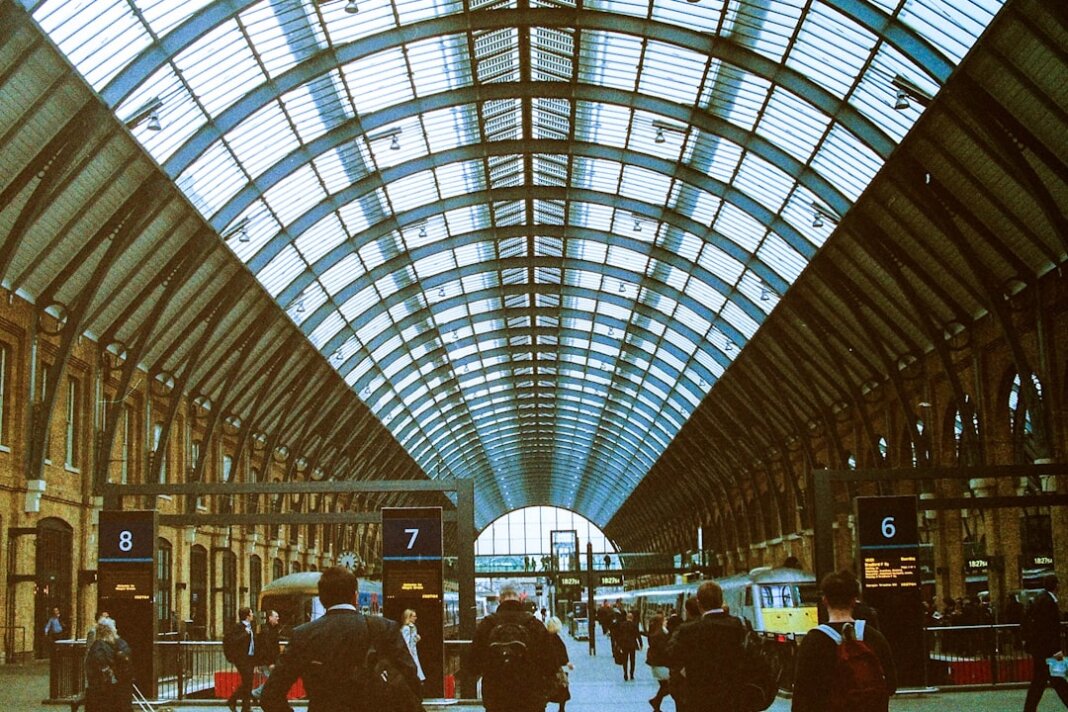
Beyond Platform 9¾, King’s Cross station itself features in the films. The concourse, the general architecture, and the atmosphere of the station appear in multiple Potter films, particularly at the beginning of each school year. Walking through the station with knowledge of the films, you’ll likely recognize various architectural elements and camera angles.
Leadenhall Market: Diagon Alley
Diagon Alley—the hidden magical street where wizards shop—was filmed at Leadenhall Market, a historic covered market in the City of London. The market is genuinely picturesque, with Victorian architecture, charming shops, and a somewhat hidden-away atmosphere that’s perfect for filmmaking.
Walking through Leadenhall Market, you’ll immediately recognize the arched glass roof, the architectural style, and the shop fronts from the films. The filmmakers didn’t need to add much—the location was already beautiful and atmospheric. The market was closed during filming, allowing the production team to dress it up and film scenes without crowds.
Visiting Leadenhall Market today, it functions as an actual working market with shops and restaurants. You can walk through the same spaces where Harry, Hermione, and Ron walked through the fictional Diagon Alley. It’s less famous than Platform 9¾ for Potter fans, but in many ways it’s more satisfying—you can actually spend time here, grab lunch, browse the shops, and soak in the atmosphere. The arched glass ceiling is particularly striking and photographs beautifully.
The market is near the Tower of London and some of London’s medieval churches, so it’s easy to combine with other City of London sightseeing. It’s a genuinely pleasant spot even if you’re not a Potter fan—the Victorian market architecture is beautiful regardless.
The Warner Bros. Studio Tour: The Real Deal
The Warner Bros. Studio Tour, located about twenty miles outside central London in Watford (reached by train or coach), is the definitive Harry Potter fan destination. This is where most of the interior scenes from all eight films were shot, and the studio has been preserved as a kind of museum-theme park hybrid dedicated to the making of the films.
You can walk through actual sets—Dumbledore’s office, the Gryffindor common room, the Great Hall, Hagrid’s hut, the Potions classroom, the Weasleys’ kitchen. These aren’t reconstructions or replicas—they’re the actual sets used for the films. You can see the details, the props, the furnishings. Walking through the Great Hall, you’re standing in the actual space where the Hogwarts feasts were filmed. It’s genuinely awe-inspiring.
The museum includes displays of costumes worn by the actors, props used in the films, displays explaining special effects and filmmaking techniques, and extensive behind-the-scenes information. You can learn how the visual effects were created, how the sets were built, and the actual process of making the films.
The journey from central London to Watford takes about forty minutes, and the tour itself requires a minimum of three to four hours. It’s expensive (around £59 (about $79) per person), but for any serious Potter fan, it’s worth every penny. It’s the closest you’ll get to actually being in the Harry Potter world.
Real London Locations in the Films
Beyond Diagon Alley and Platform 9¾, numerous other real London locations appear in the Potter films, recontextualised as locations in the wizarding world or simply used for establishing shots and scenes.
Gringotts Wizarding Bank
Gringotts, the wizarding bank, was filmed at an actual bank building in London—the Australian and New Zealand Bank on Gresham Street. The exterior is distinctly recognisable from the films, though it’s an ordinary bank building during normal operation. You can walk past it and see the location used for filming, though obviously you can’t enter and experience it as the set itself. It’s more of a “spot the filming location” experience than an interactive one.
The Ministry of Magic
The Ministry of Magic’s exterior was filmed at a real London government building, and various Ministry interior scenes used actual government office spaces. The exact location has been somewhat preserved by Potter fans and enthusiasts, and self-guided walking tours often include it. The fact that a government office building became the fictional center of the wizarding bureaucracy is rather charming—the filmmakers used actual architecture and government aesthetic to create the fictional Ministry.
Millennium Bridge
The Millennium Bridge (a pedestrian bridge across the Thames) appears in the sixth film when Death Eaters destroy it. For the films, the bridge was digitally destroyed, but the actual bridge is there and walkable. It’s a striking modern bridge with excellent views of the Thames and St Paul’s Cathedral, and it’s worth walking across for the views alone. Knowing it appeared in the films adds an extra layer to the experience.
Piccadilly Circus
Piccadilly Circus appears in various films as an establishing shot of London. It’s one of London’s most recognisable locations—the electronic billboard, the architecture, the general chaos of the area. Visiting, you’ll likely recognize it from the films.
The Thames and London Bridges
Various scenes in the films use the Thames and its bridges for establishing shots and action scenes. The London Bridge, Tower Bridge, and the general Thames scenery appear throughout the films. Walking along the South Bank or crossing these bridges, you’re retracing filming locations.
The Reptile House at London Zoo
In the first Harry Potter film, Harry visits the reptile house at London Zoo and accidentally releases a boa constrictor. Whilst this scene is one of the earliest Harry moments in the films, the Reptile House at the real London Zoo was indeed used for filming (though some scenes were done on sets).
The London Zoo is a real, functioning zoo in Regent’s Park, and whilst the Reptile House building was renovated and redesigned since the films were made, the general location and the zoo itself remain. Visiting the zoo is a pleasant afternoon activity regardless of the Potter connection, and knowing that early film scenes were shot here adds a little extra interest.
The Palace Theatre: Cursed Child
The Palace Theatre in London’s West End is where “Harry Potter and the Cursed Child” stage play has been running since 2016. If you want a full immersive Potter experience in London, seeing Cursed Child is the way to do it. The play is a theatrical continuation of the story after the final book, and it’s genuinely well-done—clever stagecraft, excellent performances, and a story that adds new dimensions to the Potter universe.
Seeing the play at the Palace Theatre is expensive (tickets range from £15 to £100+ (about $20-134+), depending on seating and how far in advance you book), but for dedicated fans, it’s worth it. The experience of being in an actual theater watching new Potter material in the city that inspired the original books is genuinely special.
A Walking Tour of Potter London
A self-guided walking tour focusing on actual filming locations might include:
Start at King’s Cross Station: Visit Platform 9¾, explore the station, grab coffee.
Walk to the City of London: Proceed to Leadenhall Market (Diagon Alley). Explore the market, have lunch.
To Gresham Street: Visit the Gringotts filming location exterior.
Along the Thames: Walk to Millennium Bridge, cross it, and continue along the South Bank.
Optional: West End: Visit the Palace Theatre or explore the general area.
This route covers several hours and incorporates multiple significant Potter locations. Alternatively, various walking tour companies offer dedicated Harry Potter tours that provide more detailed information and context.
The Broader Potter London Phenomenon
What’s interesting about Harry Potter’s relationship to London is that the books and films have made thousands of people interested in London who might not otherwise have been. There are dedicated Potter fan events in London, fan communities that organize meetups at filming locations, and a whole sub-culture of “Potter tourism.” The combination of the books’ brilliant writing and the films’ use of actual London locations has created something unique—a fictional world that has become partially real through tourism, cultural attention, and imaginative engagement.
Many people who’ve fallen in love with London through Potter fan culture have gone on to become interested in the city’s actual history and culture. The fictional overlay becomes a gateway to discovering the real London.
Planning Your Potter London Visit
Minimum Visit: Platform 9¾ at King’s Cross (30 minutes) and Leadenhall Market (1-2 hours).
Good Visit: Add the Warner Bros. Studio Tour (full day, including travel time), which requires advance booking.
Full Immersion: Add West End theater (Cursed Child or other shows), additional filming location walking tour, and time exploring actual London outside the Potter context.
A Final Note on Fictional Reality
J.K. Rowling created a fictional London that was so grounded in real geography and real buildings that it has become legitimate. Millions of people have visited actual London specifically because of Harry Potter. They’ve taken photographs at Platform 9¾, walked through Diagon Alley (Leadenhall Market), and experienced the city through a fictional lens. This has become real—real as measured by actual visitor numbers, real as measured by cultural significance, and real as measured by the genuine experiences people have at these locations.
Walking through Potter’s London means participating in a global phenomenon of imaginative engagement with a city. You’re standing in real places that have been transformed by fiction, and you’re part of the tradition that has made those transformations meaningful.


Free London Weekly Newsletter
A Little Bit of London In Your Inbox Weekly. Sign-up for our free weekly London newsletter. Sent every Friday with the latest news from London!