
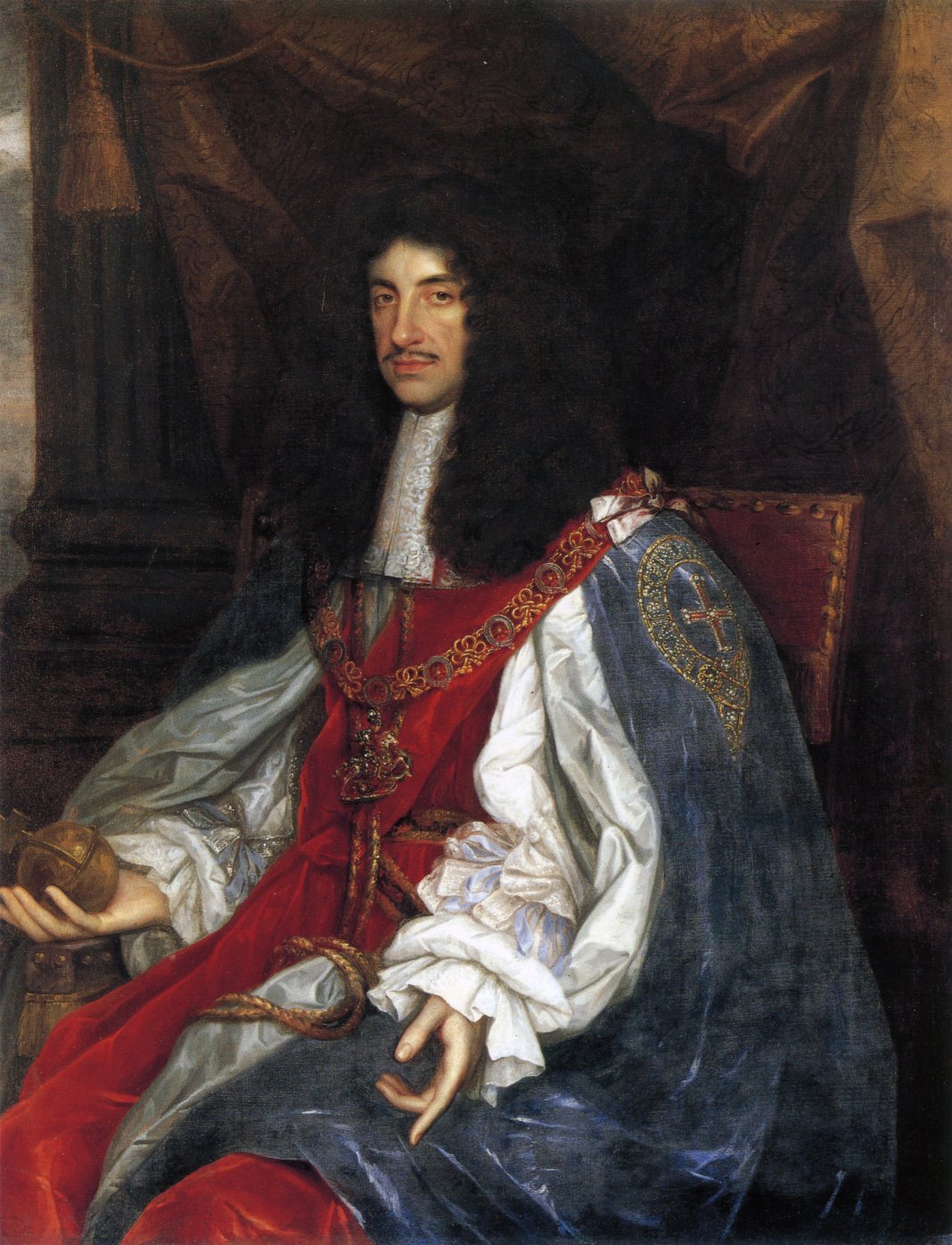


May 29, 1660, was the day London remembered how to party. After eleven years of Puritan rule that had banned everything from Christmas celebrations to theatrical performances, the city exploded in a frenzy of joy as Charles II returned to reclaim his father’s throne. It was less a royal procession and more like the biggest street festival in English history, complete with wine flowing in the gutters, bonfires on every corner, and enough fireworks to light up half of Europe.
The journey to this moment had been one of the most extraordinary political U-turns in British history. Just eleven years earlier, Londoners had watched Charles I lose his head outside the Banqueting House. Now they were cheering his son’s triumphant return as if the entire Commonwealth period had been nothing more than a particularly unpleasant nightmare that everyone was eager to forget.
The Commonwealth, that grand experiment in republican government, had started with such high hopes. Oliver Cromwell and his fellow revolutionaries had promised a godly nation, free from the corruption and excess of royal rule. What they’d delivered instead was a military dictatorship that made medieval kings look like libertarian philosophers. By 1660, most of England was thoroughly sick of being told how to live by men who considered laughter a sign of moral weakness.
The problem wasn’t just political – it was cultural and psychological. The English, it turned out, rather liked having a king. Monarchy wasn’t just a political system; it was part of the national identity, woven into everything from church services to pub songs. Trying to run England without a king was like trying to run a play without a leading actor – technically possible, but somehow fundamentally wrong.
Charles II, meanwhile, had spent his exile years becoming one of the most cosmopolitan monarchs in European history. He’d lived in France, learned diplomacy in the court of Louis XIV, and developed a sophisticated understanding of both politics and pleasure that would serve him well. Unlike his father, who’d been rigid and uncompromising, Charles II had learned the art of survival through charm, flexibility, and a healthy dose of cynicism about human nature.
The Restoration wasn’t just the return of a king – it was the return of fun to English life. Charles II brought with him a court culture that celebrated wit, learning, and sophisticated pleasure. Theaters reopened, and for the first time in English history, women appeared on stage as actresses rather than young men in drag. Coffee houses flourished as centers of intellectual discussion. The arts and sciences entered a golden age that would produce figures like Christopher Wren, John Dryden, and Isaac Newton.
London’s transformation was immediate and dramatic. The city that had been gray and austere under Puritan rule suddenly burst into color. Fashion became elaborate and flamboyant – men wore wigs and ribbons, women displayed more décolletage than had been seen in decades. Dancing, which had been banned as sinful, returned with a vengeance. The very streets seemed lighter, as if someone had lifted a heavy blanket from the entire city.
But Charles II was no mere party king. He understood that his restoration depended on finding a middle way between the extremes that had torn England apart. He needed to satisfy royalists who wanted revenge for their sufferings, while reassuring former parliamentarians that he wouldn’t govern as an absolute monarch. It was a balancing act that would have challenged a medieval Machiavelli.
The king’s entry into London on his 30th birthday was carefully choreographed to send messages about the new reign. He rode not in a closed coach like a remote monarch, but on horseback, visible and accessible to his subjects. He stopped frequently to receive petitions and address the crowds. The message was clear: this would be a different kind of monarchy, one that ruled with the people rather than over them.
The celebrations lasted for days. Londoners who had lived through years of civil war, military rule, and Puritan austerity threw themselves into the festivities with an enthusiasm that bordered on hysteria. Wine flowed freely in the streets, musicians played on every corner, and the city’s churches rang their bells until some of them cracked from overuse. It was as if eleven years of suppressed joy had been released all at once.
The Restoration also marked the beginning of London’s emergence as a modern European capital. Charles II’s court attracted visitors from across the continent, bringing new ideas, fashions, and cultural influences. The king himself spoke French fluently, corresponded with European intellectuals, and transformed the English court from a provincial backwater into a sophisticated center of learning and culture.
Perhaps most importantly, the Restoration established a new model of constitutional monarchy that would influence political development not just in Britain, but around the world. Charles II ruled not by divine right but by popular consent, expressed through Parliament. He was a king who understood that his power depended on his subjects’ satisfaction with his performance – a lesson his father had learned too late.
The religious settlement was equally pragmatic. Instead of trying to force religious uniformity, Charles II pursued a policy of relative tolerance that allowed different Christian denominations to coexist peacefully. It wasn’t perfect – Catholics and non-conformists still faced restrictions – but it was a vast improvement over the religious warfare that had characterized the previous decades.
London’s welcome for Charles II wasn’t just a celebration of the end of republican rule – it was a celebration of the return of a recognizably English way of life. The restoration of the monarchy meant the restoration of traditions, customs, and cultural practices that had defined English identity for centuries. In cheering for their king, Londoners were really cheering for themselves and their right to be governed in a manner that respected their heritage and their humanity.
A Little Bit of London In Your Inbox Weekly. Sign-up for our free weekly London newsletter. Sent every Friday with the latest news from London!