




Airport claims privately-funded expansion could be operational within decade, but faces familiar political and environmental hurdles
Heathrow Airport has submitted what it calls a “shovel-ready” proposal for a third runway, marking the latest chapter in one of London’s most contentious infrastructure debates. The £49 billion privately-funded project promises to transform Britain’s busiest airport within a decade, but the ambitious timeline depends on swift government approval and regulatory changes.
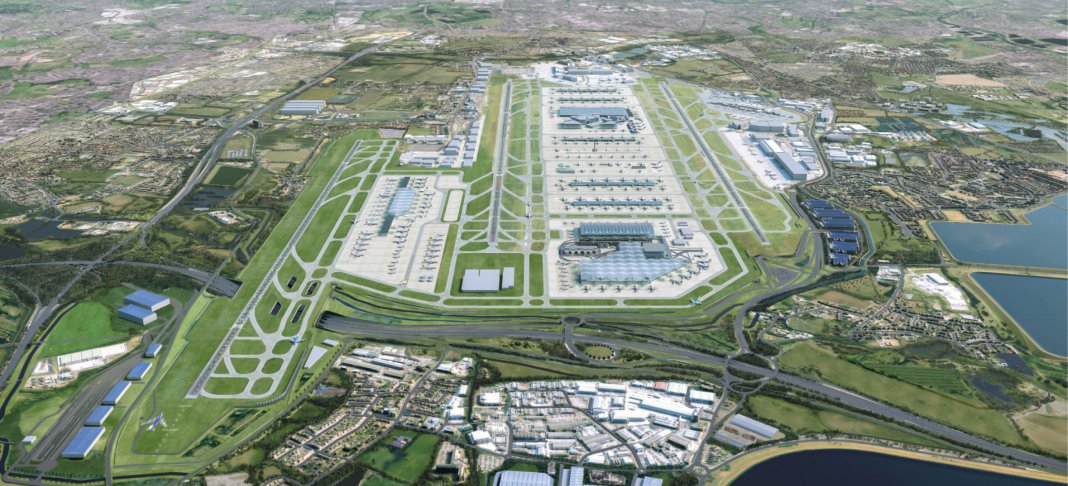
The proposal, submitted to government on Friday, represents the most detailed expansion plan yet from the west London airport. At its heart lies a £21 billion north-western runway that could handle up to 756,000 flights annually—nearly double current capacity—serving 150 million passengers compared to today’s 80 million.
A Transformed Airport Landscape
The scale of transformation envisioned is staggering. Beyond the new runway, Heathrow plans a complete reimagining of its terminal infrastructure. The centerpiece would be “T5X,” a brand-new terminal rivaling Terminal 5 in size, alongside three satellite terminals and a major expansion of Terminal 2. In a significant shift, the aging Terminal 3 would eventually close as part of the modernization.
For Londoners, the changes promise both opportunities and challenges. The airport cites tens of thousands of new jobs during construction and operation, with particular benefits for communities closest to the airport. A proposed community fund aims to address local concerns, though details remain sparse.
Economic Claims and Regional Benefits
Heathrow’s economic argument centers on national competitiveness. The airport claims expansion would add 0.43% to UK GDP, with 60% of benefits flowing outside London and the South East. The facility already handles over £200 billion in annual trade, connecting UK exporters to 92% of the world’s economy through direct flights.
“It has never been more important or urgent to expand Heathrow,” said CEO Thomas Woldbye. “We are effectively operating at capacity to the detriment of trade and connectivity.”
The airport faces growing competition from European hubs with room to expand, while Heathrow operates at near-maximum capacity. Amsterdam’s Schiphol, Paris Charles de Gaulle, and Frankfurt all handle similar passenger volumes but have greater potential for growth.
Environmental Commitments Tested
Perhaps the most scrutinized aspect of any Heathrow expansion remains environmental impact. The airport has committed to reaching net zero by 2050 and claims its noise footprint has reduced 41% since 2006. All air quality monitors around the airport currently meet legal limits.
However, environmental groups have consistently challenged such claims, arguing that massive expansion contradicts climate goals regardless of efficiency improvements. The tension between economic growth and environmental responsibility continues to define the expansion debate.
Transport and Infrastructure Overhaul
The proposal includes significant transport improvements that could benefit broader London. Plans include enhanced rail capacity, new walking and cycling routes, a road tunnel, two dedicated parkways, and improvements to what Heathrow calls “the country’s busiest bus and coach station.”
These transport links would be crucial for managing increased passenger flows without overwhelming London’s already strained transport network. The airport has introduced a 20% discount for passengers arriving by public transport, bicycle, or electric vehicle—a nod to sustainable travel concerns.
Political and Regulatory Hurdles
The proposal’s success hinges on government policy changes and regulatory framework adjustments. Heathrow needs feedback by September to maintain its ambitious timeline, with public consultations planned for next year and a planning application expected in 2028.
The expansion has garnered support from business groups including the Confederation of British Industry, British Chambers of Commerce, and various trade organizations. Notably, easyJet has endorsed the plan, seeing it as an opportunity to operate at Heathrow “at scale for the first time.”
However, the project faces familiar political headwinds. Previous expansion attempts have foundered on environmental concerns, local opposition, and shifting political priorities. The current government’s position remains unclear, though ministers have emphasized economic growth as a priority.
A Decade-Long Journey Ahead
If approved, construction could begin this year with supply chain investment, leading to an operational third runway by the mid-2030s. The full terminal modernization would extend over several decades, fundamentally reshaping one of London’s most important gateways.
The proposal represents a high-stakes gamble for Heathrow and London’s future as a global aviation hub. Success would cement the airport’s position among the world’s premier facilities while delivering significant economic benefits. Failure could see London lose ground to European competitors with fewer expansion constraints.
For Londoners, the coming months will determine whether the capital’s airport can balance growth ambitions with environmental responsibilities and community concerns. The third runway debate, dormant for years, has returned with renewed urgency—and the stakes have never been higher.
The government is expected to respond to Heathrow’s proposal by September, setting the stage for what could be one of the most significant infrastructure decisions in London’s recent history.
A Little Bit of London In Your Inbox Weekly. Sign-up for our free weekly London newsletter. Sent every Friday with the latest news from London!