


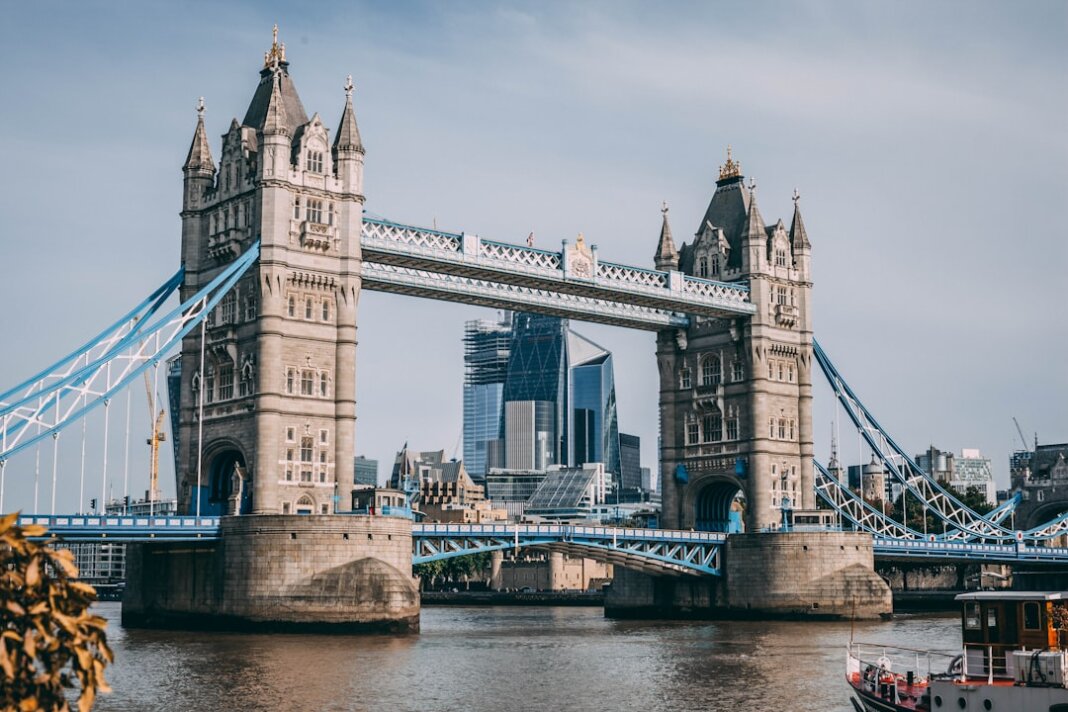
London is a historian’s dream. Walk down almost any street in this city and you’re treading on centuries of human drama—royal scandals, medieval intrigue, industrial revolution innovations, and moments that genuinely changed the world. If you’re the kind of person who gets excited about seeing the actual room where something historic happened, or who will happily spend hours in an archive, London deserves more than just a quick weekend visit. This is a city where you can spend two weeks immersed in history and barely scratch the surface. This guide is designed for serious history enthusiasts—people who want to go beyond the surface-level tourist version and really understand how London became London.
Before You Go: Prepare Yourself Properly
The best history trips aren’t improvised. Before you arrive, do some reading. Get a good general history of London—something like “A History of London” by Peter Ackroyd is dense but brilliant, or “London: A Social History” by Roy Porter for something slightly more focused. Understanding the broad strokes—the Roman settlement, the Saxon kingdoms, the Norman conquest aftermath, the medieval explosion, the Tudor dynasty, the Great Fire of 1666, the Industrial Revolution, and the Victorian expansion—gives every single place you visit infinitely more context and meaning.
Also, join the Victorian Internet (it’s not what it sounds like): get the app “Streetmuseum,” which layers historical photographs of London streets over your current location. Walking past a building and seeing what that exact spot looked like in 1890 is genuinely thrilling. Download historic maps. Follow some London history accounts on social media. This prep work transforms your visit from “I’m looking at old things” to “I’m watching the evolution of human civilization.”
The Tower of London: Beyond the Crown Jewels
Most visitors to the Tower spend about ninety minutes here, mainly to see the Crown Jewels. If you’re a history buff, plan at least four to five hours, and ideally two separate visits if you have time—one for the Crown Jewels and royal history, another for the military and medieval sections.
Start with the Tower’s origin story. William the Conqueror began construction of the White Tower around 1078, a decade after his invasion of England. This wasn’t just a palace—it was a demonstration of power, a military fortress, and a statement that the Norman conquest was here to stay. The White Tower itself is the oldest intact major structure, and standing inside it, looking at the Romanesque arches and understanding that it’s stood here for nearly a thousand years, is properly awe-inspiring.
Work your way through the different periods. The medieval additions show how the Tower evolved from a single keep into a complex defensive fortress. Read the plaques about the actual historical figures. Thomas More was held here before his execution. Anne Boleyn spent her final days here—the private apartments where she waited for her execution are still visible. The nine days’ queen, Lady Jane Grey, was imprisoned here as a teenager and executed at seventeen. These aren’t abstract historical facts—you’re standing in the rooms where these people spent their final days.
Don’t skip the medieval palace section. The restored rooms give a genuine sense of what life was like in the Tower when it was actually used as a royal residence. The kitchens are particularly interesting—vast spaces designed to feed hundreds of people daily when the court was in residence.
The military history sections, especially the displays of weapons and armour through the centuries, are essential for understanding how warfare—and therefore how power—changed over time. The evolution of armour from plate to mail to the eventual move to firearms tells the story of military innovation.
Book a Beefeater tour if you can. These are the Tower’s yeomen warders, and they’re living history. They’ve often spent years studying the Tower’s history and they tell stories with an authenticity and personality that guidebooks can’t match. They know which rooms are actually haunted (according to Tower staff), which historical figures people report seeing, and they have the kind of dark humor that comes with working in a place so saturated with execution, imprisonment, and centuries-old death.
Westminster Abbey: The Repository of English History
Westminster Abbey is simultaneously a church, a museum, a shrine, and one of the most historically important buildings in all of England. It’s the coronation church of English and British monarchs since William the Conqueror. Royal weddings happen here. State funerals happen here. The sheer historic density is extraordinary.
Plan for at least three hours, ideally more. This isn’t a place to rush through.
Start by understanding its architecture. The original church was built by Edward the Confessor in the 11th century, but most of what you see is from the 13th century onwards, with major Gothic additions that make it one of Europe’s finest examples of Perpendicular Gothic. The architecture itself is a history lesson—you can see the evolution of building techniques and aesthetics across centuries.
Then focus on the tombs and burials. Westminster Abbey is essentially a necropolis of English greatness. You’re literally walking among the graves of monarchs, scientists, poets, and military leaders who shaped Britain. Henry V, Elizabeth I (in the same vault as Mary, Queen of Scots—a final irony of history), Charles Darwin, Stephen Hawking, David Livingstone (the missionary and explorer), and Jane Austen (not buried but commemorated) are all here.
Read the memorials. They’re not just names on stone—they’re prose tributes from the periods when they were written. The language, the sentiments, the way different eras chose to remember their dead—it’s all historically fascinating. The Poets’ Corner is particularly rich. You’re surrounded by the commemorations of the people who shaped English literature.
Don’t miss the Chapter House. This is where Parliament originally met, before they had their own building. The fact that English parliamentary democracy literally began in a church building is rather significant.
The museum section (reached through a separate entrance, for an additional fee) houses artifacts including the death masks of various monarchs, medieval tiles, and personal possessions of historical figures. These small, intimate objects—a piece of embroidery, a piece of clothing, something someone actually held—create a different kind of connection to history than monuments do.
The Churchill War Rooms: The Hidden City
Beneath the Treasury building, a secret warren of rooms was constructed in the 1930s, and from 1940 until 1945, this underground complex was where Britain’s war effort was coordinated. The Churchill War Rooms are almost entirely preserved as they were left in 1945—desks have papers on them, the walls still have the period posters, the dormitory rooms still have the narrow beds where staff slept during bombing raids. It’s profoundly moving.
Book a guided tour. The tour guides here are exceptional—many are historians themselves, and they provide context and stories that aren’t on any plaques. You’ll learn about the daily life of the people who worked here, the stress of the job, the romance and personal connections that happened in these underground passages, and the machinery of how a modern war was actually run.
The Map Room is particularly affecting—you see the actual maps that were pinned up with markers showing troop movements and battle positions. The telephone room where Churchill’s conversations were recorded has a genuine sense of its importance. The dormitory where staff slept during bombing raids, the kitchen, the dining areas—it all paints a picture of an entire community of people working in secrecy to run a war.
The museum section upstairs focuses specifically on Churchill himself—his political career, his speeches, his personality. It’s excellent context for understanding the man who led Britain through its darkest hours.
The Museum of London: The Comprehensive View
While other museums specialize in specific eras or subjects, the Museum of London tells the story of London itself—how the city evolved from a Roman settlement to a medieval power center to a global empire’s capital to the modern metropolis it is today. Plan for three to four hours minimum.
The Roman section is particularly well-presented. London (Londinium) was founded as a Roman port around AD 50, and the museum has genuine artifacts from this period—pottery, coins, jewelry, and structural remnants. Understanding London’s beginnings as a Roman settlement provides context for everything that came after.
The medieval section covers the period after the Romans left, the Saxon settlements, the Viking invasions, and then the Norman conquest and medieval development. You see how London essentially became the power center of England through medieval times.
The Tudor and Stuart sections cover the periods when London was the seat of some of England’s most famous monarchs and some of the most dramatic historical events—the Henrician Reformation, Elizabeth I’s reign, the English Civil War, and the Restoration.
The Great Fire of 1666 and its aftermath are covered in detail—you see how the city had to rebuild itself, and how this disaster actually led to improvements in building standards and urban planning. Then comes the Industrial Revolution section, showing how London transformed into a global commercial and industrial powerhouse.
The Victorian and Edwardian sections show London at its height as an imperial capital, with exhibits of the goods and cultures it drew from across the Empire. The 20th-century sections cover London’s role in World War I and World War II, its post-war recovery and decline, and its late-20th-century regeneration.
The entire museum is a masterclass in how to tell the story of a complex place. Every exhibit raises questions and opens further avenues of exploration. You’ll find yourself wanting to return to specific periods to dive deeper.
The Crypt of St Paul’s Cathedral: Medieval Burials and the Great Monument
St Paul’s Cathedral is one of London’s most iconic buildings, and the history embedded within it is enormous. The current cathedral was built by Christopher Wren after the Great Fire of 1666, but there’s been a cathedral on this site since at least the 7th century.
The crypt holds centuries of burials. You can see the tombs of Christopher Wren himself, naval heroes like Nelson and Collingwood, and military figures from across British history. The sheer roll call of historical importance is overwhelming.
The medieval cathedral’s history is equally significant—Henry VIII held his first meeting with Anne Boleyn in Old St Paul’s Cathedral (destroyed in the Great Fire), the English Reformation played out in its sermons, and it was a central location in London life for over a thousand years.
The climb to the Whispering Gallery and beyond offers two things: one, a genuine sense of the cathedral’s engineering genius, and two, views of London that help you understand the city’s layout and how the Great Fire spread through it.
Roman London: The Archaeological Layers
Beyond the Museum of London’s exhibits, you can actually see Roman remains scattered throughout the City of London. The London Stone (in Cannon Street) is a mysterious Roman stone of unknown original purpose, but it’s been there for nearly two thousand years. The Temple of Mithras ruins are preserved and viewable in the City. The Roman Wall sections that still stand in various places throughout the City show the actual defensive structure the Romans built.
Walking this route with knowledge of what stood here two thousand years ago—a Roman port city with trade connections across Europe and beyond—changes how you see modern London. You’re literally walking over layers of history.
Medieval Churches and the Hidden Layers
London has over fifty medieval churches still standing within the City of London boundaries. Many survived the Great Fire, others were rebuilt on medieval foundations. Each one is essentially a timeline of architectural and social history.
St Bartholomew-the-Great (in Smithfield) is one of London’s oldest churches, founded in 1123, and the Norman and medieval sections are genuinely atmospheric. The choir stalls are original to the medieval period. Standing in them, you’re sitting where people sat nearly a thousand years ago.
St Olave Hart Street is often overlooked but is profoundly atmospheric—a medieval church that survived the Great Fire, with the burial of Samuel Pepys (he of the famous diary that documented the Great Fire), and a genuinely creepy skeleton carved into its gateway that has earned it the nickname “St Ghastly-Grim.”
St Helen Bishopsgate has a fascinating medieval section and a post-Fire rebuilt section, showing the architectural transition. It also has an enormous number of historical burials and memorials spanning centuries.
Each of these churches tells stories about London’s merchants, the Guilds system, the Reformation, the social history of specific neighborhoods, and the continuity of London life across centuries.
The Tower of London’s White Tower: The Absolute Core
If you have time, spend a full afternoon just in the White Tower. This single building is one of the most important Norman keeps in Britain, and it’s essentially a fortress museum. Each floor represents different periods and purposes—military apartments, royal residence, prison, treasury.
The chapel of St John the Evangelist on the second floor is extraordinary—a tiny, perfect Romanesque chapel that’s been in continuous use (in some form) for nearly a thousand years. Standing in it, you’re in the same space where medieval nobility worshipped.
Multi-Day Itinerary Suggestions
Day 1: Royal and Medieval History
Start at Westminster Abbey (morning), break for lunch, then the Tower of London (afternoon and early evening). Both are essential and foundational to understanding London.
Day 2: War and Power
Churchill War Rooms (morning tour), then St Paul’s Cathedral (afternoon), finishing with a walk through medieval churches in the City if you have energy.
Day 3: Roman and Medieval London
Museum of London (morning), then walking tour of the City focusing on Roman sites and medieval churches (afternoon). End at St Bartholomew-the-Great.
Day 4: Deeper Dives
Choose based on specific interest: Tudor history (Hampton Court Palace, outside London), ecclesiastical history (more churches), political history (Houses of Parliament tours, if available), or local neighborhood history (choose a specific area and research its medieval origins and development).
Day 5: Industrial and Modern London
Museums covering industrial history, docklands regeneration, or World War II history. The Imperial War Museum is exceptional if you want to focus on 20th-century British history.
Beyond the Major Sites: Walking Tours with Historical Focus
Book walking tours with guides who specialize in specific eras rather than general tourist routes. Tours focusing on Medieval London, Roman London, the Great Fire and its aftermath, or specific neighborhoods like Southwark or the East End provide context and details that self-guided visits can’t match. The guides are often historians themselves and will tell you things and point out details you’d never notice alone.
Research Before You Go
Use the British History Online website (british-history.ac.uk), which has detailed histories of London neighborhoods and buildings. The Victoria County History project is invaluable. Reading detailed historical accounts of specific periods before visiting means you’ll notice details and connections that would otherwise be invisible.
The Bottom Line
London for the serious history enthusiast isn’t about ticking boxes—it’s about immersing yourself in the accumulated weight of nearly two thousand years of human history, seeing the actual places where major events happened, and understanding how countless individual decisions, innovations, and dramas accumulated into the complex city of today. It requires time, preparation, and genuine curiosity. But if you have those things, London will reward you with a depth of historical understanding you can find in very few other places on earth.


Free London Weekly Newsletter
A Little Bit of London In Your Inbox Weekly. Sign-up for our free weekly London newsletter. Sent every Friday with the latest news from London!