


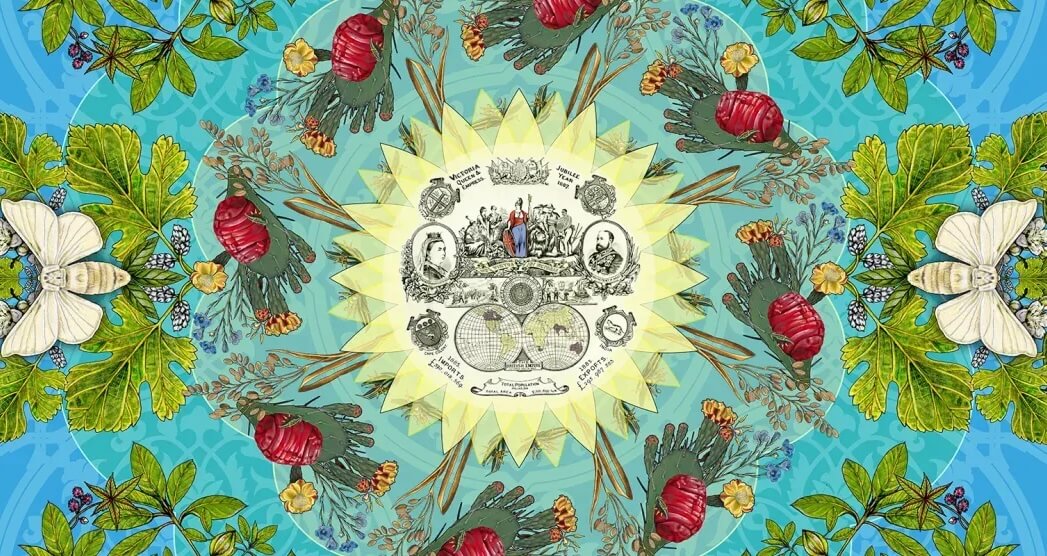


Kew Gardens is preparing to open two complementary exhibitions this October that directly examine the institution’s complex colonial history while celebrating the often-overlooked contributions of Indian artists to botanical science. The exhibitions represent a significant step for one of Britain’s most prestigious cultural institutions in addressing its imperial legacy.
Opening on October 11, 2025, at the Shirley Sherwood Gallery of Botanical Art, the twin exhibitions “The Singh Twins: Botanical Tales and Seeds of Empire” and “Flora Indica: Recovering the Lost Histories of Indian Botanical Art” will run through April 12, 2026, offering visitors an unprecedented look at how botanical science became intertwined with British imperial expansion.
Recovering Lost Voices
The more historically focused exhibition, “Flora Indica,” marks the first public display of 52 previously lost botanical artworks created by Indian artists between 1790 and 1850. These watercolors were commissioned by British botanists, many employed by the East India Company, to document India’s plant diversity for economic exploitation.
Dr Henry Noltie, who has spent years cataloguing Kew’s archive of over 7,000 Indian illustrations, co-curated the exhibition with Dr Sita Reddy. Their work represents a major effort to attribute these artworks to their actual creators rather than solely crediting the British botanists who commissioned them.
“It has been a privilege to help to recover these exquisite drawings from archival obscurity, and to present them to the world with the remarkable stories that they can tell – of the artists who painted them, of the colonial context in which they were made, and their role in the development of botanical knowledge,” the curators explained.
The artworks showcase a fascinating fusion of traditional Indian artistic techniques with the scientific demands for naturalism required by British botanists. Many documented plants that would prove economically valuable to the Empire, including poppies, cotton, herbs, and spices.
Contemporary Artistic Response
Running alongside “Flora Indica,” The Singh Twins’ solo exhibition “Botanical Tales and Seeds of Empire” offers a contemporary artistic response to Kew’s colonial collections. The internationally renowned British artists, Dr Amrit Kaur Singh MBE and Dr Rabindra Kaur Singh MBE, have created new works specifically for this exhibition that interrogate the wealth the British Empire extracted through botanical exploitation.
Their digital-printed fabric and light box artworks explore how “the seeds of empire were sewn during the age of European exploration,” examining the connections between botany, conflict, and enslavement. The exhibition includes their “Masala Art Series” – allegorical portraits celebrating the cultural significance of plants across global traditions, contrasting sharply with colonial approaches to natural resource extraction.
The Singh Twins explained their approach: “Working with Kew’s collections has been fascinating and illuminating. We hope that visitors to the exhibition will find our artistic response – which offers valuable insights into Kew’s colonial past and demonstrates the relevance of their collections to diverse audiences, whilst also celebrating the deep-rooted importance and meaning of plants across global cultures – enjoyable and thought provoking in equal measure.”
A Major Institution Reckons with History
The exhibitions represent a significant moment for Kew Gardens, a UNESCO World Heritage Site that has traditionally celebrated its scientific achievements without fully examining the imperial context in which much of its collection was assembled. The displays explicitly acknowledge how Kew botanists were “directly involved” in the economic exploitation of plants for imperial profit.
Maria Devaney, Galleries and Exhibition Leader at RBG Kew, emphasized the extensive research behind the project: “Both of these exhibitions have been several years in the making and represent the culmination of lengthy research, development and creative processes, as well as a huge amount of collaboration.”
The timing of these exhibitions coincides with broader cultural movements to reexamine the colonial origins of British museums and cultural institutions. By explicitly addressing its role in “the business of the British Empire,” Kew joins institutions like the British Museum in grappling with how to present collections acquired through imperial networks.
Beyond the Exhibitions
To complement the displays, acclaimed chef Anjula Devi will curate a special Indian menu at Kew’s Pavilion Bar & Grill from October 11 to November 14, celebrating ingredients and traditions featured in the exhibitions.
The Shirley Sherwood Gallery will also display works from its permanent collection highlighting India’s biodiversity, from Himalayan rhododendrons to sacred lotuses, emphasizing the cultural and religious significance of plants beyond their economic value.
A Model for Institutional Change
These exhibitions demonstrate how cultural institutions can meaningfully address their colonial legacies while expanding their relevance to diverse audiences. Rather than simply acknowledging past wrongs, Kew has invested substantial resources in research to recover lost histories and commissioned contemporary artists to provide critical perspectives on its collections.
The approach offers a potential model for other British institutions wrestling with similar colonial histories. By combining rigorous historical research with contemporary artistic interpretation, the exhibitions create space for both education and reflection about how imperial legacies continue to shape cultural institutions today.
For London visitors, the exhibitions provide an opportunity to engage with one of the city’s most beloved institutions in a new way, understanding how even botanical science was shaped by the imperial context of its development. The displays run through spring 2026, with admission included in standard Kew Gardens tickets.
Pre-booking online offers the best value for visits, and the exhibitions are accompanied by books published by Kew Publishing for those seeking deeper engagement with these complex histories.
A Little Bit of London In Your Inbox Weekly. Sign-up for our free weekly London newsletter. Sent every Friday with the latest news from London!