



Next spring, London’s National Gallery will host a remarkable exhibition dedicated to one of Britain’s greatest animal painters, George Stubbs (1724–1806). Titled Stubbs: Portrait of a Horse, the show brings together a rare and extraordinary painting with a fascinating exploration of how Stubbs transformed the way horses were depicted in art.
A Rare Masterpiece Revealed
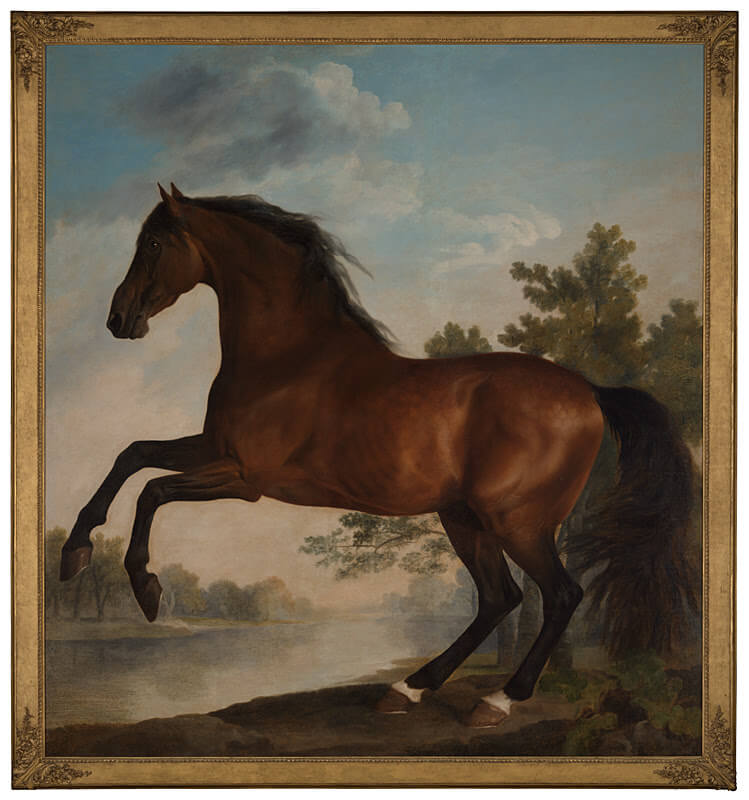
At the heart of the exhibition is Scrub (about 1762), a life-size portrait of a rearing bay horse. This monumental canvas—over 2.5 metres tall—is the only surviving Stubbs horse portrait still in private hands and has only been displayed publicly once before. Commissioned by the powerful Marquess of Rockingham, Scrub was painted the same year as Stubbs’s most famous masterpiece, Whistlejacket (also around 1762), which hangs nearby in the National Gallery’s Room 34.
The two works represent a turning point in British art: for the first time, horses were shown life-size and without riders, celebrated as noble subjects in their own right rather than as accessories to their human owners.
From Anatomy to Art
The exhibition explores the extraordinary lengths Stubbs went to in order to capture the horse with unrivaled accuracy. Between 1756–58, he spent 18 months in rural Lincolnshire dissecting and studying horses in meticulous detail. His groundbreaking anatomical drawings became the basis of his influential treatise The Anatomy of the Horse (1766), and they underpin the scientific precision visible in Scrub.
Later in his career, Stubbs continued his fascination with racehorses, producing the ambitious Turf Review series in 1790—portraits of notable horses spanning 50 years of the British racing scene. Several examples will be featured in the exhibition, placing Scrub within the broader story of Stubbs’s career.
More Than Naturalism
Stubbs’s genius lay not just in technical mastery but also in capturing the character and spirit of his animal subjects. As Associate Curator Mary McMahon notes, “Stubbs fundamentally changed the approach to depicting the horse in late 18th-century British art, combining his hard-earned knowledge and understanding of their anatomy with a desire to capture a distinct individual character.”
The result is art that transcends scientific study—paintings that are both lifelike and deeply expressive, resonating with audiences centuries later.
Why You Should Visit
For travelers heading to London in spring 2026, this exhibition offers a rare chance to see one of Stubbs’s greatest works, normally hidden from public view. It’s also a fascinating glimpse into Britain’s love affair with horses, racing, and sporting culture in the Georgian age.
And best of all—like all National Gallery exhibitions in Room 1—admission is free.
Exhibition Details
- Dates: 12 March – 31 May 2026
- Location: Room 1, The National Gallery, Trafalgar Square, London
- Admission: Free
While visiting, you can also explore Whistlejacket in Room 34, as well as other major exhibitions running at the same time, including Wright of Derby: From the Shadows and Zurbarán.
For more information, visit nationalgallery.org.uk.
A Little Bit of London In Your Inbox Weekly. Sign-up for our free weekly London newsletter. Sent every Friday with the latest news from London!